Pests & Diseases
Common Vegetable Garden Pests and How to Get Rid of Them
Learn to identify the most common vegetable garden pests by their damage signs and get rid of them using the safest, most effective controls first.
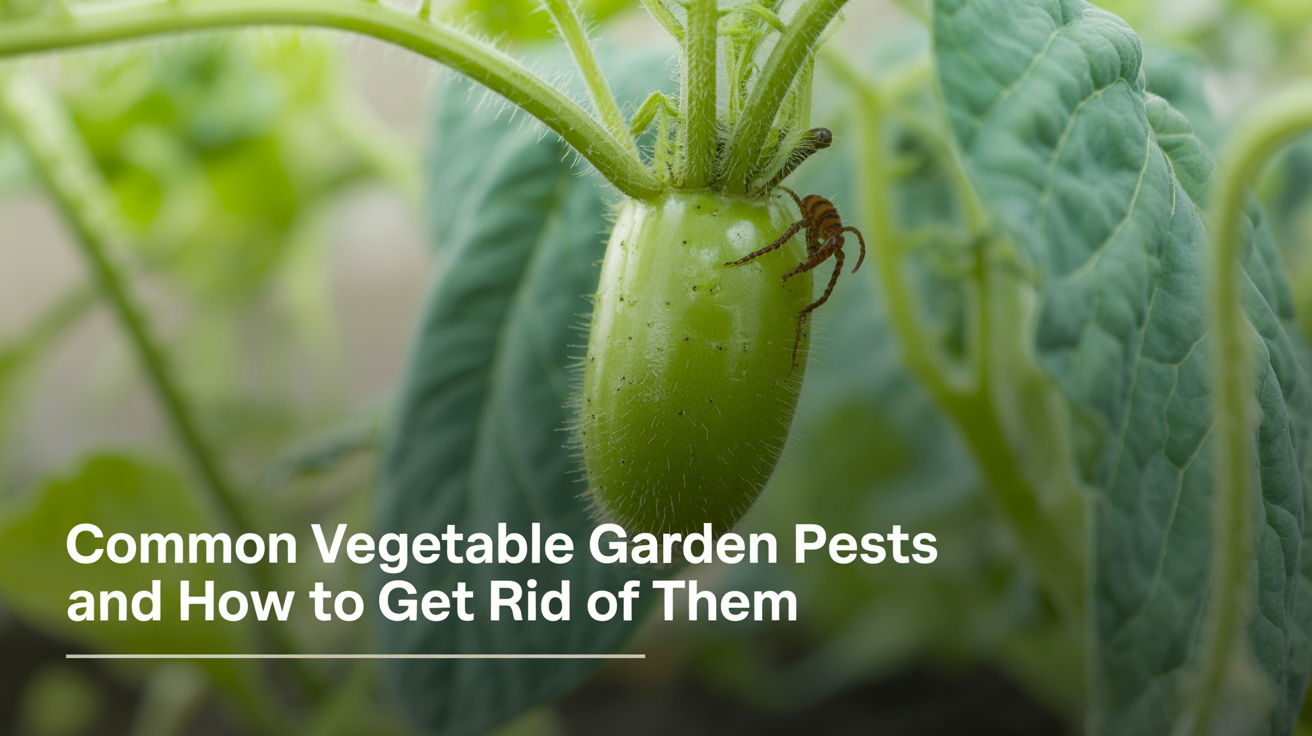
Your tomato leaves look lacy. Your kale is disappearing overnight. Something is eating the garden, and you need to know what before you do anything about it. Most common garden pests follow predictable patterns: they leave specific damage on specific plants, at specific times of season. Once you know the pattern, control gets much easier.
This guide covers the most destructive vegetable garden pests beginners encounter, how to identify each one by the evidence they leave behind, and what to do about them, starting with the least disruptive options.
A Quick Reference Table
Before diving into each pest, here is a map of the main culprits, what they target, and how to spot them.
| Pest | Plants Most Damaged | Telltale Signs | First Control Step |
|---|---|---|---|
| Aphids | Tomatoes, peppers, beans, brassicas | Sticky residue, curled leaves, clusters of tiny insects | Blast off with water; release ladybugs |
| Cabbage worms | Kale, cabbage, broccoli, cauliflower | Round holes in leaves, green frass (droppings) | Hand-pick; Bt spray |
| Tomato hornworms | Tomatoes, peppers | Stems stripped bare, large black droppings | Hand-pick; check for parasitic wasps |
| Slugs | Lettuce, seedlings, most young plants | Irregular holes, slime trails, night damage | Beer traps; diatomaceous earth |
| Squash bugs | Zucchini, squash, pumpkins | Wilting runners, bronze egg clusters on leaf undersides | Crush eggs; hand-pick adults |
| Cucumber beetles | Cucumbers, squash, melons | Yellow-stippled leaves, bacterial wilt symptoms | Row covers at planting; neem oil |
| Flea beetles | Eggplant, radish, arugula, brassicas | Tiny round shot-holes all over leaves | Row covers; sticky traps |
Soft-Bodied Pests That Suck Sap
Aphids
Aphids are tiny (1–3 mm), pear-shaped insects that cluster on new growth and the undersides of leaves. They come in green, black, gray, or white, depending on the species. Their feeding pulls nutrients from plant tissue, causing leaves to curl inward and yellow. The sticky substance they excrete (called honeydew) invites black sooty mold.
Identify by: dense clusters on shoot tips, distorted new leaves, and a sticky film on leaves below the colony.
Controls, in order of preference:
- Knock aphids off with a strong stream of water from a hose. Do this in the morning so leaves dry quickly. Repeat every couple of days. It works surprisingly well on light infestations.
- Encourage natural enemies. Ladybugs, lacewings, and parasitic wasps eat aphids. Avoid broad-spectrum insecticides that kill these beneficials alongside the pests.
- If the infestation is heavy, spray insecticidal soap (follow label rates) directly on the insects. It has to make contact to work and breaks down quickly, leaving no residue.
- Neem oil is a useful backup for persistent colonies. Mix per label directions and apply in the evening to reduce impact on pollinators.
See how to get rid of aphids on vegetable plants for a step-by-step walkthrough of each method.
Spider Mites
Spider mites are barely visible to the naked eye. They thrive in hot, dry weather and attack tomatoes, peppers, beans, and eggplant. Look for fine webbing on leaf undersides and a stippled, bronze appearance on the upper surface. Shake a suspicious leaf over white paper; if you see tiny moving dots, that is your diagnosis.
Water stress makes plants more vulnerable, so consistent irrigation is part of prevention. Knock mites off with water, use insecticidal soap, or introduce predatory mites (Phytoseiulus persimilis) if the problem is widespread.
Caterpillars and Leaf-Eaters
Cabbage Worms (Imported Cabbageworm)
The imported cabbageworm is the larva of the white cabbage butterfly, the one that flutters around your brassicas looking innocent. The caterpillar is velvety green and blends almost perfectly into cabbage leaves. It feeds heavily, leaving ragged round holes and small green pellets of frass.
Identify by: holes in outer and inner leaves of cabbage, kale, broccoli, and Brussels sprouts; green frass near feeding sites; pale green caterpillars 2–4 cm long.
Controls:
- Hand-pick caterpillars and eggs (pale yellow, football-shaped, on leaf undersides) in the morning. Drop them in soapy water. This is effective for small plantings.
- Use floating row covers over brassica beds from planting time. This physically excludes the butterfly before she can lay eggs.
- Bacillus thuringiensis (Bt), a naturally occurring soil bacterium, kills caterpillars within days of ingestion and is safe for people, pets, and beneficial insects. Mix per label and spray on leaves, including undersides.
Tomato Hornworm
Tomato hornworms are massive, up to 10 cm, and bright green with white chevron markings. They are hard to spot because they match stems and foliage so well. But their damage is unmistakable: entire branches stripped of leaves, and large dark droppings on the soil and leaves below.
Identify by: sudden severe defoliation on tomatoes or peppers, thick black or dark-green droppings the size of a peppercorn, and the caterpillar itself (look carefully along main stems).
Controls:
- Hand-pick. They look intimidating but are harmless. Drop into soapy water or relocate far from the garden.
- If you find a hornworm covered in small white rice-like cocoons, leave it alone. Those are pupating parasitic wasps (Cotesia congregata) that will kill the caterpillar and then go on to parasitize more hornworms. Removing it destroys a free biocontrol agent.
- Bt works on small hornworms but is less reliable on large ones. Spinosad, a fermentation-derived organic pesticide, is more effective on bigger larvae.
For more on diagnosing tomato damage that could be hornworm, bird, or disease, see what's eating my tomato plants.
Night Feeders
Slugs and Snails
Slugs feed at night or on cloudy, damp days, which is why beginners often suspect something invisible. They chew irregular holes in leaves (not clean circles), and they leave a glistening slime trail that dries silvery. Young seedlings can be cut off at the base entirely.
Identify by: ragged holes in lettuce and leafy greens, seedlings gone overnight, slime trails visible in morning light.
Controls:
- Reduce hiding spots: clear debris, lift boards, and thin mulch around seedlings.
- Go out with a flashlight after dark and hand-pick slugs. Drop them in soapy water or salt water.
- Sink shallow containers (jar lids work) into the soil near affected plants and fill with beer. Slugs are attracted, fall in, and drown. Empty and refresh every couple of days.
- Sprinkle diatomaceous earth (food-grade) around plant bases. It works by abrading the slug's body, but loses effectiveness when wet, reapply after rain.
- Iron phosphate baits (sold as Sluggo and similar brands) are effective and safe around pets and wildlife. Scatter pellets near plants per label directions.
Squash Family Pests
Cucurbits (squash, zucchini, cucumbers, melons) attract their own dedicated pest community.
Squash Bugs
Squash bugs are flat, gray-brown insects about 1.5 cm long. They suck sap from squash and pumpkin vines, and large populations inject a toxin that causes sudden vine collapse. They are hard to kill once mature but manageable if you catch them early.
Identify by: bronze egg clusters (neat rows of oval eggs) on leaf undersides; grayish adults congregating near the crown; wilting runners despite adequate water.
Controls:
- Check leaf undersides weekly from June onward. Crush egg clusters with your fingers or scrape them off with tape.
- Hand-pick adults and nymphs in early morning when they are sluggish. They hide under plant debris, so clear mulch from around stems.
- Boards or cardboard laid near plants overnight attract squash bugs sheltering from light. Flip the boards in the morning and destroy the bugs.
- Neem oil applied to leaf undersides is moderately effective against nymphs (young bugs). Adults are much harder to kill with sprays.
Cucumber Beetles
Cucumber beetles come in two forms, striped (yellow with black stripes) and spotted (yellow with black spots), both about 6 mm long. They chew leaves, pollen, and petals, but their real damage is transmitting bacterial wilt. An infected plant wilts, never recovers, and must be removed.
Identify by: stippled yellow leaves on cucumber family plants; small yellow-and-black beetles visible on flowers and leaves; plants wilting despite good soil moisture.
Controls:
- Row covers from transplant time through early flowering exclude beetles entirely. Remove covers for a few hours when plants flower to allow pollination, then replace.
- Yellow sticky traps catch adults and help you monitor pressure.
- Neem oil and pyrethrin-based sprays reduce beetle numbers but require frequent reapplication.
- Plant resistant cucumber varieties (look for "resistant to bacterial wilt" on the seed packet).
Prevention That Actually Reduces Pest Pressure
Reactive control is fine, but reducing how many pests find your garden in the first place is better. A few practices make a consistent difference.
Healthy soil. Plants grown in well-amended soil with adequate nutrients tolerate pest damage better and recover faster. A stressed plant signals its weakness through volatile compounds, which certain insects detect.
Row covers. Floating row covers (spunbond fabric, sold as Reemay or Agribon) exclude most flying and crawling pests when applied at planting. They are the single most effective physical barrier available to home gardeners. Remove or vent during hot spells to prevent heat buildup.
Encourage beneficial insects. Ladybugs, ground beetles, lacewings, and parasitic wasps eat or parasitize many common pests. They need food (nectar from small flowers like dill, fennel, alyssum, and cilantro allowed to bolt), water, and shelter. Planting a few of these near the vegetable bed significantly increases beneficial insect populations.
Rotate crops. Moving plant families to different beds each year breaks pest cycles. Cucumber beetles and squash bugs overwinter in soil near where their host plants grew. If you move the cucurbits, the emerging adults must travel to find food, and many do not make it.
Scout regularly. Walk the garden every two or three days. Flip leaves. Look at soil near plant crowns. Most infestations are far easier to control at 10 bugs than at 10,000. Early scouting is the most cost-effective pest control available.
For a deeper look at keeping pests at bay without harsh chemicals, see organic pest control: stopping pests without harsh chemicals.
When to Escalate to Pesticides
Most vegetable garden pest problems can be resolved with physical removal, barriers, and biological controls. Pesticides, even organic-approved ones, can harm beneficial insects and disrupt the garden ecosystem if used carelessly.
When you do need a spray:
- Use the most targeted product first. Insecticidal soap and Bt affect a narrow range of organisms. Pyrethrin and spinosad are broader-spectrum and should be applied in the evening when pollinators are inactive.
- Read and follow label directions every time. "Natural" or "organic" does not mean "harmless in any quantity." Dosage and timing matter.
- Do not spray during bloom. Pollinators visiting flowers will be exposed, reducing fruit set and harming hive health.
Frequently Asked Questions
How do I figure out which pest is damaging my plants?
Start with the type of damage. Ragged irregular holes at night suggest slugs. Clean round holes in brassica leaves with frass nearby point to caterpillars. Stippled yellowing on hot dry days is usually mites or leafhoppers. Sudden vine collapse in squash usually means squash bugs or squash vine borers. Then look for the pest itself on plant undersides, at the soil line, or after dark with a flashlight.
Are there pests I should just ignore?
Yes. Light aphid colonies on mature plants, a few flea beetle holes on established kale, or minor slug damage on plants with plenty of leaves, these rarely threaten yield and can be left alone while beneficials build up. Treat when damage is escalating or when seedlings (which have less capacity to recover) are involved.
Do coffee grounds or eggshells actually repel slugs?
The evidence is weak. Neither creates a reliable barrier under real garden conditions. Beer traps, diatomaceous earth (reapplied after rain), and iron phosphate bait are more consistently effective.
Can I use the same Bt I buy for tomato hornworms on cabbage worms?
Yes. Bacillus thuringiensis var. kurstaki (the most common garden formulation) kills a range of caterpillar pests, including both hornworms and cabbage worms. It will not harm beetles, flies, or beneficial insects. Apply when caterpillars are small and actively feeding, and reapply after rain washes it off leaves.
What attracts pests to my garden in the first place?
Primarily: the plants themselves, plus stressed or weak plants that emit distress signals, overcrowded plantings that create humid hiding spots, and heavy mulch or debris that gives pests shelter near food. Gardens near weedy areas or adjacent untended land tend to see higher pest pressure because those areas harbor overwintering populations.