Getting Started
Container, Raised Bed, or In-Ground: Which Garden Is Right for You?
Compare container vs raised bed garden vs in-ground growing. Honest look at cost, setup, soil control, and which works best for your situation.
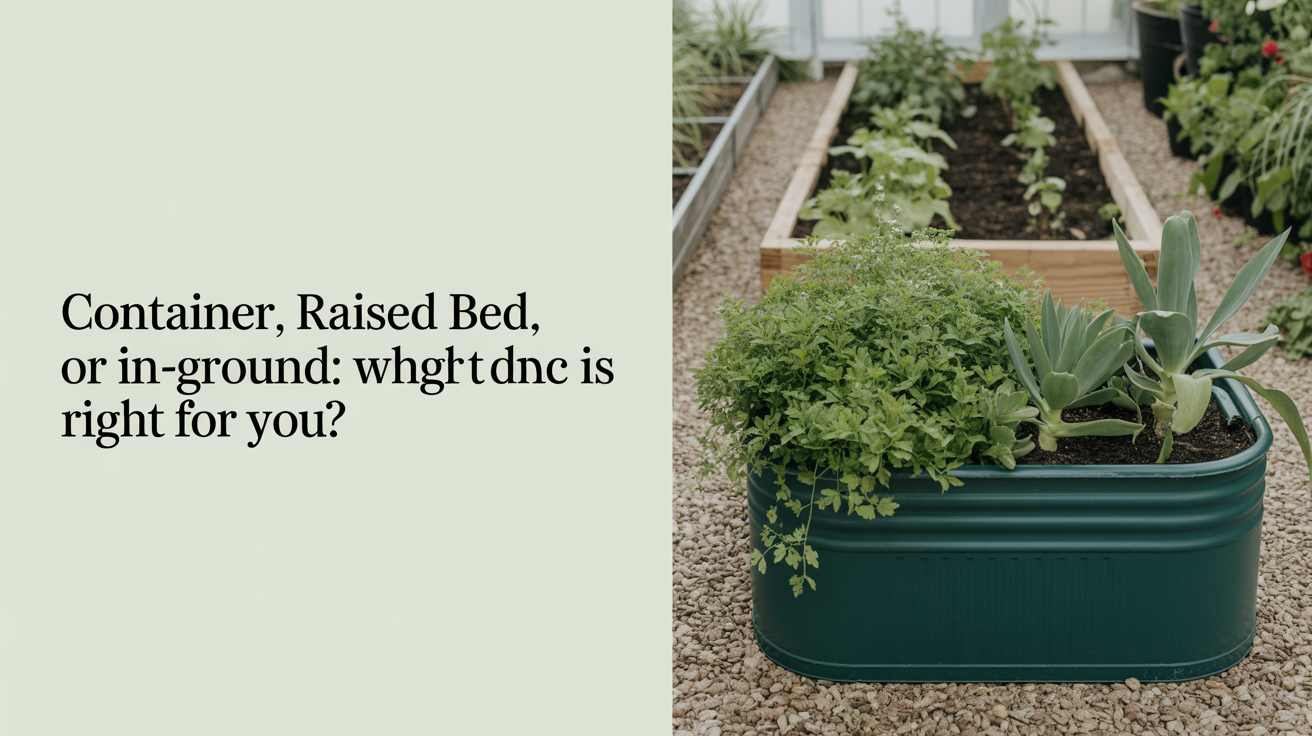
The three most common ways to grow vegetables at home each have real advantages and real drawbacks, and the right choice depends almost entirely on your specific situation, not on what looks best in someone else's backyard.
What Each Garden Type Actually Looks Like
Before comparing them, it helps to be precise about what each option involves.
Container gardening means growing in pots, buckets, grow bags, or any vessel you fill with potting mix. Containers can sit on a balcony, a patio, a driveway, or even a rooftop. You control the soil entirely because you buy or mix it yourself. Containers range from a five-gallon bucket for a single tomato plant to large fabric grow bags that hold enough soil for a small pepper plant collection.
Raised bed gardening means building or buying a frame, setting it on top of your existing ground (or sometimes on pavement), and filling it with a custom soil blend. The frame is typically 8 to 24 inches deep and anywhere from 2 feet by 4 feet up to 4 feet by 8 feet. The bed sits in one spot permanently or semi-permanently, and you never walk on the growing area, which keeps the soil loose.
In-ground gardening means digging directly into your native soil, amending it, and planting in place. This is how most traditional vegetable gardens have worked for generations. No frame, no purchased growing medium beyond amendments, just whatever ground is under your feet.
Each is a legitimate way to grow food. None is automatically better. They suit different people, budgets, and spaces.
Side-by-Side Comparison
| Factor | Containers | Raised Beds | In-Ground |
|---|---|---|---|
| Startup cost | Low to medium (pots + potting mix) | Medium to high (lumber or kits + soil blend) | Low (mainly amendments + tools) |
| Soil control | Complete | Complete | Partial (working with native soil) |
| Setup effort | Low | Medium | Medium to high |
| Drainage | Excellent | Good to excellent | Variable |
| Watering frequency | High (dries out fast) | Medium | Lower (native soil holds moisture longer) |
| Space needed | Minimal (a balcony works) | Small to medium yard or patio | Dedicated garden bed |
| Mobility | High (move pots easily) | Low (frame stays put) | None |
| Scalability | Easy to add more pots | Requires building more beds | Easy to expand beds |
| Best for | Renters, small spaces, patios | Compacted soil, bad native soil, beginners | Large harvests, low-cost expansion |
The Real Cost of Each Option
Cost is where most guides gloss over the details. Here is a more honest breakdown.
Containers cost very little to start. A few five-gallon buckets, some grow bags from a hardware store, and a bag or two of potting mix will run you under $50 for a small setup. The ongoing cost is potting mix, since containers need refreshed or replaced soil each season. Potting mix is more expensive per cubic foot than bulk soil blends.
Raised beds have higher upfront costs. A single 4-by-8 cedar frame from a kit typically runs $60 to $150 before you fill it. And filling a raised bed takes more soil than most beginners expect. A 4-by-8 bed that is 12 inches deep needs roughly 32 cubic feet of growing medium. Buying quality premixed raised bed soil in bags adds up quickly. Ordering bulk delivery of a compost-topsoil blend is cheaper but requires a large order and somewhere to put it. Once built and filled, though, a raised bed costs very little to maintain year over year.
In-ground is usually the lowest upfront cost, since you are working with what is already there. The main expense is amendments: compost, aged manure, or other materials to improve your native soil. The hidden cost is time: digging and improving clay or sandy soil takes real effort and can take multiple seasons before results feel consistent.
Who Each Method Actually Suits
Containers suit you well if:
- You rent and cannot modify the yard or install permanent structures
- Your only outdoor space is a balcony, patio, or rooftop
- You want to be able to move plants indoors before frost or out of harsh sun
- You want to start small and experiment with one or two crops before committing
- You grow in a climate with short seasons and want to extend it by moving pots
The main challenge with containers is watering. Small pots can dry out in a day or two during hot weather, which makes containers less forgiving if you travel or have an irregular schedule.
Raised beds suit you well if:
- Your native soil is clay-heavy, sandy, rocky, or compacted
- You want to garden but have mobility limitations (a tall raised bed is easier on your back and knees)
- You want clean paths between beds and a tidy layout
- You are starting out and want predictable, controllable growing conditions
- Your yard has drainage problems
For many beginners, raised beds are the best first step. You skip the work of rehabilitating native soil, you start with a known growing medium, and the contained space is manageable. Starting a vegetable garden from scratch is much less intimidating when you are working with a single 4-by-8 bed rather than an open patch of ground.
In-ground suits you well if:
- You want to grow a lot of food and cost is a priority
- Your native soil is already decent or sandy (easy to amend)
- You have the time and energy to improve soil gradually over seasons
- You want to grow sprawling crops like winter squash, melons, or sweet corn that would be impractical to contain in a bed or pot
- You plan to expand your garden significantly over time
In-ground is the most scalable option. Once the soil is in good shape, adding more growing area costs almost nothing. It is also the best setup for crops that spread wide or send down deep taproots.
Soil and Watering: The Practical Day-to-Day Differences
Soil control affects what you can actually grow and how much trouble you have along the way.
With containers and raised beds, you choose and mix your growing medium from the start. This means you can dial in drainage, organic matter content, and pH before you plant anything. You are unlikely to inherit the compacted, nutrient-depleted, or overly alkaline soil that frustrates so many in-ground gardeners in the first season.
With in-ground beds, you work with what is there. That can be an advantage if you have good loamy soil, but most suburban yards do not. Years of construction activity, lawn maintenance, and surface compaction leave many home plots with soil that needs real work before vegetables thrive. Testing your native soil before deciding is a worthwhile step.
Watering frequency follows a clear pattern. Containers dry out fastest because of their small soil volume exposed on all sides to air. A hot afternoon can drain a five-gallon pot fast. Raised beds dry out faster than in-ground soil but slower than containers. In-ground soil, especially with mulch on top, holds moisture the longest and typically needs the least frequent watering.
Choosing the easiest vegetables to start with also helps you match garden type to crop. Lettuce and herbs do well in containers. Root vegetables like carrots and parsnips need deep, loose soil that suits a raised bed or a well-prepared in-ground row.
Sun, Space, and Siting Considerations
Regardless of which garden type you choose, vegetable growing depends on sunlight more than almost any other factor. Most fruiting crops (tomatoes, peppers, cucumbers, squash) want six to eight hours of direct sun each day. Leafy crops can manage with four to five hours. Understanding how much sun your garden actually gets is a step worth taking before you decide where to put anything.
Containers have one clear advantage here: you can move them. If a spot turns out shadier than expected in midsummer, shift the pot. You cannot do that with a raised bed or an in-ground row.
Space requirements also differ. A container setup can fit in tight quarters; a 10-by-10 foot patio can hold a useful mix of pots. Raised beds need enough room for the frame plus paths. In-ground beds can be as large as you want but need a yard rather than a paved surface.
Frequently Asked Questions
Can I mix all three methods in one garden?
Yes, and many experienced gardeners do. Containers work well for herbs near the kitchen, raised beds for main crops like tomatoes and beans, and in-ground rows for sprawling crops like squash. There is no rule that says you have to pick one.
Which method is best for a first-time vegetable gardener?
A single raised bed is often the easiest starting point. You control the soil from day one, the scale is manageable, and the confined space makes watering and weeding easier to keep up with. If you have no ground at all, start with containers.
Do raised beds really warm up faster in spring?
Yes. Raised beds sit above ground level and the soil in them does warm up earlier than in-ground soil, which can extend your growing season by a week or two in cooler climates. This matters most for heat-loving crops like tomatoes and peppers.
How deep do containers need to be for vegetables?
Depth depends on what you are growing. Lettuce and herbs do fine in six inches of soil. Tomatoes, peppers, and eggplant need at least 12 to 14 inches. Carrots and parsnips need 12 inches of loose soil minimum, and a deeper container or a deep raised bed is better.
Is in-ground gardening harder to start than raised beds?
Usually yes, in the first season. If your soil needs improvement, you will spend real effort amending it and the results may not be great right away. By the second or third season, a well-tended in-ground bed can rival or outperform raised beds, especially for moisture retention. The payoff is a long-term investment.