Harvest & Storage
How to Cure and Store Onions, Garlic, and Winter Squash
Learn how to cure onions, garlic, and winter squash so they last months in storage. Includes curing times, temperatures, and a quick-reference table.
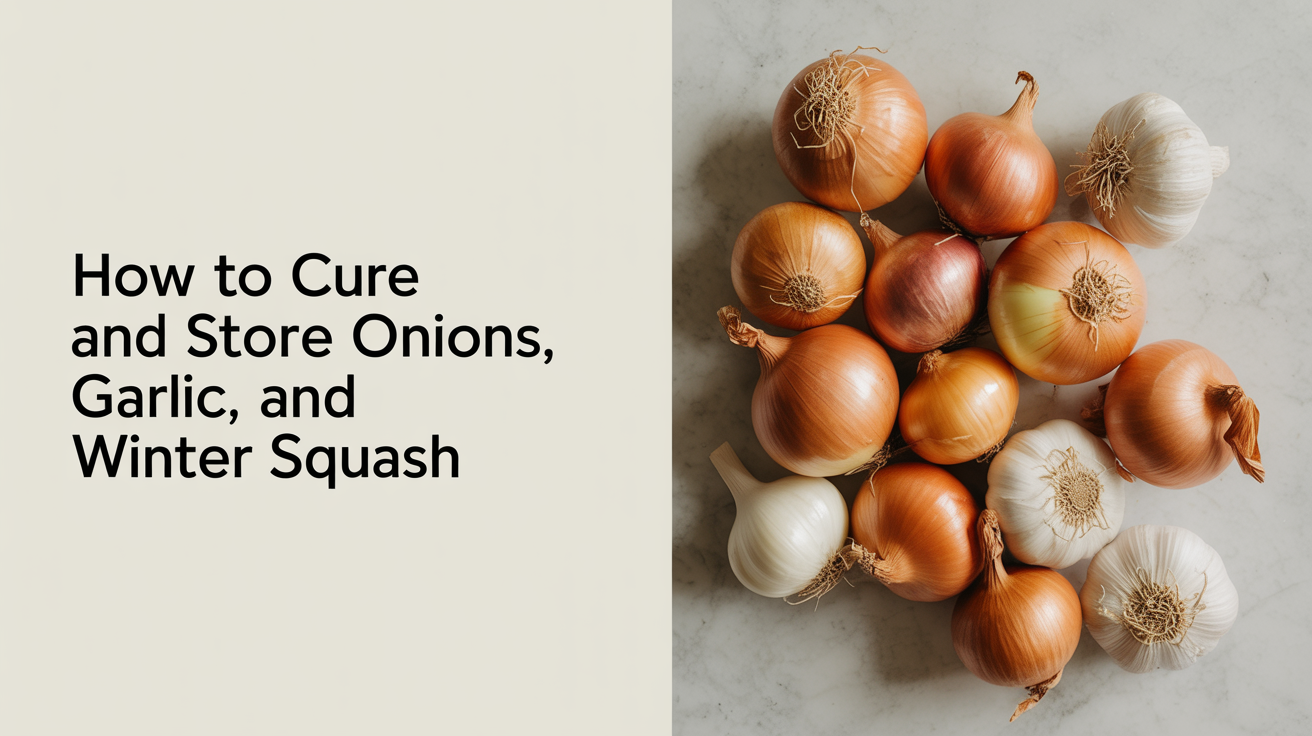
Curing is what turns a freshly pulled onion into one that lasts half a year. It means letting the outer skins and neck tissue dry down completely before you put anything in long-term storage, and skipping it is the most common reason homegrown onions and squash go soft or mold within a few weeks.
What Curing Actually Does
When you pull an onion or cut a squash from its vine, the outer tissue is still damp. In storage, that moisture invites mold and bacteria through any cut surface or thin skin. Curing removes that moisture by drying the neck (the tissue just above the bulb) down to a tight, papery seal, and hardening the outer wrapper leaves until they crinkle and rustle.
For winter squash, curing thickens and hardens the skin over minor surface cuts and scrapes that happen at harvest, so nothing can work its way in during months of storage.
Without a cure:
- Onions and garlic feel firm when you first store them, then turn soft and rotten at the neck within a month or two
- Winter squash skins stay thin enough that small nicks from harvest become entry points for rot
With a proper cure, onions commonly last 6 to 12 months, garlic 6 to 9 months, and butternut squash 3 to 6 months.
How to Cure Onions and Garlic
The process is the same for both crops. Pull them when the leaves fall over or the tops dry down, shake off loose soil (do not wash them), and move them to a warm, dry, well-ventilated spot.
What "warm, dry, and airy" looks like in practice:
- A covered porch with good airflow
- A garage with a box fan running past the bulbs
- An open shed where humidity stays low
- Indoors near an open window in late summer
Spread them in a single layer on wire shelving, old window screens, or a mesh rack. If you pile them, the inner ones stay damp. Airflow is the key variable, not the exact temperature, though 75 to 85 degrees Fahrenheit is the target range.
Curing timelines:
- Onions: 2 to 4 weeks (longer for thick-necked varieties)
- Garlic: 3 to 4 weeks
You know they are ready when:
- The neck above the bulb is completely dry and tight, with no give when you squeeze it
- The outer wrappers are papery and crinkle when touched
- The roots have dried to a brittle frizz
Once cured, trim the roots and cut the dried tops to about an inch above the bulb (or leave them long for braiding). Store in a mesh bag, open crate, or braided bunch in a cool, dry location away from light.
One thing to avoid: direct sun. It can scorch the outer layers and heat the bulbs unevenly. Shade and airflow matter more than heat.
How to Cure Winter Squash and Pumpkins
Winter squash needs a shorter, warmer cure than alliums. Harvest with at least 2 inches of stem attached. A snapped-off stem creates an open wound at the top that invites rot and shortens storage life significantly. A good readiness test: the rind should resist a fingernail scratch.
Move harvested squash to a warm spot for the curing period:
- 80 to 85 degrees Fahrenheit is the target
- A warm room indoors, a greenhouse bench, or a sheltered spot in full sun all work
- Keep squash off concrete floors (concrete stays cool and damp; set them on cardboard or a rack instead)
Curing times by type:
- Butternut, delicata, pumpkins, and most winter squash: 10 to 14 days
- Acorn squash: 5 to 7 days only (longer curing reduces quality for acorn)
After curing, move squash to a cool, dry room for long-term storage. A basement corner, a root cellar shelf, or an unheated spare room all work well. Avoid the refrigerator. Temperatures below 50 degrees Fahrenheit cause chilling injury in most winter squash, which shows up as water-soaked flesh and off flavors after you cut it.
Storage Conditions by Crop
Here is a reference table for the most common storage crops. All temperatures are Fahrenheit.
| Crop | Curing Temp | Curing Time | Storage Temp | Humidity | Shelf Life |
|---|---|---|---|---|---|
| Onions | 75-85°F | 2-4 weeks | 32-40°F | Low (60-70%) | 6-12 months |
| Garlic (softneck) | 75-85°F | 3-4 weeks | 32-50°F | Low (60-70%) | 6-9 months |
| Garlic (hardneck) | 75-85°F | 3-4 weeks | 32-50°F | Low (60-70%) | 4-6 months |
| Butternut squash | 80-85°F | 10-14 days | 50-55°F | Medium (50-70%) | 3-6 months |
| Delicata squash | 80-85°F | 10-14 days | 50-55°F | Medium (50-70%) | 3-4 months |
| Acorn squash | 80-85°F | 5-7 days | 50-55°F | Medium (50-70%) | 1-3 months |
| Pumpkins | 80-85°F | 10-14 days | 50-55°F | Medium (50-70%) | 2-4 months |
A few things to notice:
- Onions and garlic want cold AND dry. An unheated garage in winter, or the coldest corner of a basement, works well for most of the US.
- Squash wants moderately cool but not cold. A 55-degree basement is better than a refrigerator.
- Acorn squash stores the shortest time of the group. Plan to eat it first.
- Butternut stores the longest among winter squash and is usually the last one left by spring.
- Softneck garlic outlasts hardneck garlic in storage, which is why it is the type sold in most grocery stores and the one used for braiding.
Mistakes That Shorten Storage Life
Storing in plastic bags. Plastic traps moisture. Mesh bags, paper bags with holes punched in them, and open wooden crates all allow the airflow that keeps onions and garlic dry.
Mixing good bulbs with damaged ones. One soft onion with neck rot will spread to its neighbors. Sort before storing and check your storage spot every few weeks. Remove anything that smells off or feels soft.
Skipping the cure because you want to use the crop now. You can eat uncured onions and squash immediately after harvest, and they taste fine. Curing is only for what you want to keep for months. Pull what you need for this week and cure the rest.
Storing squash below 50 degrees. An unheated garage in a cold climate is fine for onions but can damage squash. Check your actual temperatures before choosing a spot.
Letting squash touch each other in a tight pile. If one starts to rot, it will spread to the ones touching it. Give each squash a little space, or at least check them regularly.
For a broader look at keeping your harvest in good shape, how to store fresh vegetables so they last longer covers the full range of crops from leafy greens to roots.
Frequently Asked Questions
How do I know if my onions are cured enough? Squeeze the neck just above the bulb. If it feels tight and dry with no give, and the outer leaves rustle and crinkle when you touch them, the onion is ready. If the neck still has any softness or dampness, leave it for a few more days. Under-cured onions will rot in storage within a few weeks.
Can I cure onions indoors? Yes. A dry room with a fan running nearby works well. The key is low humidity and moving air. Avoid curing near a sink or in a damp basement. A spare room or a corner of the kitchen near an open window in late summer works in most homes.
Do I need to wash onions and garlic before storing them? No. Washing adds moisture and defeats the whole point of curing. Brush off loose dirt and leave the dry outer skin intact. Wash them right before you are ready to use them, not before storage.
My winter squash has a small soft spot. Can I store it? No. A soft spot means decay has already started inside. Use that squash immediately, cut out the affected area, and set the rest aside for the kitchen. Only squash with a completely hard, unbroken rind will keep in long-term storage.
How long does garlic last compared to onions? Both last roughly 6 to 9 months when properly cured and kept cold and dry. The main difference is within garlic types: softneck varieties can push past 9 months in ideal conditions, while hardneck varieties begin to lose quality around the 4 to 6 month mark. If you want garlic that carries through to the following spring, grow or buy softneck.