Getting Started
The Beginner Gardening Tools You Actually Need
A no-fluff guide to the essential vegetable garden tools every beginner should own — and what you can safely skip until later.
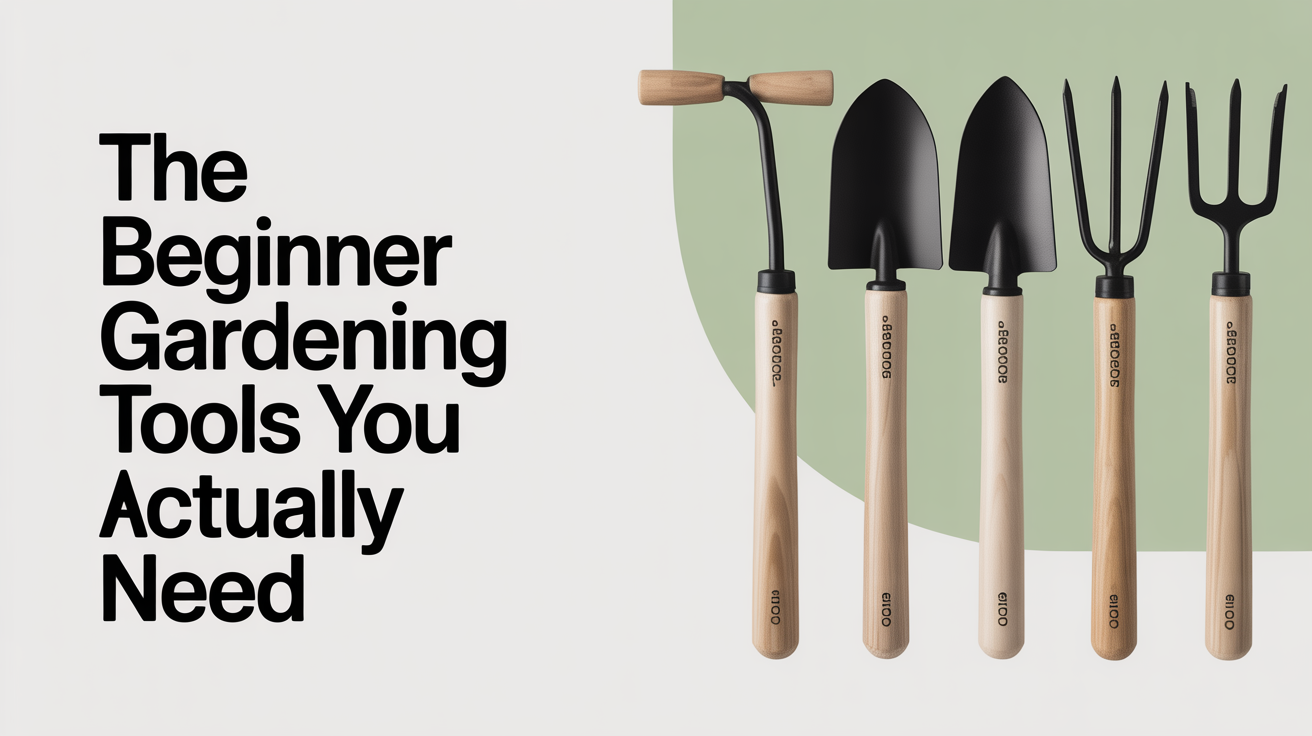
You do not need a garage full of equipment to grow vegetables. A short list of quality basics will cover almost every task you encounter in a first season, and buying fewer, better tools beats filling a shed with cheap ones that bend or break mid-project. This guide separates the genuine must-haves from the gadgets that can wait (or stay at the store).
If you are still deciding what to plant, the complete beginner's guide to starting a vegetable garden covers site prep, spacing, and soil before you spend a dollar on equipment.
The Short List
Buy these first. They handle soil prep, planting, watering, and cutting, the four things you do every single time you garden.
Hand Trowel
A hand trowel is the tool you will reach for more than any other. Use it to dig planting holes, transplant seedlings, scoop compost, and poke around for pests near the roots. Look for a single-piece forged steel blade, welded or hollow-tang trowels separate at the joint after a season of hard use. A comfortable grip matters; if it rubs your palm after five minutes in the store, it will blister after an hour in the garden. Expect to pay $15–30 for one that lasts years.
Garden Gloves
Bare hands in soil sounds romantic until you hit a hidden rock at speed or handle a thorny tomato stem. A fitted pair of gloves with a leather or synthetic palm and a breathable fabric back protects your hands without killing your dexterity. Avoid thick rubber-coated gloves for fine work, you lose the feel needed to handle seedlings without crushing them. Buy two pairs so one can dry while you use the other.
Bypass Pruners (Hand Pruners)
Pruners do the precision work a trowel cannot: harvesting zucchini, trimming pepper plants, cutting back dead foliage, snipping herbs. Bypass pruners (two blades that pass each other like scissors) make cleaner cuts than anvil types, which can crush soft stems and invite disease. Keep them sharp. A blunt pruner tears tissue and slows plant recovery. Most garden-supply stores carry a sharpening stone sized for pruner blades; a quick touch-up before each season is enough.
Watering Can or Garden Hose with a Adjustable Nozzle
Seeds and seedlings need gentle watering, a hard blast from a straight hose washes them out of the soil and knocks over young plants. A watering can with a rose head (the sprinkler attachment) gives you control in a small space. For a larger plot, a hose with a multi-setting nozzle that includes a shower or mist setting does the same job faster. Either works; the choice is mostly about plot size and how far you are from an outdoor tap.
Tools That Are Worth Adding in Season Two
These are not mandatory for a first garden, but most growers pick them up once they understand what frustrates them most.
Garden Fork
A garden fork (sometimes called a digging fork) breaks up compacted soil and works compost into beds far more effectively than a trowel can manage at scale. If your soil is heavy clay or you are expanding a bed that has not been worked before, a fork becomes essential quickly. For raised beds with loose, well-amended soil, you may go a full season without missing one.
Hoe
A hoe scrapes weeds off at the soil line before they get established. The classic flat or stirrup hoe works across the top inch of soil and can cover ground in minutes that hand-weeding would take half an hour. The catch: a hoe is most useful between rows of established plants, so it suits in-ground beds more than tightly spaced raised beds.
Garden Kneeler or Kneeling Pad
Not glamorous, but your knees will thank you. Even a folded piece of foam works. If you plan to spend real time in the garden, a kneeling pad is worth the $10–15.
Soil Thermometer
Soil temperature determines whether seeds germinate or just sit in cold ground and rot. A simple dial or digital thermometer takes the guesswork out of spring planting, knowing when to plant your easiest vegetables gets much easier when you know your soil has crossed the 50°F or 60°F threshold most crops need.
Tool Comparison Table
| Tool | Primary Use | Priority |
|---|---|---|
| Hand trowel | Digging, transplanting, scooping | Must-have |
| Garden gloves | Hand protection | Must-have |
| Bypass pruners | Harvesting, cutting, trimming | Must-have |
| Watering can / hose nozzle | Gentle, controlled watering | Must-have |
| Garden fork | Breaking up soil, incorporating compost | Add in season 2 |
| Hoe | Surface weeding between rows | Add in season 2 |
| Kneeling pad | Comfort for extended work | Add when needed |
| Soil thermometer | Timing plantings accurately | Add when needed |
| Dibber / bulb planter | Making uniform planting holes | Skip, trowel does this |
| Long-handled cultivator | Loosening soil between plants | Skip for small beds |
| Specialty gadgets | Various single tasks | Usually skip |
What You Can Skip
Seed-starting heat mats, soil moisture meters, magnetic kneelers, battery-powered weeders, these have uses, but none of them will determine whether your first garden succeeds or fails. The single-task gadgets are often marketed heavily to beginners precisely because beginners do not yet know what they do and do not need. Buy basics first, then add tools that solve a specific problem you have actually encountered.
Caring for Your Tools
Cheap tools maintained well outlast expensive tools neglected in a wet shed. After each session, knock soil off blades, wipe metal parts dry, and hang tools where air can circulate. Once a season, rub a light coat of linseed oil on wooden handles to prevent cracking and touch up metal edges with a sharpening stone or file. A little attention extends tool life by years.
Proper site selection matters as much as tools. Before you dig, check how much sun your vegetable garden actually needs, the wrong spot undermines everything else.
Frequently Asked Questions
How much should a beginner spend on gardening tools?
A practical starter kit, trowel, gloves, pruners, and a watering can, can cost $50–80 for decent mid-range quality. Spend a bit more on the trowel and pruners; they take the most wear. You can add secondary tools over time as you identify actual gaps, rather than guessing in advance.
Is a shovel or spade necessary for a vegetable garden?
For raised beds, usually no. A hand trowel handles most planting tasks, and a garden fork (if you have one) manages soil work at bed scale. A full-size spade becomes useful for digging new in-ground beds or turning a compost pile, but it is not a day-to-day gardening tool for most beginners.
Can I use kitchen scissors instead of pruners?
In a pinch, yes, for herbs or very soft stems. Kitchen scissors dull fast in the garden (soil grit is abrasive), and they are not shaped for the angles you encounter cutting thick pepper stems or harvesting squash. A dedicated pair of bypass pruners is cheap enough that substituting scissors is not worth the frustration.
Do I need separate tools for raised beds versus in-ground gardens?
The same basic kit works for both. Raised beds (with their looser soil) need a fork less urgently than in-ground plots, and a hoe is less practical in a compact raised bed. In-ground gardeners tend to reach for a hoe and fork sooner; raised-bed growers lean harder on the hand trowel.
What is the difference between a trowel and a dibber?
A dibber (or dibble) is a pointed stick for poking uniform holes at a set depth, useful for planting bulbs or seeds in rows. A hand trowel does the same job with more flexibility. Beginners do not need both; the trowel handles everything a dibber does and then some.