Getting Started
Where to Put Your Vegetable Garden: Choosing the Right Spot
Learn how to pick the best location for your vegetable garden. We cover sun, drainage, water access, and more so your first garden actually grows.
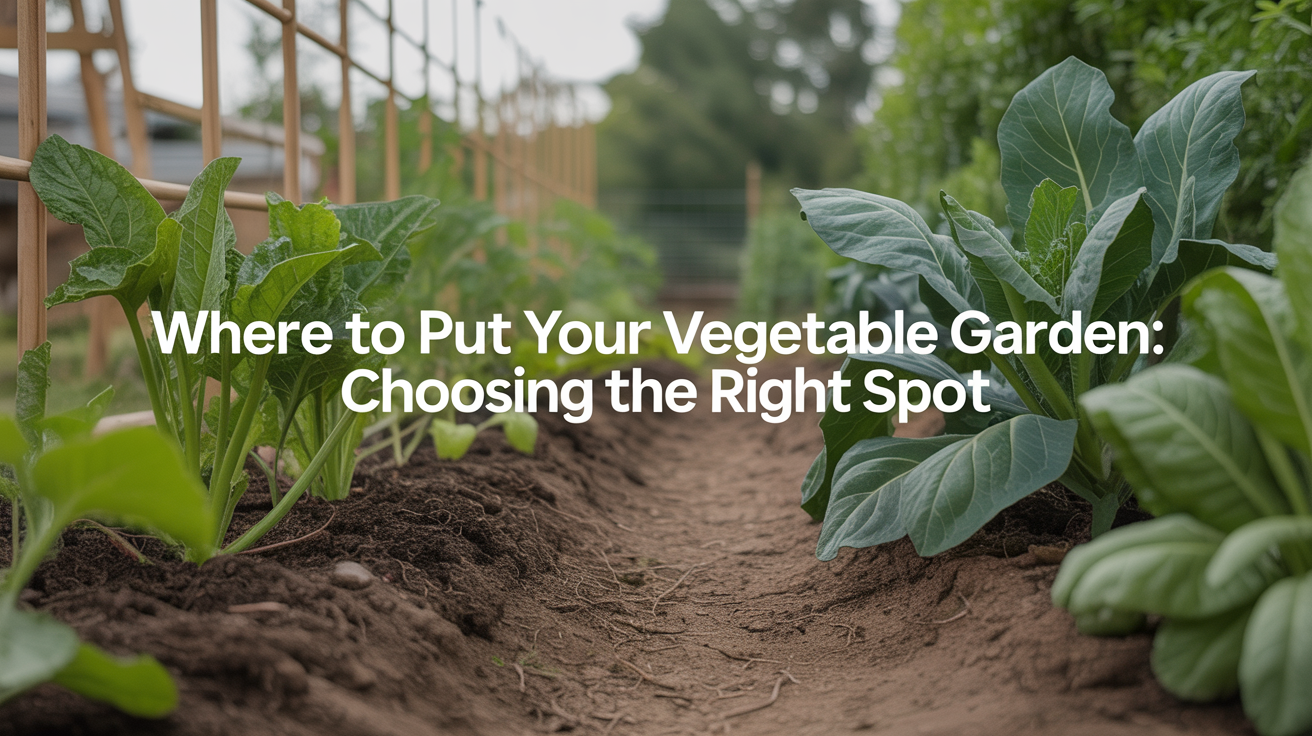
The single biggest factor in whether a beginner's vegetable garden succeeds or fails is not the soil, the seeds, or the tools. It's where the garden sits. Pick the right spot and vegetables will grow despite beginner mistakes. Pick the wrong one and even experienced gardeners struggle. This guide walks you through every factor that matters for vegetable garden placement, so you can walk around your yard with confidence and make a smart decision before you dig a single hole.
Start With Sun
Most vegetables need at least six hours of direct sunlight per day. Eight is better. This is non-negotiable for crops like tomatoes, peppers, squash, cucumbers, and beans. Leafy greens like lettuce and spinach can get by with four to five hours, but even they produce more in full sun.
Walk your yard at different times of day and note where shade falls. A spot that looks sunny at 8 a.m. may be shaded by a fence by noon. The best way to evaluate sun is to check the space at 9 a.m., noon, and 3 p.m. on a sunny day. If it's in direct sun at all three checks, it's a solid candidate.
South-facing and west-facing areas usually get the most sun in the Northern Hemisphere. North sides of buildings, fences, and dense hedgerows are typically the worst locations. Avoid planting under or near large trees, which cast moving shade and compete aggressively for water and nutrients through their root systems.
If your best sunny spot is partially shaded, don't give up, put your greens and herbs there and save the sunniest corner for tomatoes and squash. For a deeper look at exactly how much sun different crops need, see how much sun does a vegetable garden really need.
Water Access Matters More Than You Think
A garden that's inconvenient to water will get neglected. That's not a character flaw, it's just how human behavior works. If you have to drag a hose across the entire yard, coil it around a tree, and fight a kink every time you water, you'll start skipping days. Skipped watering during a heat spell can kill a vegetable garden fast.
The best location for a vegetable garden is close to an outdoor spigot (hose bib). Ideally within 50 feet, so a standard garden hose reaches without strain. If you're placing a garden near a shed or fence, check what's on the other side before committing, a spigot around the corner is much better than one at the far end of the property.
Drip irrigation or soaker hoses make watering more efficient, but they still need a water source to connect to. Plan for it early.
Avoid Low Spots and Poor Drainage
Low areas in a yard collect water after rain. Standing water drowns vegetable roots within days and creates conditions where fungal diseases thrive. If you've ever noticed a spot that stays soggy for days after a storm, or one where ice forms and lingers in winter, that's a frost pocket and drainage problem rolled into one, and it's the wrong place for vegetables.
Do a simple drainage test before committing to a location: dig a hole about 12 inches deep, fill it with water, and check it an hour later. If most of the water has soaked in, drainage is fine. If it's still sitting there, you'll need to either build raised beds (which sidestep the problem entirely) or choose a different spot.
Gentle slopes drain better than flat ground, and far better than low-lying areas. A slight slope also helps cold air drain away overnight, reducing frost risk in spring and fall, useful if you want to stretch your growing season.
Proximity to the House
Experienced gardeners will tell you: a garden you can see from the kitchen window gets tended. One that's tucked behind the garage gets forgotten. You'll notice when something needs water, when a pest is moving in, or when a plant has tipped over. Small problems get caught early.
This isn't about aesthetics. It's about how often you'll actually walk out there. Placing your vegetable garden closer to a door you use every day, the back door, the side gate, means you'll check on it during a 30-second trip outside. That consistency is worth more than an extra hour of sun somewhere remote.
If you're deciding between two spots with similar sun and drainage, choose the closer one.
Wind, Trees, and Buildings
Strong winds dry out soil quickly, damage tall plants like staked tomatoes, and make it harder for pollinators to land on flowers. A natural windbreak, a fence, hedge, or building wall, on the north or northwest side of a garden can help without casting shade on the garden itself.
The problem with trees is usually roots, not shade. A mature maple or oak tree can send roots 20 to 40 feet from its trunk, and those roots will compete with vegetable plants for water and nutrients. Keep your garden at least 10 to 15 feet away from the drip line (the outermost edge of the canopy) of any large tree.
Buildings can be useful on the north side as a windbreak but problematic on the south or west, where they'll shade your garden during peak sun hours. Eaves and overhangs can also create dry strips where rain never reaches, so plants near a wall may need more supplemental watering.
Garden Siting Checklist
Use this table to evaluate any candidate spot in your yard before committing:
| Factor | What to Look For |
|---|---|
| Sun hours | 6+ hours of direct sun daily; 8 is ideal |
| Morning sun | East-facing exposure dries dew fast, reducing disease |
| Drainage | No standing water 1 hour after rain |
| Slope | Gentle slope preferred; avoid bowls and low spots |
| Distance to water | Within 50 feet of a spigot or rain barrel |
| Distance to house | Visible from a regularly used door or window |
| Tree proximity | At least 10–15 feet from large tree drip lines |
| Wind exposure | Protected on north/northwest side; open on south |
| Access | Easy to walk around with a wheelbarrow or hose |
| Soil | Loose, not compacted clay (or use raised beds) |
Run through this list for each spot you're considering. A spot that checks seven or eight of these boxes is worth building on. A spot that fails on sun or drainage is hard to compensate for.
Sizing Your First Garden
Once you've identified the right location, resist the urge to make it huge. A 4x8 foot raised bed or a 10x10 foot in-ground plot is enough for a first-year garden. Smaller plots are easier to water, weed, and maintain, and success in a small space builds the confidence to expand next year.
If the best spot in your yard is oddly shaped or partially shaded, consider raised beds. They let you control soil quality, drain independently of surrounding ground, and can be positioned precisely to catch the most sun even in a challenging yard. They're also easier on your back and knees.
For help deciding what to plant once you've chosen your spot, the easiest vegetables to grow for first-time gardeners is a good next read.
Frequently Asked Questions
Can I put a vegetable garden in partial shade?
Yes, with limitations. Leafy greens like lettuce, spinach, kale, and arugula can produce in four to five hours of sun. Herbs like parsley, cilantro, and mint also tolerate partial shade. Fruiting vegetables, tomatoes, peppers, squash, cucumbers, beans, need at least six hours and will yield poorly or not at all in a shady spot.
How close to a fence can I plant vegetables?
You can plant right up to a fence on the south or west side, since the fence provides useful wind protection without shading the plants. Avoid planting close to a fence on the north or east side of your garden, as it will cast shade during part of the day. Leave a foot or two of clearance for air circulation and access.
What if my yard is mostly shaded?
Consider growing in containers on a sunny patio, balcony, or driveway. Large pots work well for tomatoes, peppers, herbs, and greens. You can also look into growing sprouts or microgreens indoors near a south-facing window. If you rent or have limited outdoor space, a community garden plot is another option, most plots are sited specifically for maximum sun.
Does it matter which direction my garden rows run?
For most home gardens, row orientation matters less than sun and drainage. If you have a choice, running rows north to south allows taller plants to cast shade down the row rather than across it, which helps shorter plants on either side. But this is a refinement, not a requirement.
How do I know if my soil is good enough before digging?
Grab a handful of slightly damp soil and squeeze it. Good garden soil forms a ball that crumbles when you poke it. Heavy clay stays in a tight clump and cracks. Sandy soil falls apart immediately. Either extreme is workable, add compost to both, but if you want to sidestep soil problems entirely, raised beds with purchased garden mix are the fastest path to a productive first garden. To learn more about getting started from scratch, see how to start a vegetable garden: a complete beginner's guide.