Raised Beds & Soil
How Deep Should a Raised Garden Bed Be?
Most vegetables need at least 6 inches of soil, but 10–12 inches is better. Here's how to choose the right raised bed depth for your crops and setup.
Six inches of soil is the bare minimum for a raised bed, but 10 to 12 inches gives most vegetables enough room to thrive without fighting for space. If you plan to grow carrots, parsnips, or other root crops, aim for 18 inches or more. And if your bed sits on concrete, a patio, or any non-soil surface, the full depth lives in the bed itself, roots cannot borrow anything from below.
That's the short answer. The rest of this article explains why those numbers matter, how to match depth to what you want to grow, and when a taller bed makes sense for reasons beyond root space.
At a Glance
- Minimum workable depth: 6 inches, for lettuce, radishes, and herbs only.
- All-purpose depth: 10 to 12 inches covers tomatoes, peppers, beans, and brassicas.
- Root crops (carrots, parsnips): 18 to 24 inches, or the roots come out stubby and forked.
- On concrete, decking, or pavers, the frame is the whole root zone, add 2 to 4 inches over the soil-based numbers above.
- A 4x8-foot bed at 12 inches deep holds about 32 cubic feet of soil, roughly 21 bags of standard 1.5 cubic foot mix.
- Fresh fill settles 10 to 20 percent by the end of the first season, so build a little deeper than your target, or plan to top up with compost each spring.
Why Raised Bed Depth Matters
Soil depth controls two things: how far roots can travel, and how much water and nutrients the bed holds.
A shallow bed, say 4 inches, dries out fast and leaves little room for root systems to spread. You end up watering more often, and plants under stress produce less. A bed that's too shallow for a given crop will stunt growth even if everything else is perfect. University of Missouri Extension puts the general rule at a 6- to 12-inch rooting zone for most vegetables, deeper where you can manage it, which lines up with the crop-by-crop numbers below.
When a raised bed sits directly on garden soil, roots can punch through the bottom and reach deeper. That's a safety net: a bed that's nominally 8 inches deep might effectively give tomatoes 18 inches if the native soil below is loose and healthy. But on a paved surface, what's in the frame is all you get.
Depth by Crop Type
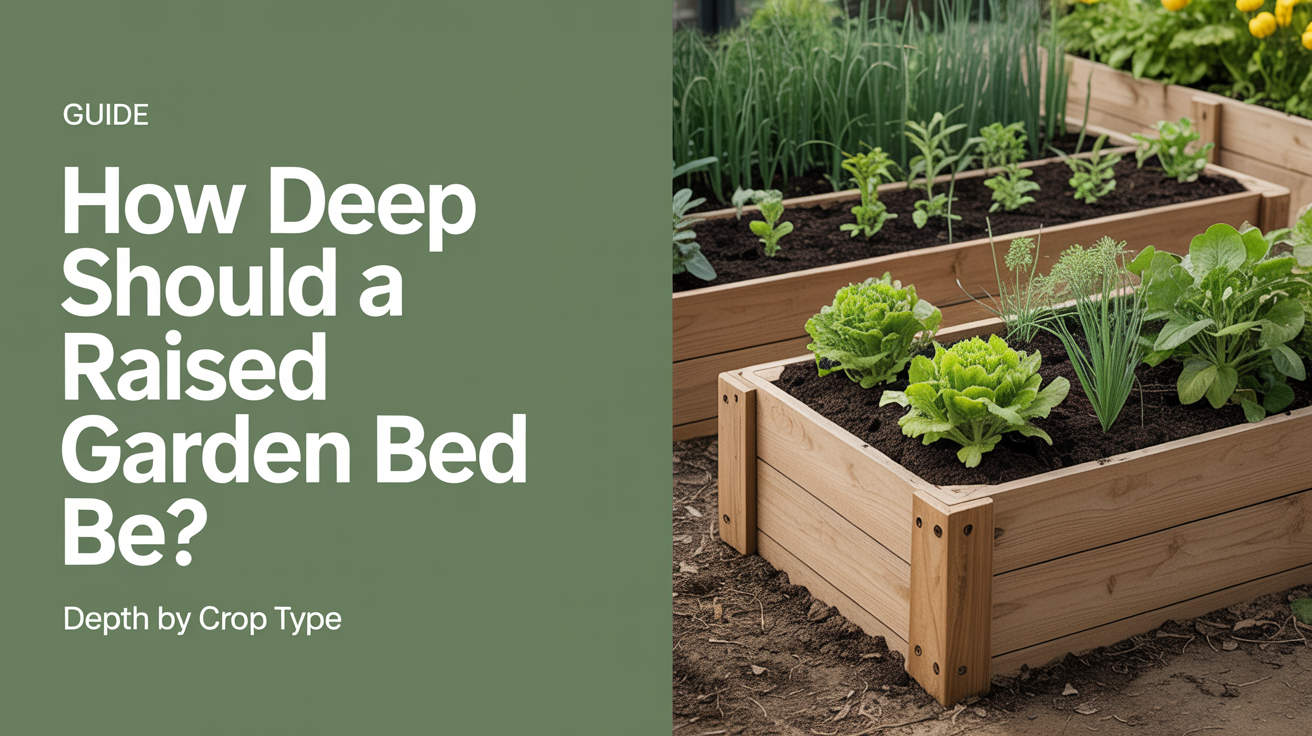
Different vegetables root at very different depths. Shallow-rooted crops (lettuce, radishes, herbs) work fine in 6 inches. Medium-rooted plants like tomatoes, peppers, and beans want 12 inches or more. Deep-rooted crops such as carrots, parsnips, and beets need at least 12 to 18 inches, and they'll produce straighter, fuller roots with more room.
Here's a practical reference:
| Crop | Root Depth | Recommended Bed Depth |
|---|---|---|
| Lettuce, spinach, arugula | 6–8 inches | 6 inches (minimum) |
| Radishes | 6–8 inches | 6 inches |
| Herbs (basil, parsley, cilantro) | 6–10 inches | 6–8 inches |
| Green beans, peas | 10–12 inches | 10–12 inches |
| Peppers, eggplant | 12–18 inches | 12 inches |
| Tomatoes | 12–24 inches | 12–18 inches |
| Broccoli, cabbage, kale | 12–18 inches | 12 inches |
| Cucumbers, zucchini | 12–18 inches | 12 inches |
| Beets | 12–18 inches | 12–18 inches |
| Carrots | 12–18 inches | 18 inches |
| Parsnips | 18–24 inches | 18–24 inches |
If you plan to grow a mix of crops in the same bed, build for the deepest one. A 12-inch bed covers most vegetables; 18 inches covers almost everything.
For more on filling a bed once you've chosen a depth, see what to fill a raised garden bed with.
How Much Soil a Given Depth Actually Takes
Depth decisions get real once you start pricing fill. Here's what a standard 4x8-foot bed needs at three common depths, using 1.5 cubic foot bags as the baseline (adjust down if you buy bulk by the cubic yard, which is usually cheaper past about 1 cubic yard):
| Bed depth | Soil volume | Bags needed (1.5 cu ft) | Bulk (cubic yards) |
|---|---|---|---|
| 6 inches | 16 cubic feet | About 11 bags | 0.6 yards |
| 12 inches | 32 cubic feet | About 21 bags | 1.2 yards |
| 18 inches | 48 cubic feet | About 32 bags | 1.8 yards |
Bagged mix typically runs 8 to 12 dollars per bag depending on region and blend, so going from a 12-inch to an 18-inch fill on one 4x8 bed can add well over 100 dollars in bagged material. That gap is exactly why the fill strategies further down this article (Hugelkultur-style layering, or cheap subsoil under a richer top layer) exist: they let you build deeper without paying premium prices for every cubic foot.
Beds Over Grass vs. Beds Over Hard Surfaces
Beds Placed on Soil or Grass
If your bed sits on lawn or bare ground, you're in good shape even with a shallower frame. Grass and weeds underneath will die off within a few weeks as sunlight is cut off, and the soil below remains available to roots. Many gardeners put down a layer of cardboard before filling the bed, it smothers existing vegetation and breaks down over the season, leaving a clear path for roots to continue downward.
In this situation, a 6 to 8-inch frame is workable for most crops because the frame depth isn't the hard limit. Still, a 10 to 12-inch frame is worth building once, it holds more water, compacts more slowly, and gives you flexibility to grow anything. One pitfall to watch for: if the native soil beneath is heavily compacted clay or construction fill, roots may not actually be able to punch through it even though it's technically "soil." Push a garden fork straight down into the ground before you build. If it stops hard within the first 6 inches, treat the site as if it were a hard surface and build to full depth in the frame.
Beds Placed on Concrete, Pavers, or a Deck
On a hard surface, the bed is a closed system. Every inch of root space must be inside the frame. This changes the math:
- Shallow crops (lettuce, herbs): 8–10 inches absolute minimum; 12 is comfortable.
- Most vegetables: 12–18 inches.
- Root vegetables: 18–24 inches, or grow shorter varieties bred for containers.
The tradeoff is weight. A 4x8-foot bed filled 18 inches deep with a quality soil mix weighs roughly 1,200 to 1,500 pounds. Check that your deck, patio, or balcony can bear it before you build. Most residential decks are rated for 40 to 60 pounds per square foot of live load, so a single 18-inch bed of that size (32 square feet of footprint) can approach or exceed the limit on its own, especially once you add the weight of the frame, the gardener, and a watering can. If you're building on a deck or balcony, get a straight answer on the load rating before you commit to depth, or split one large bed into two smaller ones spread across different joists.
Drainage also matters more on an impermeable surface, make sure the bottom of the frame isn't fully sealed. A few half-inch gaps between bottom boards, or a layer of landscape fabric instead of solid plywood, keeps water from pooling at the roots after a heavy rain.
Accessibility and Back-Saving Heights
Depth from the soil surface and height from the ground are related but separate choices. A bed can be set into the ground (so a 12-inch board sticks up 12 inches), set on legs, or anywhere in between.
If you or someone you garden with has difficulty bending, building taller, 24 to 36 inches from the ground, makes gardening much more comfortable. At that height, you can sit on the edge of the frame or on a stool and reach across without crouching. A bed 24 to 30 inches tall also works well for wheelchair access, since it puts the growing surface roughly at lap height. Taller beds also mean more fill material and more cost, so many people split the difference with a 16-inch tall frame that's still easy to reach.
For a walk-through of construction details, see how to build a raised garden bed.
A good frame height for most beginners who are building at ground level is 10 to 12 inches. That gives you genuine root depth without the cost of going taller, and it's enough for every common vegetable except long root crops.
What to Fill the Extra Depth With
One practical concern: filling an 18-inch bed with premium bagged potting mix gets expensive fast. There are a few approaches to bring the cost down without shortchanging your plants.
The Hugelkultur-inspired approach: fill the bottom 6 to 8 inches with logs, branches, straw, or cardboard, then top with a quality soil blend. The organic material decomposes slowly, adding nutrients over time, and wicks moisture during dry spells. Expect this base layer to compress noticeably in the first year or two as the wood breaks down, so a bed built this way will need extra topping up compared to one filled entirely with soil.
The simpler approach: fill the bottom 4 to 6 inches with subsoil or low-cost topsoil (not bagged potting mix), and reserve the top 10 to 12 inches for a richer blend your plants will actually root into. Most feeder roots live in the upper portion anyway.
Either way, the top layer, what your plants actually grow in, should be a well-draining, fertile mix. For specifics on what goes into that layer, see the best soil mix for a vegetable garden.
A Note on Soil Settling
Fresh fill settles 10 to 20 percent over the first season. A bed you fill flush to the top in spring may sit 2 inches lower by fall. That's normal. On a 12-inch bed, that's the difference between a full 12 inches and closer to 10 by midsummer, still enough for most crops, but worth planning for if you're right at the minimum for something like carrots. Top up with compost each year and you'll maintain both depth and fertility.
Frequently Asked Questions
Can a raised bed be too deep?
Not really, from the plant's perspective, more depth means more roots, more water retention, and better drought tolerance. The practical limits are cost of fill material and structural weight if you're building above a surface that has weight limits.
What is the minimum soil depth for vegetables?
Six inches is the functional minimum for shallow-rooted crops like lettuce and herbs. For most vegetables, 10 to 12 inches gives you enough margin that the bed performs well even as soil settles. Below 6 inches, you're fighting the bed.
Do I need landscape fabric at the bottom?
On soil, most gardeners skip it or use cardboard. Landscape fabric blocks weeds but also blocks worms and restricts root travel downward, both of which you want. On a hard surface, you don't need it at all, there's nothing below to block. A permeable layer (or just gaps between boards) is enough to let excess water drain.
How deep should a raised bed be for tomatoes?
Tomatoes are heavy feeders with large root systems. Aim for at least 12 inches; 18 is better if you can manage it. In a 12-inch bed over native soil, tomatoes will still push roots deeper, so it works. In a 12-inch bed over concrete, they'll be a bit cramped by midsummer.
Is a 6-inch raised bed enough?
For lettuce, spinach, radishes, and most herbs, yes. For anything else, peppers, beans, tomatoes, cucumbers, 6 inches is tight. If you're building once and want flexibility, skip 6 and go straight to 10 or 12.
How much soil do I need for a 4x8 raised bed?
At 12 inches deep, a standard 4x8-foot bed holds about 32 cubic feet of soil, roughly 21 bags of 1.5 cubic foot mix, or a little over a cubic yard if you're buying in bulk. Use length times width times depth (in feet) to calculate any other bed size before you order.
Should I build one deep bed or two shallower ones?
If cost or weight is the constraint, two 8 to 10-inch beds are often more practical than one 18-inch bed, since you can grow shallow and medium-rooted crops in both and reserve a single deeper bed just for carrots or parsnips. This also spreads the load if you're building on a deck.