Raised Beds & Soil
What to Fill a Raised Garden Bed With
Learn exactly what to fill a raised garden bed with: the ideal soil mix ratio, how to calculate cubic feet, cheap bottom-fill options, and what to avoid.
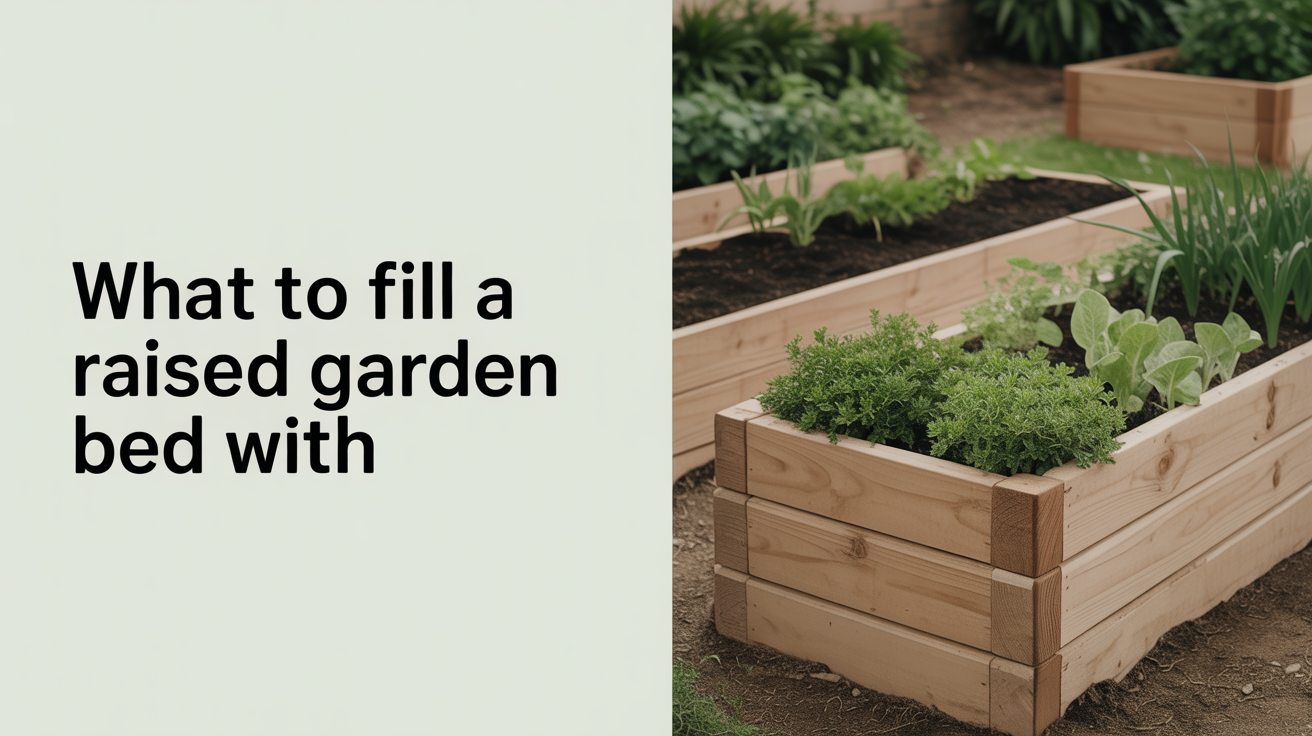
The short answer: fill a raised bed with a blend of topsoil, compost, and an aerating amendment. A mix that is roughly 60% topsoil, 30% compost, and 10% perlite or coarse sand drains well, holds moisture, and feeds plants all season. That's the target. Everything below explains why that ratio works, how to calculate how much you need, and what to skip.
Why You Can't Just Use Garden Soil or Bag Topsoil Alone
Native ground soil is the first thing beginners reach for because it's free. The problem is compaction. In a raised frame, heavy clay soil compresses under its own weight until roots can't push through it and water pools instead of draining. Even lighter sandy soils lack the organic matter to hold nutrients near plant roots.
Bagged topsoil is only marginally better. Most topsoil products are low-grade fill with minimal organic content. They compact almost as badly as clay and don't have enough nutrients to sustain a full growing season without serious amendments.
Pure compost has the opposite problem: it's too rich and too light. It settles dramatically as it breaks down, shrinking by 20–30% over a single season. Beds filled with straight compost also tend to hold excess nitrogen that can burn seedlings and push leafy growth at the expense of fruit.
The fix is to blend all three components so they balance each other's weaknesses.
The Ideal Raised Bed Soil Mix Ratio
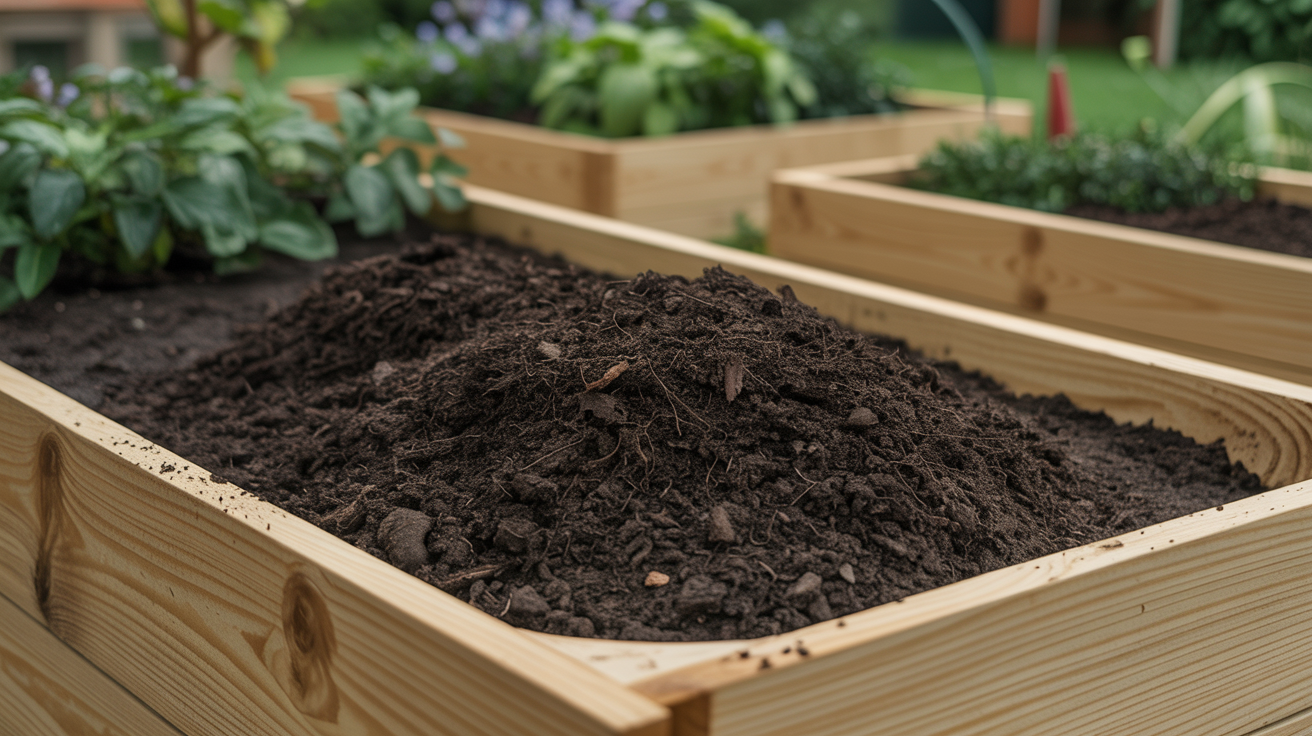
| Component | Share | What It Does |
|---|---|---|
| Topsoil | 60% | Provides structure, weight, and mineral base |
| Compost | 30% | Feeds soil biology, holds moisture, adds nutrients |
| Perlite or coarse sand | 10% | Creates air pockets, improves drainage |
This is often called the best soil mix for a vegetable garden in raised-bed contexts, and it holds up in practice across most climates. If you want a fully soilless option, the classic "Mel's Mix" substitutes the topsoil for vermiculite and uses equal thirds of compost, vermiculite, and peat moss (or coir). It's lighter and works well for balcony beds but costs more per cubic foot.
For most outdoor raised beds on ground level, the 60/30/10 blend is the most economical and reliable starting point.
How to Calculate How Much Soil You Need
Volume is length x width x depth, measured in feet, which gives you cubic feet.
A standard 4x8 raised bed at 10 inches deep (roughly 0.83 feet):
4 ft x 8 ft x 0.83 ft = 26.6 cubic feet
Round up to 27 cubic feet. For the 60/30/10 blend, that breaks down as:
- Topsoil: 16 cubic feet (about 8 bags of 2-cu-ft topsoil)
- Compost: 8 cubic feet (about 4 bags of 2-cu-ft compost, or roughly half a cubic yard in bulk)
- Perlite: 3 cubic feet (one large 4-cu-ft bag leaves a small surplus)
If you're filling to a full 12 inches (1 foot), the math is cleaner:
4 x 8 x 1 = 32 cubic feet
Most raised beds land somewhere between 6 and 12 inches deep. Knowing the exact depth before you shop saves a second trip to the garden center. For guidance on picking the right depth for your crops, see how deep should a raised garden bed be.
Bulk orders from a landscape supplier are significantly cheaper per cubic foot than bags once you need more than 10–15 cubic feet. A half-cubic-yard scoop (13.5 cubic feet) typically costs less than the equivalent bag count at a big-box store.
The Cheap Bottom-Fill Option (Hugelkultur-Style)
If your bed is deeper than 12 inches, you don't have to fill the entire thing with expensive amended mix. The bottom third or so can be filled with free or cheap organic material that will break down slowly and add nutrients over time. This approach borrows from hugelkultur, a traditional European technique of burying wood and organic debris under growing beds.
Suitable bottom-fill materials:
- Untreated cardboard (flattened boxes, no glossy ink)
- Straw or dry leaves packed loosely
- Small branches and wood chips
- Grass clippings that have dried out
Layer these materials in the bottom 4–6 inches of a deep bed, then tamp lightly and fill the top 8–12 inches with your amended soil mix. The organic matter underneath decomposes over one to three seasons, slowly feeding the bed. It also creates air channels that improve drainage in the early years.
One caveat: freshly cut wood and green plant material tie up nitrogen as they decompose, which can temporarily starve plants of that nutrient. Use older, partially decomposed wood or dried organic material at the bottom, not fresh green branches.
If your bed sits directly on the ground, laying cardboard first (before any soil goes in) smothers grass and weeds underneath without digging. This also connects loosely to how to build a raised garden bed a step-by-step guide, where site prep and base layers are covered in more detail.
What to Avoid When Filling a Raised Bed
Straight topsoil. Already covered above, but worth repeating: it compacts and doesn't have enough organic matter to sustain vegetables without heavy fertilizing.
Landscape mix or "garden soil" from bulk suppliers. These are catch-all categories. Some are excellent; many are substandard fill with little compost. Always ask what's in a bulk mix before ordering. A reputable supplier will tell you the components.
Fill dirt or construction soil. Fill dirt is subsoil scraped during excavation. It often contains clay, rocks, compacted layers, and sometimes debris or contamination. It has almost no organic matter. It's cheap for a reason.
Potting mix as the primary fill. Potting mix is designed for containers, drains extremely fast, and has very little mineral base. It's expensive and compresses badly at raised-bed volumes. Use it as a top-dressing for seedlings or mix a small amount into the top layer, not as a full fill.
Anything with persistent herbicide residue. Hay, straw, grass clippings, and compost from commercial sources can carry aminopyralid or clopyralid herbicide residue that survives composting and damages broadleaf vegetables. These residues are increasingly common. If you're using purchased hay or compost, verify it's from an herbicide-free source, or do a quick bioassay: pot up some bean seeds in the material, wait two weeks, and check for cupped or twisted leaves.
Topping Off Each Season
A newly filled raised bed will settle by roughly 10–15% in the first growing season as organic matter breaks down and soil particles pack together slightly. Don't overfill at the start hoping to compensate — let it settle, then add 1–2 inches of compost each spring to restore volume and refresh fertility.
After the second season, most beds stabilize and need only that annual top-dressing of compost to maintain the mix quality. No rototilling required — the biology in a well-maintained raised bed does the aeration work for you.
Frequently Asked Questions
Can I use regular garden soil from my yard to fill a raised bed?
You can use it as a component, but not as the sole fill. Mix no more than 40–50% native soil with compost and perlite to correct for compaction and nutrient deficiencies. Test pH first if you're unsure of your soil's baseline.
How much does it cost to fill a 4x8 raised bed?
A standard 4x8 bed at 10 inches deep needs about 27 cubic feet. Buying bags at retail, expect to spend $80–$130 depending on your region and brand. Buying topsoil and compost in bulk from a landscape supplier typically cuts that cost by 30–50%.
Is Miracle-Gro Garden Soil good for raised beds?
Miracle-Gro sells a product specifically labeled "Raised Bed Soil" that's a reasonable pre-blended option. Their standard "Garden Soil" is designed to be tilled into existing ground, not used as a standalone fill, and compacts in raised-bed conditions. Check the label before buying any bagged product.
Do I need to add fertilizer if I use compost?
Mature compost supplies moderate amounts of nitrogen, phosphorus, and potassium, enough to get most crops through a season. A light application of a balanced granular fertilizer or fish emulsion at planting is a good supplement for heavy feeders like tomatoes and squash. Leafy greens often need nothing beyond the compost.
How often should I replace the soil in a raised bed?
You don't replace it — you refresh it. Add 1–2 inches of compost each spring before planting. Over several years, the soil biology in a well-tended raised bed improves rather than declines. Full replacement is only necessary if you've had a persistent disease problem (like Fusarium wilt) that survives winter in the soil.