Harvest & Storage
How to Freeze Garden Vegetables the Right Way
Learn how to freeze vegetables from your garden so they keep their flavor and texture. Covers blanching, flash-freezing, and which vegetables freeze well.
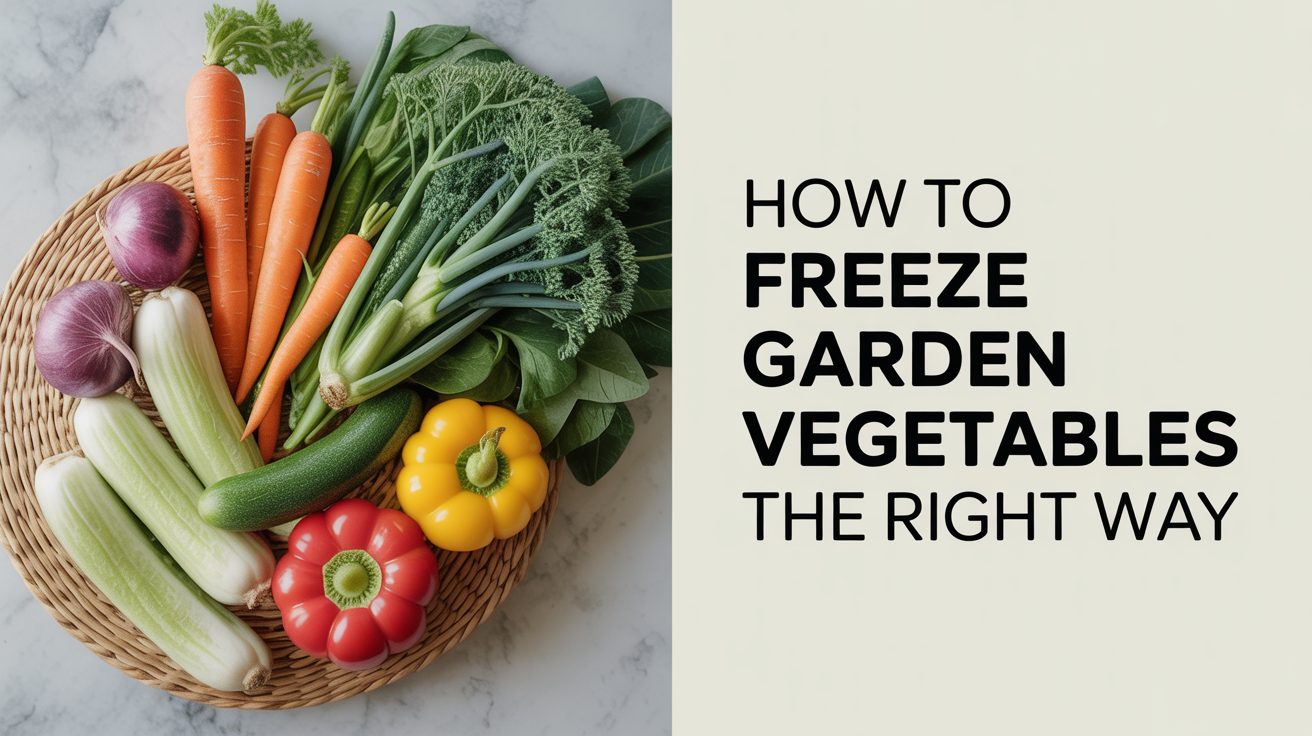
If your garden is producing faster than you can eat it, freezing is the most reliable way to hold onto that harvest without losing much quality. Done right, frozen garden vegetables can last eight to twelve months and taste close to fresh. The key is blanching before freezing, most people skip it and then wonder why their beans taste like lawn clippings after six weeks in the freezer.
At a Glance
- Blanch (briefly boil, then ice-water shock) almost every vegetable before freezing. Peppers, onions, and herbs are the exceptions.
- Blanching times run from 90 seconds (peas) to 30 minutes (whole beets cooked through), see the full reference table below.
- Flash-freeze on a tray first so pieces stay separate in the bag instead of clumping into one frozen block.
- Squeeze out air before sealing, air is what causes freezer burn, the dry gray patches that ruin texture and flavor.
- For best quality, use frozen vegetables within eight to twelve months. Properly frozen at 0°F, they stay safe indefinitely, but flavor and texture decline after a year.
- High-water vegetables like cucumbers, celery, and lettuce do not freeze well raw. Pickle or ferment those instead.
Why Blanching Matters Before You Freeze
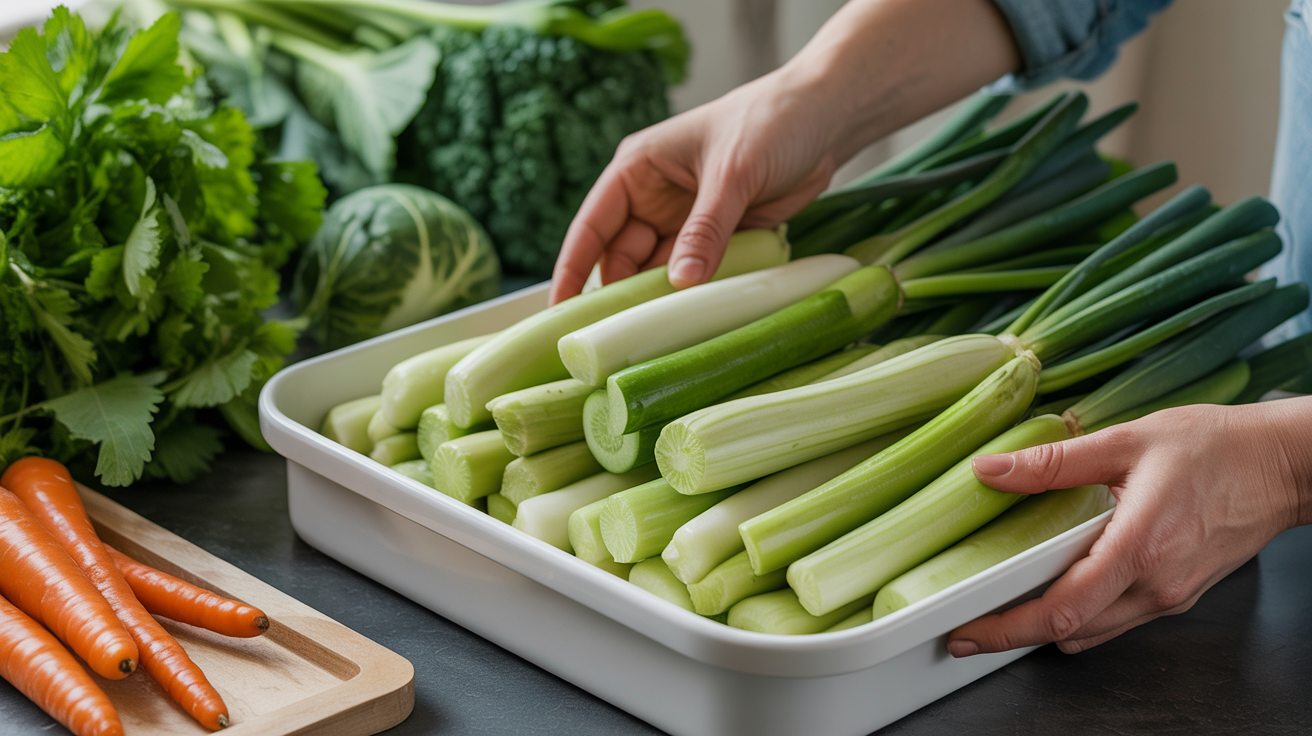
Blanching means briefly boiling (or steaming) vegetables, then plunging them into ice water. It sounds like an extra step, and it is, but it's the step that makes home-frozen vegetables worth eating.
Raw vegetables contain enzymes that break down color, flavor, and texture over time. In a fresh vegetable sitting on the counter, these enzymes work slowly. In a freezer, they slow down further but don't stop. After a few months, unblanched frozen green beans turn khaki-colored and mushy. According to the National Center for Home Food Preservation, the University of Georgia's federally funded food safety research center, blanching "slows or stops the action of enzymes which cause loss of flavor, color and texture" in frozen vegetables, and skipping it is the single biggest reason home-frozen produce disappoints.
Blanching also kills surface bacteria, wilts leafy vegetables so they pack more compactly, and brightens color right before freezing. Freezing itself does not sterilize food; as the National Center for Home Food Preservation explains, the extreme cold only slows microbial growth and chemical changes, it doesn't stop them entirely, which is why properly prepared, well-packaged vegetables hold quality far longer than ones frozen raw and loose.
Steam blanching works too (hold vegetables in a basket above an inch of boiling water, covered), but boiling water is faster and more beginner-proof because the heat is even throughout the pot.
The Blanch-and-Shock Steps
You need a large pot of boiling water, a bowl of ice water, and a slotted spoon or spider strainer. Work in small batches, one pound of vegetables at a time is a good rule. Overcrowding drops the water temperature and you end up with uneven blanching, some pieces undercooked and still holding raw-tasting enzymes, others going soft.
- Bring a large pot of water to a full rolling boil. Use at least one gallon of water per pound of vegetables.
- Add the vegetables. Start timing from the moment they go in, not when the boil returns.
- When the time is up (see the table below), scoop them out immediately with a slotted spoon.
- Drop them straight into a bowl of ice water. Use as much ice as water. This is the "shock", it stops the cooking in seconds. Leave them in the ice water for roughly the same amount of time as the blanch time.
- Drain thoroughly. Pat dry with a clean towel if they're wet. Excess moisture becomes ice crystals that damage texture.
How long to blanch each vegetable
Different vegetables need different blanch times. Here's a reference for common garden crops:
| Vegetable | Blanch Time (minutes) | Notes |
|---|---|---|
| Green beans | 3 | Cut into pieces first; whole pods need 4 min |
| Broccoli | 3 | Cut into uniform florets; thick stems need 4 min |
| Cauliflower | 3 | Break into 1-inch florets |
| Corn (kernels) | 4 | Cut off the cob after blanching, not before |
| Corn (on cob) | 7 to 11 | Depends on cob diameter; full ears only |
| Zucchini/summer squash | 3 | Slice quarter-inch thick; goes mushy if over-blanched |
| Peas | 1.5 | Shell first; short blanch preserves sweetness |
| Spinach | 2 | Blanch in very small batches; packs down dramatically |
| Kale | 2 | Strip stems; blanch leaves only |
| Carrots | 3 to 5 | Dice or slice; larger pieces need more time |
| Peppers | No blanch needed | Raw-freeze fine; texture softens slightly but acceptable |
| Beets | 25 to 30 (cook fully) | Cook whole, peel after cooling, freeze in chunks |
| Sweet potatoes | Cook fully | Freeze as mashed or cooked chunks, not raw |
Flash-Freeze on a Tray First
Once your vegetables are blanched, shocked, and dried, spread them in a single layer on a baking sheet lined with parchment paper. Slide the tray into the freezer for one to two hours until each piece is frozen solid.
This step is called flash-freezing (or individually quick freezing, IQF), and it prevents the vegetables from clumping into a single frozen block in the bag. If you skip it and pack wet vegetables straight into a bag, you'll end up with a solid mass you have to hack apart every time you want a handful of peas.
After the tray is done, transfer the frozen pieces to bags or containers. They'll pour out loosely and you can grab exactly how much you need. A standard half-sheet tray holds roughly 2 to 3 pounds of most diced vegetables in a single layer without pieces touching, if you're processing a big harvest, plan on running several tray batches through the freezer in sequence rather than crowding one tray.
Packaging, Labeling, and Storage
The enemy of frozen food is air. Air causes freezer burn, those dry, grayish patches that make food taste like cardboard. Use one of these options:
- Zip-top freezer bags: Squeeze out as much air as possible before sealing. Lay them flat to freeze so they stack easily. Freezer bags are thicker than regular storage bags; don't substitute.
- Vacuum sealer bags: The best option for long-term storage. Removes virtually all air and significantly extends quality.
- Rigid freezer containers: Good for wet or puréed vegetables. Leave a half-inch of headspace for expansion.
Label every bag with the vegetable name and the date. Frozen vegetables all look the same after a few months, and you'll forget. Use a permanent marker on the bag directly, or stick a piece of masking tape.
For best quality, use frozen vegetables within eight to twelve months. They're technically safe to eat indefinitely if kept at 0°F, but quality drops after a year.
Portion Sizing: A Worked Example
Freezing in useful portions saves you from thawing more than you need. A typical family side dish uses about 1.5 to 2 cups of cooked vegetables per meal. If your garden hands you 10 pounds of green beans in one picking, here's roughly what that becomes after trimming and blanching:
| Raw Weight | Approx. Yield After Trim/Blanch | Meal Portions (1.5 cups each) |
|---|---|---|
| 1 pound | About 3 cups | 2 portions |
| 5 pounds | About 15 cups | 10 portions |
| 10 pounds | About 30 cups | 20 portions |
Portioning at this stage, rather than freezing one giant bag, means you thaw exactly what a meal needs instead of refreezing leftovers, which noticeably degrades texture.
Which Vegetables Freeze Well (and Which Don't)
Not everything from the garden is worth freezing raw. Understanding what freezes well saves you effort and storage space.
Freeze well: green beans, broccoli, peas, corn, spinach, kale, cauliflower, carrots, peppers, summer squash, winter squash (cooked and mashed), tomatoes (for cooking), beets (cooked).
Freeze poorly raw: cucumbers, celery, lettuce, cabbage, and other salad greens. These are high in water, and ice crystals rupture their cell walls, they thaw limp and watery. If you have more cucumbers than you can eat, pickling is a better route than freezing.
Tomatoes deserve a separate note. Whole raw tomatoes turn soft and watery when frozen and thawed. They're fine for cooked applications (sauce, soup, chili) but not for eating fresh. If that's your goal, freeze them whole and use them straight from frozen in cooking. For other storage ideas, see how to store fresh vegetables so they last longer.
Knowing when and how to harvest your vegetables also affects freeze quality, vegetables frozen at peak ripeness taste significantly better than those that are past their prime. The freezer preserves quality; it doesn't improve it.
Frequently Asked Questions
Do I really have to blanch before freezing?
For most vegetables, yes. The exception is peppers, onions, and herbs, these can be frozen raw without much quality loss because their flavor compounds hold up differently. But for green beans, broccoli, corn, peas, and leafy greens, skipping the blanch means you'll end up with off-flavored, mushy vegetables within two to three months.
Can I freeze vegetables without washing them?
Wash before blanching, not after. Dirt and debris come off easily on fresh produce. Once blanched, the vegetables are clean and ready to freeze. Don't rinse again after blanching, you've already knocked out the bacteria, and the point now is to get them dry.
How do I know if my frozen vegetables are still good?
Color fading, excessive ice crystals inside the bag, and off-odors when you open the bag are the main signs of quality loss. Freezer burn (dry white patches) affects taste and texture but isn't a safety issue. If vegetables smell fine and look mostly normal, they're safe, the question is just whether the texture and flavor are what you want.
Can I freeze vegetables that are already cooked?
Yes, and for some vegetables it's the preferred method. Winter squash, sweet potatoes, and beets freeze much better cooked than raw. Roasted vegetables freeze fine and reheat well in the oven. The main thing to watch is moisture, pat off any excess oil or liquid before freezing.
What's the best way to use frozen vegetables once thawed?
Most frozen vegetables are better cooked directly from frozen than thawed first. Add them to soups, stir-fries, and pasta dishes still frozen, they'll heat through quickly and hold their shape better than if you let them thaw in a bowl. If you need them thawed (for a salad mix-in, for example), let them sit in a colander and drain the excess liquid before using. See also how to tell when tomatoes are ripe and how to pick them if you're deciding whether to freeze or use fresh.
Can I refreeze vegetables that have thawed?
Only if they thawed in the refrigerator and still feel cold, and even then quality drops noticeably. Refreezing ruptures cell walls a second time, so texture gets softer and watery with each cycle. If vegetables thawed at room temperature for more than two hours, cook them and eat them rather than refreezing raw, that window is also the safety cutoff most food safety guidance uses for perishable food left unrefrigerated.