Pests & Diseases
Powdery Mildew on Squash and Cucumbers: Prevention and Treatment
White powdery spots on squash or cucumber leaves? Learn how to identify powdery mildew, what causes it, and which treatments and prevention steps actually work.
Powdery mildew is the white, floury coating that shows up on squash and cucumber leaves in mid to late summer, and it spreads fast once it takes hold. The good news is that you can slow it down and often stop it with a few low-cost treatments and some changes to how you water and space your plants.
At a Glance
- First sign: a small, circular patch of white or gray powder on the upper side of a leaf, spreading and merging within one to two weeks.
- It thrives in warm days and cool nights with high humidity, and does not need wet leaves to spread, unlike most fungal diseases.
- Prevention beats treatment: correct spacing, base watering, and resistant varieties do more than any spray applied after the fact.
- Early treatments (baking soda, milk spray, potassium bicarbonate) work best when caught in the first week; sulfur fungicide is the step up for established infections.
- The fungus stays on the leaves and stems, fruit from an infected plant is safe to eat.
- Spores overwinter in soil and plant debris, so fall cleanup and crop rotation matter as much as anything you spray in July.
What Powdery Mildew Looks Like
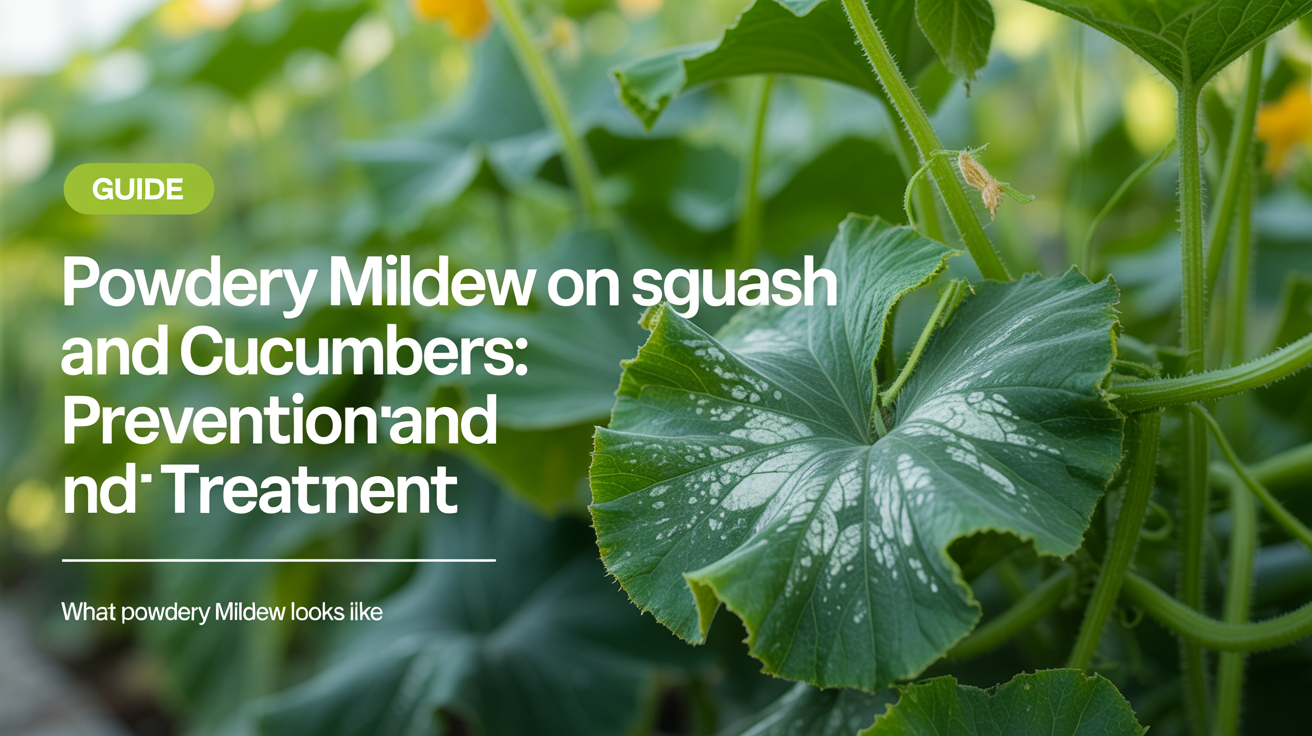
The first sign is usually a small, circular patch of white or grayish powder on the upper side of a leaf. It looks almost like someone dusted flour on the surface. Unlike many fungal diseases, the leaf underneath often still looks green and healthy at first. The coating sits on top of the leaf tissue rather than soaking in.
Within a week or two, the patches spread and merge. Leaves turn yellow, then brown, then dry out and die. Severely infected plants stop producing fruit, or produce undersized, bitter cucumbers and soft squash. On squash, you'll often see it on the large fan-shaped leaves first. On cucumbers, check the older leaves near the base of the vine before looking at the newer growth higher up.
One thing that confuses beginners: powdery mildew is not the same as downy mildew. Powdery mildew sits on the top surface of the leaf and will partly wipe off if you rub it. Downy mildew shows up on the underside and looks more yellow or purple-gray. This guide covers the powdery type.
Why Squash and Cucumbers Get It So Often
Powdery mildew is caused by fungi in the Erysiphales order. Several species target cucurbits (the plant family that includes squash, cucumbers, melons, and pumpkins), and they have adapted well to that specific host group. University of Maryland Extension notes the disease is favored by warm weather and can be destructive in both dry and hot seasons, and unlike many leaf pathogens it doesn't need wet foliage to spread.
A few conditions make infection more likely:
- Warm days, cool nights. Spores germinate best when daytime temperatures are in the 70-80 F range (21-28 C) and nights drop below 60 F (15 C). This is exactly what mid to late summer looks like in most growing zones.
- High humidity without rain. Powdery mildew does not need wet leaves to infect. It actually spreads more during dry weather because the spores are airborne and do not wash off. High ambient humidity above 50-60% speeds spore germination.
- Poor airflow. When plants grow too close together, air stagnates around the leaves. Spores settle and linger instead of dispersing.
- Soft, fast-growing foliage. Plants given too much nitrogen produce a lot of lush, leafy growth that powdery mildew finds easy to colonize.
- Shady spots. Full sun dries leaf surfaces and slows spore germination. Plants in partial shade stay damp longer and warm up more slowly in the morning.
How to Prevent Powdery Mildew
Prevention is easier than treatment. If you have had powdery mildew in your garden before, these steps will cut down how fast it comes back.
Space plants correctly. Squash needs 3-4 feet between plants. Cucumbers on a trellis need about 12 inches of horizontal spacing, but the trellis itself is what keeps the vines from piling up. When leaves overlap and tangle, nothing dries out and nothing breathes. Crowding is the single biggest setup for powdery mildew in a small garden.
Water at the base, not overhead. Drip irrigation or a soaker hose keeps foliage dry. If you use a hose or sprinkler, water in the morning so leaves dry before temperatures drop at night. Wet leaves overnight are an invitation for fungal problems.
Remove old or infected leaves early. As soon as you spot a few white patches, cut those leaves off and drop them in the trash, not the compost pile. Early removal cuts the spore load on the plant significantly. Do not leave dead plant material lying on the soil surface.
Choose resistant varieties. Selecting resistant cultivars is one of the two management approaches University of Maryland Extension leads with, alongside horticultural oil products, and many seed catalogs flag powdery mildew resistance with a PM or PMR label. For cucumbers, varieties like Marketmore 76 and many slicing types have some built-in resistance. For squash, look for that label on the seed packet. Resistant does not mean immune; it means the plant slows the disease down enough that it usually does not ruin the harvest.
Avoid heavy nitrogen feeding in midsummer. By July, most squash and cucumber plants do not need aggressive fertilizing. Too much nitrogen pushes soft, leafy growth. Feed lightly with a balanced fertilizer if at all once the plants are producing.
You can read more about building a low-impact approach to garden health in our guide to organic pest control.
Treatment Options When It Shows Up
Powdery mildew rarely kills a healthy established plant outright, but it reduces yield and shortens the plant's productive life. If you catch it early, you can slow or stop the spread.
Prune first, then spray. Before reaching for anything, remove heavily infected leaves. Put them in a bag and throw them away. This reduces the spore load and lets your spray reach more of the plant surface. Never compost infected material.
Timing matters as much as the product you choose. Spores need roughly six hours of leaf-surface humidity to germinate, so a spray applied first thing in the morning, before the day heats up and the leaf surface dries out, interrupts that window more effectively than an evening application. Whatever you use, treat both the top and underside of leaves; spores that land on the underside are just as capable of establishing a new colony, and a spray that only coats the top surface leaves half the infection untouched.
How Much of the Plant Is Affected Decides What to Do
Use this as a rough decision guide once you've spotted an infection:
| Share of plant affected | What it means | Recommended action |
|---|---|---|
| Under 10% (a few spotted leaves) | Early, easily managed | Remove affected leaves; start baking soda or milk spray weekly |
| 10-30% | Established, spreading | Prune heavily, apply potassium bicarbonate or neem oil on a 7-10 day schedule |
| 30-65% | Advanced | Sulfur fungicide per label; expect reduced yield this season |
| Over 65%, late season | Not worth treating | Pull and bag the plant; focus on fall cleanup and next year's spacing/varieties |
Baking Soda Spray
Mix 1 tablespoon of baking soda with 1 teaspoon of liquid soap (not dish detergent) in 1 gallon of water. Spray both the top and bottom surfaces of leaves. This raises the pH on the leaf surface, which disrupts fungal growth. A related combination, baking soda mixed with a lightweight horticultural oil, is also documented as an effective home treatment by University of Wisconsin-Madison Extension. Reapply every 7-10 days and after rain.
One caution: baking soda sprays can burn leaves during heat waves. Apply in the morning or evening, not midday, and skip it if temperatures are above 90 F.
Diluted Milk Spray
A mix of 40% whole or 2% milk and 60% water has shown good results in several garden trials. The proteins in milk interact with sunlight to produce compounds that slow fungal growth on the leaf surface. Spray in the morning so it dries in the sun. The smell fades once it dries. Reapply weekly.
Neem Oil
Neem oil, derived from the neem tree, disrupts the life cycle of several fungal diseases including powdery mildew. Mix according to the product label directions (usually around 2 tablespoons per gallon of water, with a small amount of liquid soap as an emulsifier). Apply in the evening to avoid burning leaves and to reduce contact with pollinators. Follow all label instructions. Neem can harm bees if they are sprayed directly, so timing and care matter.
Potassium Bicarbonate
This is a step up from baking soda and is approved for use in certified organic gardens. It is more effective and less likely to cause leaf burn than baking soda. Available at most garden centers and online, sold specifically as a fungicide. Follow label directions exactly.
Sulfur-Based Fungicides
For persistent or severe infections, sulfur fungicides (available as wettable powders or liquids) are effective and widely approved for use on food crops. Sulfur is one of the fungicide active ingredients specifically registered for powdery mildew control listed by University of Wisconsin-Madison Extension, alongside chlorothalonil, copper, and a few others. They work both preventively and curatively. Do not apply when temperatures exceed 90 F (32 C) or within two weeks of applying any oil-based product. Read the label carefully before use, and follow it.
Here is a quick comparison of common treatment options:
| Treatment | Ease of Mixing | Application Frequency | Best For |
|---|---|---|---|
| Baking soda spray | Easy | Every 7-10 days | Early, mild infection |
| Milk spray | Easy | Weekly | Early infection, organic gardens |
| Neem oil | Moderate | Every 7-14 days | Moderate infection |
| Potassium bicarbonate | Easy | Per label | Prevention and early treatment |
| Sulfur fungicide | Moderate | Per label | Severe or persistent infection |
For a broader look at common problems in the vegetable garden and how to read the signs, see our guide on common vegetable garden pests and how to get rid of them.
When to Let a Plant Go
If a plant is more than two-thirds infected and it is late in the season, it is often not worth treating. Pull it, bag it, clean the area, and plan on resistant varieties and better spacing next year. For squash that sets fruit before the mildew gets bad, you can often still harvest a decent yield even from a sick-looking plant. The fruit is safe to eat.
If you are also noticing holes in leaves or missing chunks alongside the mildew, there may be more than one problem happening. Our guide on what's eating my tomato plants and how to identify the culprit covers how to read plant damage and figure out what you are actually dealing with.
Frequently Asked Questions
Can I eat squash or cucumbers from a plant that has powdery mildew? Yes. The fungus affects the leaves and stems but does not get into the fruit. Cucumbers and squash from an infected plant are safe to eat. Wash them as you normally would before eating.
Does powdery mildew spread to other vegetables? The species that attacks cucurbits (squash, cucumbers, melons) is mostly specific to that plant family. It will not spread to your tomatoes or beans. That said, removing infected material is still worth doing since each crop family has its own powdery mildew species that can build up in the soil.
Will powdery mildew go away on its own? It will not disappear on its own, but it can slow down during hot, dry stretches or after a good rain washes off spores. Once temperatures drop in fall and the plant dies back, the growing season ends. The spores survive in soil and plant debris through winter, which is why cleaning up thoroughly at the end of the season makes a real difference.
Why does my squash get powdery mildew every year in the same spot? Fungal spores overwinter in the soil and in dead plant material. If you do not rotate your cucurbits or clean up at season's end, the spore load builds up year after year in the same area. Moving your squash and cucumbers to a different bed each year and clearing out all dead plant material in fall both help break that cycle.
Is potassium bicarbonate better than baking soda for treating powdery mildew? Generally yes. Potassium bicarbonate is more effective at lower concentrations and is less likely to burn foliage. It is also approved for certified organic use. Baking soda is a reasonable starting point if you already have it on hand, but potassium bicarbonate is worth picking up if you deal with powdery mildew every season.
Can I mix baking soda spray and neem oil together to save time? Don't combine them in the same application. Mixing an oil-based product with a soap-and-baking-soda solution can strip the leaf's natural waxy coating and increase the risk of burn, especially in warm weather. Alternate them instead, for example baking soda early in the week and neem oil a few days later, and always test a small area first if you're unsure how a plant will react.
Does pruning lower leaves for airflow actually help once mildew has already started? Yes, and it's often underused. Removing the oldest, most shaded lower leaves opens up airflow around the crown of the plant even after an infection is underway, which slows new spore germination on the leaves that remain. Don't remove more than about a third of the plant's total leaf area at once, though, since that stresses the plant and cuts into the energy it needs to keep producing fruit.