Pests & Diseases
Yellow Leaves on Vegetable Plants: Causes and Fixes
Find out why plant leaves turn yellow and how to fix it. Covers overwatering, nutrient deficiencies, pests, low light, and natural aging.
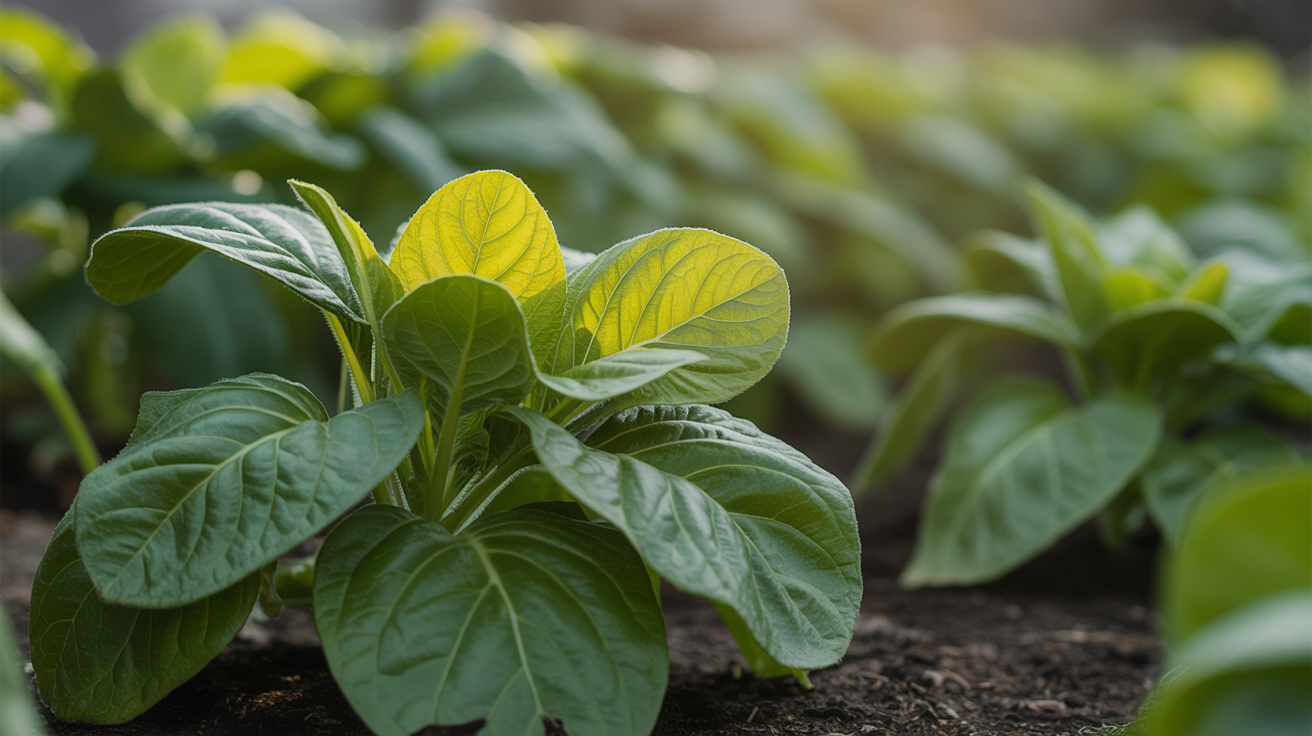
Yellow leaves on vegetables almost always mean the plant is telling you something specific. The key is knowing how to read the pattern before reaching for fertilizer or the hose.
At a Glance
- Where the yellowing shows up matters more than how much: lower leaves point to nitrogen or aging, new growth points to iron, whole-plant yellowing points to watering.
- Interveinal chlorosis (yellow between green veins) means a micronutrient shortage, usually iron in new leaves or magnesium in older ones.
- Overwatering is the single most common cause of yellow leaves in home gardens and containers.
- A soil test is the fastest way to settle whether you're dealing with a true nutrient shortage or a pH problem locking nutrients away.
- Yellow leaves don't turn green again. Fix the cause, and judge success by how the new growth looks, not the old leaves.
- A few yellowing leaves at the very bottom of an established, productive plant is normal aging, not a problem to fix.
Read the Pattern First
Before you do anything, look at which leaves are yellow and how the yellow appears. That tells you most of what you need to know.
Which leaves are affected?
- Older, lower leaves turning yellow first usually points to nitrogen deficiency or natural aging.
- New growth at the tips yellowing first suggests an iron or manganese shortage.
- Leaves throughout the plant yellowing at once is more likely overwatering, root damage, or a systemic disease.
How does the yellowing look?
- Solid, uniform yellow across the whole leaf: nitrogen deficiency, overwatering, or aging.
- Yellow between the veins while the veins stay green (called interveinal chlorosis): a micronutrient shortage, often iron or magnesium.
- Yellow patches or blotches in irregular shapes: viral disease, fungal infection, or pest damage.
- Yellow edges or tips: could be underwatering, salt buildup from fertilizer, or wind stress.
The Most Common Causes
Overwatering
This is the single most frequent reason for plant leaves yellowing in home gardens and containers. When roots sit in soggy soil, they struggle to take up oxygen. The plant can't shuttle nutrients even if the soil has plenty, so leaves go pale and yellow, often starting with the lower foliage. In containers especially, standing water in a saucer for more than a day is often enough to trigger it.
Check the soil before watering. Stick your finger two inches down. If it still feels damp, wait. In raised beds with good drainage this matters less, but containers are easy to overwater.
Underwatering
A thirsty plant can also yellow, though the leaves usually look limp or papery first and the soil is bone dry. Yellow leaves from underwatering tend to start at the edges and tips, and the plant wilts noticeably between waterings.
Nitrogen Deficiency
Nitrogen is the nutrient most responsible for green, leafy growth. When a plant runs short, it pulls nitrogen out of the older leaves and sends it up to new growth. The result: older, lower leaves turn pale yellow while the top of the plant looks okay at first. University of Maryland Extension's guide to nutrient deficiencies in vegetable plants describes this same bottom-up pattern in leafy crops like lettuce, cabbage, and spinach, where the whole plant can take on a light green or yellowish cast when nitrogen runs short.
This is common in fast-growing crops like tomatoes, corn, and leafy greens, especially in sandy or heavily leached soil. A balanced fertilizer or a top-dressing of compost usually fixes it within a couple of weeks, new leaves coming in a noticeably darker green is the clearest sign it's working.
Iron or Magnesium Deficiency
Both of these show as interveinal chlorosis, but they appear in different places.
- Iron deficiency shows up in the newest leaves. The young growth looks yellow or lime-green, but the veins stay noticeably darker. The Maryland Extension resource above notes that this iron chlorosis pattern is most often triggered by high soil pH, above roughly 7.0, since the ideal pH range for most vegetables sits closer to 6.5.
- Magnesium deficiency starts in the older, middle leaves and works outward. According to a magnesium deficiency in tomato factsheet from Rutgers Cooperative Extension, symptoms typically appear as the plant shifts into flowering and fruiting, when demand for magnesium spikes, and the classic sign is yellow patches between the veins on leaves that are otherwise mature and established. Rutgers notes the deficiency responds well to Epsom salt (magnesium sulfate) applied early, either as a soil drench near the root zone or through drip irrigation, once the plant is badly affected the correction takes longer to show results.
Both can be caused by actual nutrient shortage in the soil, but also by soil pH being off. In soil that's too alkaline (above 7.5 or so), iron becomes chemically unavailable even if it's technically there. A soil test is the most reliable way to figure out whether you need to add nutrients or adjust pH, most extension offices offer test kits for a modest fee and return results with specific amendment recommendations within a couple of weeks.
Not Enough Sun
Vegetable plants need real sunlight to run photosynthesis efficiently. When they're shaded, chlorophyll breaks down and the leaves gradually lose their color. This tends to be a slow, even yellowing across the plant rather than a sudden change. Lower leaves that are heavily shaded go first.
If your plants are getting fewer than six hours of direct sun, consider moving containers, trimming overhanging branches, or planning for a sunnier spot next season. Most fruiting vegetables (tomatoes, peppers, squash) want eight or more hours to produce well; leafy greens tolerate partial shade better.
Transplant Shock
Seedlings or transplants often drop a few leaves or show yellowing in the first week or two after being moved into the garden. The roots need time to establish, and until they do, the plant is under stress. This is normal and usually resolves on its own once the plant settles in.
To minimize it, transplant in the evening or on a cloudy day, water immediately, and avoid fertilizing for the first week or two.
Pests
Several common garden pests cause yellow leaves on vegetables by feeding on plant cells or sap.
- Spider mites leave tiny stippled spots that merge into general yellowing, usually on the undersides of leaves.
- Aphids cluster on stems and under leaves, sucking sap and causing curled, yellowed foliage.
- Whiteflies cause similar symptoms, and you'll see white clouds of them when you shake the plant.
- Thrips leave silvery streaks and patches.
Turn the leaf over and look closely. If you see insects, eggs, or webbing, you're dealing with a pest problem rather than a nutrient issue. See our guide to common vegetable garden pests and how to get rid of them for identification and treatment, or check out organic pest control: stopping pests without harsh chemicals if you want to avoid synthetic sprays.
Natural Aging
Not every yellow leaf is a problem. As a plant matures, the oldest leaves at the very base eventually yellow and drop off. This is especially obvious on tomatoes, peppers, and beans. If only the bottommost leaves are yellowing, the rest of the plant looks healthy, and you're deep into the growing season, this is just normal leaf turnover. Remove those leaves to improve airflow and move on.
Symptom-to-Cause-to-Fix Table
| What You See | Most Likely Cause | What to Do |
|---|---|---|
| Lower leaves yellow first, solid color | Nitrogen deficiency or natural aging | Feed with balanced fertilizer; remove if isolated to the very bottom |
| Yellow between veins, new growth | Iron deficiency | Check soil pH; apply chelated iron if pH is high |
| Yellow between veins, middle leaves | Magnesium deficiency | Apply Epsom salt solution, 1 tbsp per gallon, as a foliar spray or soil drench |
| Whole plant yellowing, soggy soil | Overwatering | Let soil dry out; improve drainage; reduce watering frequency |
| Limp yellow leaves, dry soil | Underwatering | Water deeply; mulch to retain moisture |
| Yellow patches or blotches, irregular | Disease or pest damage | Inspect closely; remove affected leaves; identify cause before treating |
| Uniform pale yellow throughout | Low light | Move to sunnier location; trim shade sources |
| Yellowing right after transplanting | Transplant shock | Water consistently; avoid fertilizer for 1 to 2 weeks |
| Stippling, silver streaks, tiny dots | Spider mites or thrips | Check leaf undersides; treat with insecticidal soap |
Soil pH and Nutrient Availability
Since two of the most confusing causes, iron and magnesium deficiency, are often pH problems rather than true shortages, it helps to know roughly where the trouble zones sit:
| Soil pH | What Happens |
|---|---|
| Below 5.5 | Aluminum and manganese can become excessive; most nutrients still available |
| 6.0 to 6.8 | Ideal range for most vegetables; nutrients broadly available |
| 7.0 to 7.5 | Iron starts becoming less available; watch for new-growth chlorosis |
| Above 7.5 | Iron and manganese often locked out even when present in the soil |
How to Diagnose Step by Step
- Look at which leaves are affected. Bottom, middle, top, or scattered?
- Look at the pattern of yellow. Solid, between veins, edges only, or blotchy?
- Check the soil. Is it wet, dry, or normal?
- Check for pests. Flip the leaves and use a magnifying glass if needed.
- Think about recent changes. Did you just transplant, fertilize, or have a stretch of rain?
For tomato-specific problems including leaf curl, spots, and pest damage, our guide to identifying what is eating your tomato plants covers the most common culprits in detail.
Frequently Asked Questions
Should I remove yellow leaves from my vegetable plants?
In most cases, yes. Yellow leaves are not going to recover. Removing them clears up airflow, reduces the chance of fungal problems, and helps you see whether the yellowing is spreading. If only the very bottom leaves are yellow and the rest of the plant is healthy, just pull them off and keep an eye on it.
Can too much fertilizer cause yellow leaves?
Yes. Over-fertilizing, especially with nitrogen-heavy products, can cause fertilizer burn, which shows as yellowing or browning at the leaf tips and edges. Salt buildup from repeated synthetic fertilizer applications can also block nutrient uptake over time. If you suspect this, flush the soil with plain water, roughly a gallon per square foot poured slowly, and hold off on feeding for a few weeks.
Why are my cucumber leaves turning yellow?
Cucumbers are particularly prone to yellowing from overwatering, powdery mildew, and magnesium deficiency. They also yellow quickly when cucumber mosaic virus is present, usually with a mottled or irregular pattern. Check your watering first, then look for signs of disease or pests on the undersides of leaves.
Do yellow leaves mean my plant is dying?
Not necessarily. A few yellow leaves, especially lower down, is normal for any maturing vegetable plant. The key question is whether the yellowing is spreading upward or affecting most of the plant. If only the oldest leaves are going yellow while the rest looks healthy and is producing, you're fine. If the whole plant is rapidly losing color, investigate the cause and act on it promptly.
How quickly can yellowing be fixed once I treat the cause?
It depends on the cause. Nutrient deficiencies can show improvement in one to two weeks once the right nutrients are available. Watering issues resolve faster, sometimes within days once you correct the schedule. The existing yellow leaves will not turn green again, but new growth coming in should look healthy once the underlying problem is fixed.
Is a soil test worth it, or can I just guess based on the pattern?
For a one-off yellow leaf, the visual pattern is usually enough to guess correctly and try a fix. If you're seeing repeated deficiency symptoms across multiple crops or seasons, a soil test is worth the small cost. It tells you your actual pH and nutrient levels rather than leaving you to cycle through fertilizers and amendments by trial and error.