Planting & Care
How and When to Fertilize Your Vegetable Garden
Learn how to fertilize your vegetable garden the right way: what N-P-K means, organic vs synthetic options, timing, and how much is too much.
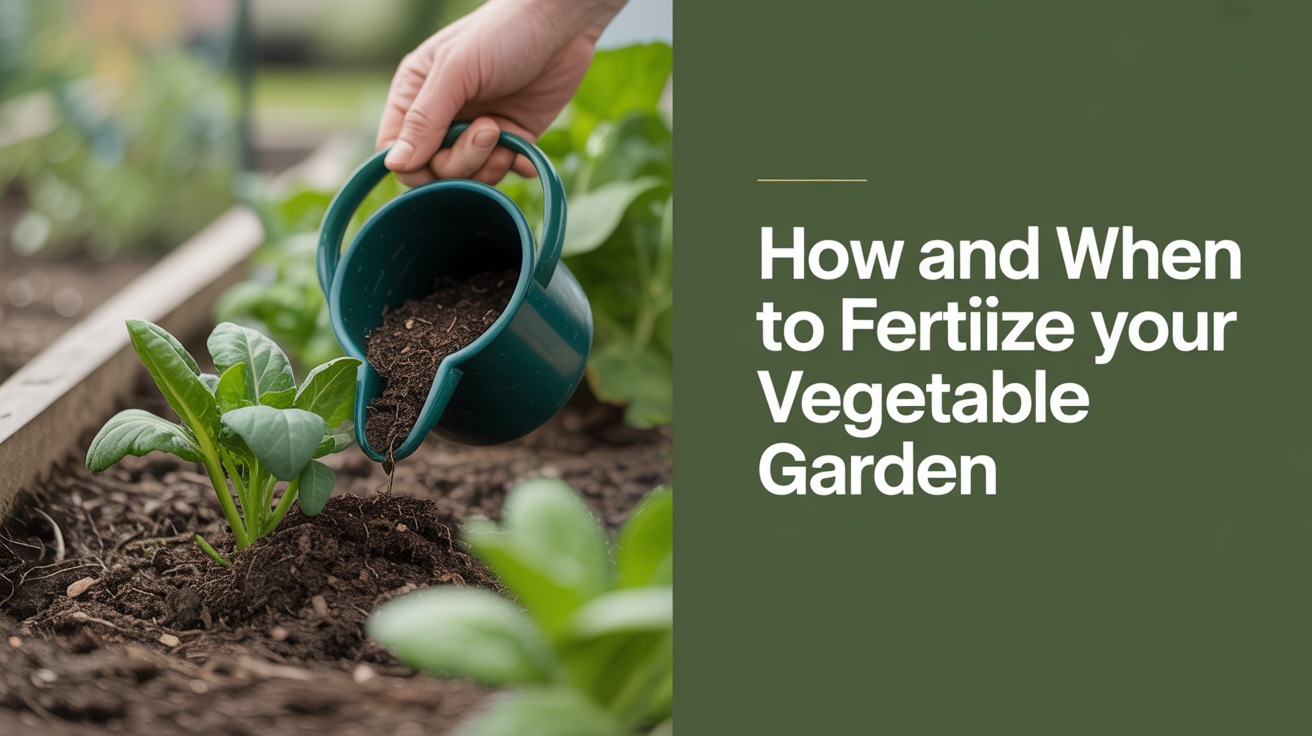
Most vegetable plants are hungry. Give them the nutrients they need at the right time and they reward you with bigger harvests. Skip feeding entirely and they stall, turn pale, and produce little.
What N-P-K Means
Every bag, bottle, or box of fertilizer carries three numbers separated by hyphens, like 10-10-10 or 5-3-4. These are the N-P-K ratios, and they tell you the percentage of each major nutrient by weight.
- N (Nitrogen) drives leafy, green growth. Spinach, lettuce, kale, and other greens need plenty of it. Nitrogen is also the nutrient most likely to wash out of soil after heavy rain.
- P (Phosphorus) supports root development, flowering, and fruit set. Tomatoes, peppers, and squash need adequate phosphorus to flower and set fruit reliably.
- K (Potassium) helps the plant regulate water, resist disease, and develop strong cell walls. It matters most once plants are actively fruiting.
A balanced fertilizer (equal N-P-K numbers) works well for general use. If your soil already holds good levels of phosphorus and potassium from compost, a higher-nitrogen formula suits leafy greens at planting time, while a lower-nitrogen, higher-phosphorus mix suits fruiting crops once they start to flower.
Before you buy anything, a basic soil test from your county extension office or a mail-in kit will tell you what your soil already contains. That saves money and prevents over-feeding.
Organic vs Synthetic Fertilizers
Both types work. The practical differences are in how fast they act and what they do to your soil over time.
Organic fertilizers include compost, aged manure, fish emulsion, blood meal, bone meal, feather meal, and kelp. They release nutrients slowly as soil microbes break them down, so the risk of burning plants is low. Over time they also improve soil structure and feed the biological community underground. The trade-off is that they act slowly, so they are not a quick fix when a plant looks deficient mid-season.
Synthetic fertilizers are mineral salts processed into concentrated, water-soluble forms. They deliver nutrients fast, which is useful when you need to correct a deficiency quickly or push heavy feeders during peak growth. The downside is that they can burn roots if you over-apply them, they contribute nothing to soil structure, and in large amounts they can disrupt the microbial balance your soil depends on.
A practical approach for beginners: work compost into your beds at the start of each season as a base. Then use a balanced organic granular fertilizer for steady feeding, and keep a diluted fish emulsion or liquid kelp on hand for a quick boost when plants look like they need it.
Heavy Feeders vs Light Feeders
Not all vegetables are equally hungry. Matching your feeding schedule to each crop's appetite prevents both waste and over-feeding.
| Crop Type | Typical Feeding Needs | Notes |
|---|---|---|
| Tomatoes | High (N early, P+K once flowering) | Feed every 2 weeks once fruiting begins |
| Peppers | Moderate to high | Reduce nitrogen after first flowers appear |
| Squash and zucchini | High | Large plants, fast growers, need consistent feeding |
| Corn | High nitrogen | Side-dress with nitrogen when knee-high |
| Cucumbers | Moderate | Feed at planting and again at flowering |
| Leafy greens (lettuce, spinach, kale) | Moderate nitrogen | One or two applications per growing cycle |
| Beans and peas | Low | Fix their own nitrogen; too much N = leaves, no pods |
| Carrots and beets | Low to moderate | High nitrogen produces forked, hairy roots |
| Garlic and onions | Moderate | Need nitrogen in spring, taper off before bulbing |
| Herbs (basil, parsley) | Low | Over-feeding reduces flavor intensity |
Beans and peas are the exception to the general rule. They host bacteria in their roots that pull nitrogen from the air and convert it into a form the plant can use. Extra nitrogen from fertilizer pushes them toward leafy growth at the expense of pods. Skip nitrogen feeding for legumes entirely unless your soil test shows a real deficiency.
When to Fertilize Through the Season
Timing matters as much as the fertilizer itself.
At planting: Work a slow-release granular fertilizer or a generous amount of compost into the top few inches of soil before you transplant or direct sow. This gives roots something to find as they expand. If you are starting seeds indoors, do not fertilize the germination mix; seeds carry their own nutrient reserves and seedling soil should be lean until true leaves appear. For more on starting from seed, see how to start seeds indoors.
During vegetative growth: Once transplants are in the ground and actively growing, begin regular feeding. For most vegetables this means every two to three weeks with a liquid fertilizer or once a month with a granular product. Keep the nitrogen moderate during this phase to build strong stems and foliage before the plant shifts energy toward fruiting.
At first flower: This is the pivot point for fruiting crops like tomatoes, peppers, squash, and cucumbers. Switch to a fertilizer lower in nitrogen and higher in phosphorus and potassium. High nitrogen at flowering can push the plant to keep producing leaves instead of setting fruit.
Mid-season for heavy feeders: Tomatoes and corn in particular benefit from a side-dressing of fertilizer halfway through the season. For tomatoes, scratch a small amount of granular fertilizer into the soil around the drip line (not against the stem) and water it in. For corn, a nitrogen side-dress when plants are knee-high is a standard practice.
Taper off at the end of the season: Stop feeding six to eight weeks before your first expected frost date. Late nitrogen pushes tender new growth that gets hit hard by cold. Let plants slow down naturally.
Timing note for transplants: Freshly transplanted seedlings that have been hardened off properly are less vulnerable to fertilizer stress than plants moved directly from indoors. Give newly transplanted seedlings a few days to settle before beginning a feeding routine. Read more about the hardening-off process at how to harden off seedlings before transplanting.
Signs of Over- and Under-Feeding
Under-feeding signs
- Pale green or yellow leaves, starting with older leaves at the bottom (nitrogen deficiency)
- Purple tints on stems and leaf undersides (phosphorus deficiency, often visible in cool weather)
- Brown leaf edges that look scorched (potassium deficiency, often confused with heat or drought stress)
- Slow growth and small fruit
A soil test is the only reliable way to confirm a deficiency rather than guessing from symptoms. Many of these signs overlap with watering problems or pest damage.
Over-feeding signs
- Lush, very dark green foliage with little fruit production
- Wilting or browning at leaf tips and edges from fertilizer burn (usually caused by synthetic fertilizers applied too heavily or too close to stems)
- White crusty deposits on soil surface from salt buildup
- Root burn that shows up as stunted, discolored transplants
If you suspect fertilizer burn, flush the soil with water to dilute the salt concentration. Pull back on feeding and return to a lighter schedule once the plant recovers.
The most common beginner mistake is applying too much fertilizer too often, assuming more is better. Follow label rates, start at the lower end of the recommended range, and increase only if plants show clear signs they need more.
Frequently Asked Questions
Can I just use compost and skip fertilizer?
Compost is genuinely useful and improves soil over time, but it is not a high-analysis fertilizer. A finished compost might have an N-P-K of roughly 1-0.5-0.5, which is low compared to most packaged fertilizers. For heavy feeders like tomatoes and corn in a dedicated vegetable bed, compost alone often is not enough. Use compost as a base amendment and supplement with a real fertilizer for crops that demand more.
How do I fertilize without burning my plants?
Water your plants before applying granular fertilizer if the soil is dry. Keep granules off stems and leaves. For liquid fertilizers, mix to the lower end of the recommended dilution rate, especially for seedlings. Water in granular applications after spreading. Never apply concentrated fertilizer to stressed or drought-wilted plants.
Does it matter whether I fertilize in the morning or evening?
For granular fertilizers worked into soil, timing does not matter much. For liquid fertilizers applied as a foliar spray, morning is better because leaves dry out during the day, which reduces the risk of fungal issues. Avoid foliar feeding in direct hot sun since that can cause leaf burn.
When should I fertilize transplants I bought from a nursery?
Wait until transplants have been in the ground for about a week and show signs of new growth. Transplanting is stressful, and roots need time to establish before being pushed with nutrients. If you are thinking through whether to start from seed or buy transplants instead, seeds vs seedlings covers the trade-offs.
Is liquid or granular fertilizer better for vegetables?
Neither is universally better. Granular fertilizers are convenient, feed slowly, and need less frequent application. Liquid fertilizers act quickly and are useful for correcting deficiencies or giving plants a fast boost. Many gardeners use granular products for steady background feeding and a diluted liquid fertilizer for a mid-season push on heavy feeders.