Planting & Care
How Often Should You Water a Vegetable Garden?
Learn how often to water a vegetable garden with the finger test, timing tips, container rules, and signs your plants need more or less water.
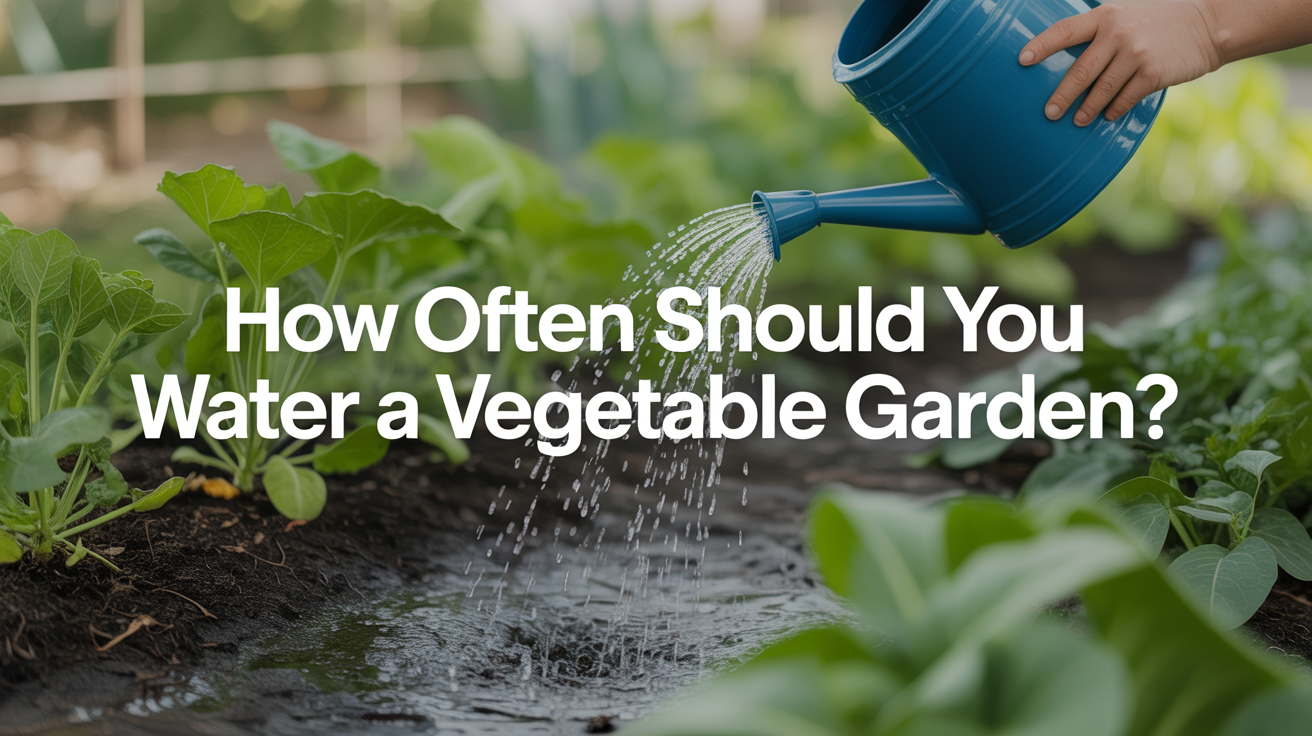
Most vegetables need about 1 inch of water per week. That sounds simple, but the real question isn't how much, it's how. Deep, infrequent watering (every 2 to 3 days rather than a light daily sprinkle) pushes roots deeper into the soil where moisture lingers longer. Shallow daily watering does the opposite: roots stay near the surface, the soil dries fast, and plants become fragile and drought-prone. Getting the rhythm right is the single biggest thing a new gardener can do to keep vegetables healthy without wasting water.
At a Glance
- Baseline need is about 1 inch of water per week for established plants, more like 1.5 to 2 inches in weather above 90°F.
- Use the finger test (2 inches down) instead of a fixed schedule; it adjusts automatically for rain, heat, and soil type.
- Water at the base of the plant, in the morning, so foliage dries before nightfall and fungal disease pressure stays low.
- Containers dry out far faster than ground beds and can need daily water in summer heat.
- A 2 to 3 inch mulch layer can cut watering frequency roughly in half by slowing evaporation.
- Uneven watering, not just too little water, is the main cause of blossom-end rot and fruit cracking in tomatoes and peppers.
The Finger Test: Your Most Reliable Tool
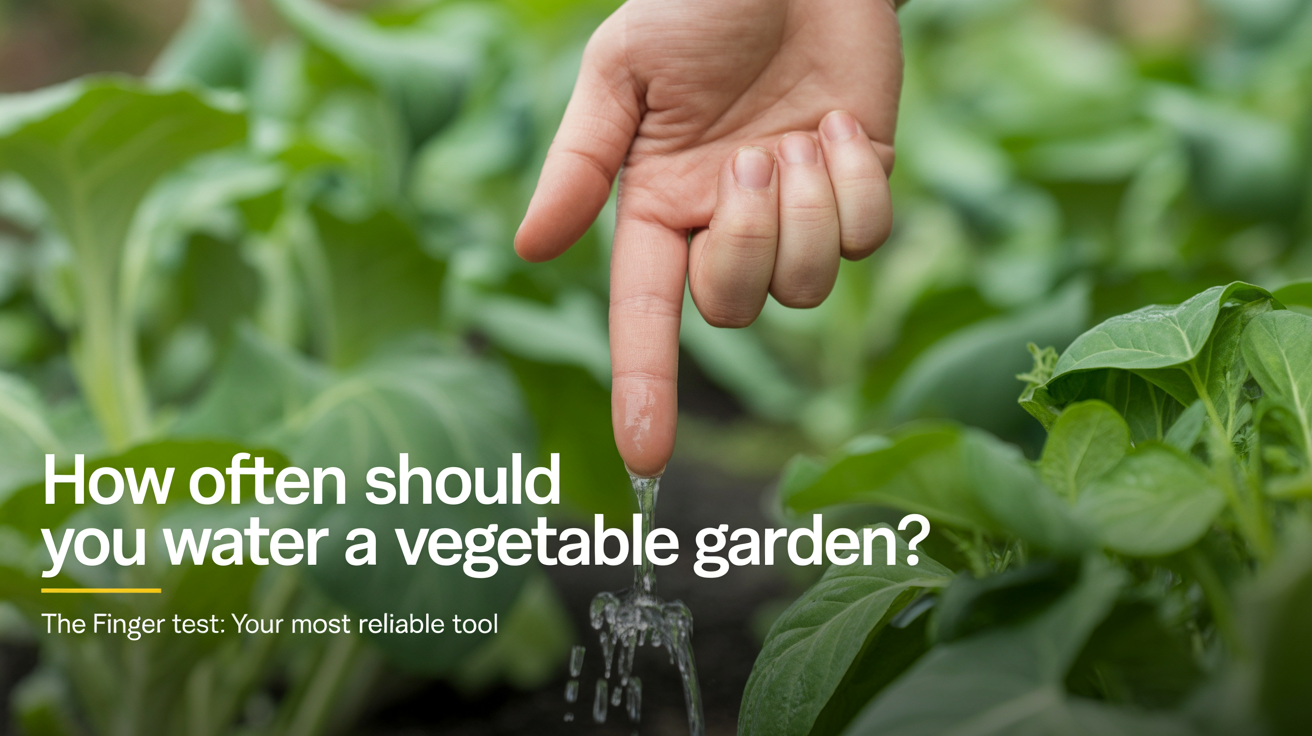
Before you turn on the hose, check the soil. Push your finger about 2 inches into the ground near the base of a plant. If the soil at that depth feels dry, water. If it still feels cool and slightly moist, wait another day and check again.
This test beats any fixed schedule because it accounts for variables no calendar can track: last night's rain, a heat spike, a cloudy week, or the fact that your clay soil holds moisture twice as long as your neighbor's sandy bed.
Do the test at the same time each morning. Over a week or two, you'll notice patterns, your garden's personal rhythm, and a schedule will emerge naturally from the data rather than a guess.
How Much Water Do Vegetables Actually Need?
The 1-inch-per-week rule is a solid baseline, but it shifts depending on weather, plant size, and growth stage. University of Minnesota Extension's guide to watering the vegetable garden puts the same figure at the center of its guidance, one inch of rain or irrigation per week, while noting that sandy, fast-draining soils often need that split into two applications rather than one, since they can't hold a full week's water at once the way denser clay or loam can.
| Situation | Approximate water need |
|---|---|
| Established plants, mild weather | 1 inch per week |
| Established plants, hot/dry weather (above 90°F) | 1.5 to 2 inches per week |
| Seedlings (first 2 weeks after transplant) | Light water daily or every other day, keep top 1 inch moist |
| Seeds just sown | Keep surface moist; fine mist 1 to 2 times daily until germination |
| Container vegetables | Water when top 1 inch is dry, often every 1 to 2 days in summer |
| Fruiting crops (tomatoes, peppers, squash) at peak | Consistent moisture matters most, uneven watering causes blossom-end rot and cracking |
One inch of water translates to roughly 0.6 gallons per square foot of bed. The Minnesota Extension figures work out close to the same number: about 62 gallons per 100 square feet for a full inch. A 4x8-foot raised bed needs about 20 gallons per week in normal conditions, a useful number if you're filling from a rain barrel or tracking irrigation.
If you're running a soaker hose or drip line instead of hand watering, translate that gallon figure into minutes by checking your system's flow rate, most soaker hoses put out roughly half a gallon per foot per hour at normal household pressure. For a 20-gallon weekly need spread over two sessions, that works out to somewhere around 45 minutes to an hour per session on a typical bed, though it's worth confirming with a simple test: run the line for 15 minutes, then check how deep the moisture has traveled with a trowel or soil probe, and scale the time up or down from there.
Seedlings vs. Established Plants
Seedlings are the exception to "deep and infrequent." Their roots are short, confined to the top few inches of soil, so you need to keep that shallow zone moist until they establish. Once plants are 6 to 8 inches tall with a visible root system, shift to deeper, less frequent watering. Established plants handle a day or two between waterings without stress, in fact, a brief dry spell between waterings encourages roots to search deeper, which is exactly what you want.
If you're still in the seed-starting phase, seeds vs. seedlings, when to start from seed and when to buy plants covers how root development differs between seed-started and purchased transplants, which affects early watering decisions.
When and How to Water
Morning is the best time. Watering in the morning gives leaves time to dry before nightfall, which cuts the risk of fungal diseases like powdery mildew. Evening watering is a distant second, water sits on foliage through the night. Midday watering isn't harmful to plants (the "burned leaves from droplets" idea is a myth), but much of it evaporates before soaking in.
Water at the base, not from above. A soaker hose or drip line puts water directly on the root zone and keeps foliage dry. A watering can with a long spout works just as well in a small bed. If you're using a hose with a spray nozzle, aim low and let water soak in slowly rather than pounding the surface. This same base-watering habit is one of the main defenses against the fungal foliar diseases that plague tomatoes and other nightshades in wet years.
Slow is better than fast. If water pools or runs off before soaking in, you're going faster than your soil can absorb. Pause for a minute, let it sink, then continue. Sandy soil absorbs quickly; dense clay benefits from two shorter watering sessions an hour apart so water percolates rather than sitting on top.
Containers Dry Out Faster Than Ground Beds
This is the detail that catches most beginners off guard. A pot has a finite volume of soil, no connection to ground moisture, and often sits in full sun against a patio that radiates heat. In summer, container vegetables, tomatoes, peppers, herbs, can need water every single day. University of Maryland Extension's guidance on maintaining container-grown vegetables puts it plainly: the limited volume of growing medium available to a container plant makes keeping the root zone consistently moist critical, and improper watering (usually shallow, infrequent watering rather than a deep soak) is the number one reason container vegetable gardens fail.
Check containers every morning by lifting them slightly. A light pot is a dry pot. Or stick your finger into the top inch; if it's dry, water until it drains freely from the bottom holes. Never let containers sit in standing water, though, roots in soggy soil suffocate just like in compacted ground. A pot with a saucer that traps drainage water is a common, easily fixed mistake, empty it within thirty minutes of watering.
If you're growing transplants in containers before moving them outside, how to harden off seedlings before transplanting explains how outdoor conditions (wind, full sun, dry air) change watering needs compared to a sheltered indoor setup.
Mulch Changes Everything
A 2- to 3-inch layer of organic mulch, straw, shredded leaves, wood chips, over bare soil can cut watering frequency almost in half. Mulch slows evaporation, keeps the soil surface from baking into a crust, and moderates soil temperature. In a hot summer, unmulched soil can lose half an inch of water a day to evaporation alone.
Apply mulch after planting, keeping it a few inches away from plant stems to prevent rot. Top it off mid-season as it breaks down. This is one of those cheap, low-effort changes that pays back every time you don't have to drag the hose out.
Signs of Under-Watering vs. Over-Watering
Both look like struggling plants, which is why beginners often respond to overwatered plants by adding more water. Knowing the difference saves plants.
Under-watered plants:
- Leaves curl inward or look papery at the edges
- Wilting that doesn't recover by the next morning (afternoon wilt in heat can be normal, plants temporarily close stomata to reduce moisture loss; check again at dusk)
- Dry, cracked soil pulling away from bed edges
- Fruit that's small, stunted, or developing blossom-end rot
Over-watered plants:
- Yellowing lower leaves that feel soft, not crisp
- Soil that stays wet several days after the last rainfall
- Mold or algae on the soil surface
- Root rot, roots appear brown and mushy if you pull a struggling plant
The fix for under-watering is obvious. For over-watering, stop irrigating and let the soil dry out to 2 inches down before watering again. If drainage is poor, adding compost to loosen compacted soil helps long-term.
Building a Simple Watering Schedule
Rather than a rigid calendar, think in conditions. Here's a practical starting framework for a typical in-ground vegetable bed:
| Season | Check Frequency | Typical Watering |
|---|---|---|
| Spring (cool, frequent rain) | Every 2 days | Once or twice a week |
| Early summer (warming, less rain) | Every 2 to 3 days | 2 to 3 times a week, watch fruiting plants closely |
| Peak summer (above 85°F consistently) | Daily for containers, every 1 to 2 days for beds | 3 to 5 times a week |
| Late summer/fall (cooler, shorter days) | Every 3 to 4 days | Once or twice a week, evaporation slows significantly |
If you're starting from seed indoors before any of this, how to start seeds indoors: a step-by-step guide covers how to keep seed-starting mixes moist without overwatering, which is a different challenge from outdoor bed management.
Frequently Asked Questions
Is it okay to water vegetables every day?
For established plants in the ground, daily watering is usually more than necessary and can lead to shallow roots and waterlogged soil. The exception is containers in hot weather, which often need daily water, and seedlings in their first week or two after transplanting. Check soil depth before watering rather than following a daily habit.
Why are my vegetable plants wilting even though I water regularly?
Afternoon wilting is common and often normal, plants temporarily drop leaves and wilt during peak heat as a way to reduce moisture loss. Check again in the evening or early morning. If plants are still wilted then, they need water. If they've perked up, the afternoon wilt was temporary and no action is needed.
How do I know if I'm overwatering?
The clearest signs are yellowing lower leaves that feel limp (not crisp), soil that stays wet for days after watering, and a sour or musty smell from the soil. Overwatering is as harmful as underwatering because saturated soil drives out oxygen that roots need to function.
Do I need to water differently after it rains?
Yes. Check rain depth with a rain gauge or a straight-sided container left in the garden. If you received half an inch or more, skip the next scheduled watering and check the soil before the one after that. An inch of rain usually covers the weekly need for most beds, though hot or windy weather speeds up soil drying.
Does the type of vegetable change how often I need to water?
Somewhat. Leafy greens (lettuce, spinach, kale) prefer consistent moisture and are less drought-tolerant. Root vegetables (carrots, beets) need even watering to avoid cracking or forking. Tomatoes and peppers are sensitive to inconsistent moisture, irregular watering is the main cause of blossom-end rot and fruit cracking. Squash and cucumbers are vigorous but wilt quickly in heat. The finger test applies across all of them; what changes is how quickly each crop shows stress.
Should I water based on a fixed schedule if I travel often?
A drip irrigation system on a timer is the most reliable fix if you can't be there to check soil daily. Set it for a deep, slower watering (30 to 45 minutes at low flow) every 2 to 3 days rather than a quick daily burst, and add a thick mulch layer beforehand so the bed holds moisture longer between cycles. A soaker hose on a battery timer is an inexpensive version of the same idea for a small bed or a handful of containers.