Growing Vegetables
How to Grow Carrots in Beds and Containers
Learn how to grow carrots from seed in raised beds or containers. Covers soil prep, sowing depth, thinning, container depth, and common problems.
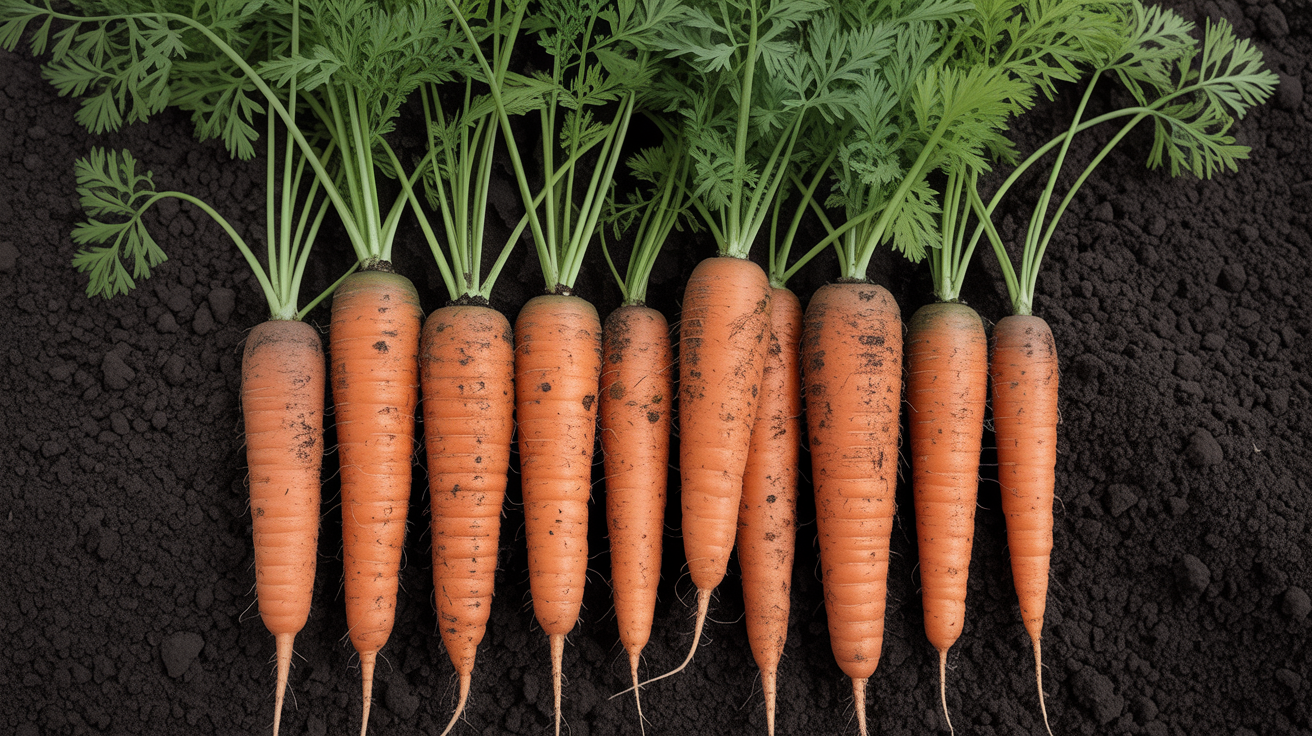
Carrots are one of the most satisfying crops to pull from the ground yourself, and one of the more unforgiving if your soil or timing is off. Get those two things right and you can grow a steady supply from spring through autumn.
Why Soil Preparation Matters More Than Almost Anything Else
A carrot root grows straight down into the soil. When it hits a rock, a hard clump, or a dense layer of clay, it splits, forks, or curves sideways. The result is still edible, but it looks nothing like what you had in mind when you planted.
Loose, stone-free soil is the single biggest factor in growing straight, uniform carrots. This is also why raised beds work so well: you control what goes into them. A blend of topsoil, compost, and sharp sand drains well, stays loose, and gives roots room to go straight.
Before sowing, work through the bed to a depth of at least 30 cm (12 inches). Pull out any stones, break up lumps by hand, and rake the surface to a fine, crumbly texture. Avoid fresh manure; it is high in nitrogen and can cause roots to fork or sprout hairy side roots. Well-rotted compost worked in a few weeks before sowing is fine.
If your native soil is heavy clay, do not try to grow carrots directly in it. Build a raised bed or grow a short-rooted variety in a deep container.
Direct Sowing: Why Carrots Cannot Be Transplanted
Unlike tomatoes or peppers, carrots must be sown directly where they will grow. The taproot that becomes the carrot you eat begins forming immediately after germination. If you try to transplant a seedling, you sever or disturb that root and the plant either dies or produces a stunted, misshapen result.
This matters for timing. You cannot start carrots early indoors and move them outside. Wait until the soil temperature reaches at least 7-10°C (45-50°F), because seeds will not germinate reliably in cold ground. In most temperate climates, that means sowing from mid-spring onward. A second sowing in midsummer gives you an autumn harvest.
Carrot seeds are very small. Sow them shallowly, no more than 6 mm (a quarter of an inch) deep. A common mistake is pushing them too deep. The seeds need light to germinate and cannot push through much soil cover. Make a shallow groove with your finger or the edge of a trowel, scatter the seeds thinly, and cover them with a fine layer of soil or vermiculite.
Keeping the Seedbed Moist
Carrot germination is slow. Depending on the temperature, it takes anywhere from 10 to 21 days for seedlings to appear. During that time, the seedbed must stay consistently moist.
If the surface dries out, the seeds will not germinate. If it crusts over after rain or watering, seedlings cannot push through. This is one of the places where beginners most often give up on carrots, assuming the seeds were bad or the sowing failed.
A few approaches help. You can lay a plank or a piece of cardboard over the row after sowing to keep moisture in and prevent surface crust formation. Check under it daily. The moment you see seedlings pushing up, remove the cover immediately or they will etiolate in the dark.
Alternatively, water gently with a rose-headed watering can every day or two in dry weather. Avoid anything that hammers the surface and compacts the soil.
Once seedlings are growing, back off to watering every few days depending on rainfall.
Thinning: The Step Most Beginners Skip
Carrot seeds are tiny and hard to sow individually, so you will almost always end up with too many seedlings in a row. If you leave them crowded, the roots will be thin, stunted, and tangled.
Thin the seedlings in two stages. When they are about 2-3 cm (an inch) tall, thin to roughly 2-3 cm apart. When they reach 5-7 cm (2-3 inches), thin again to the final spacing of about 5-7 cm between plants.
Pull thinnings out carefully. Disturbing neighbouring roots can attract carrot fly, which is drawn to the smell of bruised foliage. Thin in the evening if possible, and firm the soil around remaining plants afterward.
The thinnings from the second pass are edible. They are small but sweet.
Growing Carrots in Containers
Containers are a good option if your garden soil is poor or you are working with a balcony or patio. The key constraints are depth and drainage.
Short and half-long varieties work best in pots. Varieties described as "Chantenay" or "Paris Market" type top out at 10-15 cm (4-6 inches) and grow well in containers. Long Nantes or Imperator types need deeper conditions and will frustrate you in a standard pot.
The container needs to be at least 30 cm (12 inches) deep. Wider is better, because you can fit more plants. A long window box or a 40 cm (16 inch) pot works well. Fill it with a light potting mix blended with some sharp sand. Garden soil on its own is too heavy and will compact.
Water more frequently than you would in a ground bed, because containers dry out faster. Feed with a low-nitrogen, higher-potassium liquid fertiliser once roots start to form, roughly four to six weeks after germination.
Quick Reference: Carrot Sowing and Growing Guide
| Detail | Ground / Raised Bed | Container |
|---|---|---|
| Sowing depth | 6 mm (1/4 inch) | 6 mm (1/4 inch) |
| Final spacing | 5-7 cm (2-3 inches) | 5-7 cm (2-3 inches) |
| Minimum soil depth | 30 cm (12 inches) | 30 cm (12 inches) |
| Germination time | 10-21 days | 10-21 days |
| Days to harvest (short) | 60-70 days | 60-70 days |
| Days to harvest (medium/long) | 70-80 days | Not recommended |
| Best container varieties | Chantenay, Paris Market | Chantenay, Paris Market |
Common Problems
Forked or multi-rooted carrots. The most likely cause is stones or hard lumps in the soil. The root hits an obstruction and splits around it. Improve soil prep for next time. Fresh manure or fertilisers high in nitrogen can also trigger forking.
Hairy or rough-skinned carrots. Small, hairy side roots usually mean the soil is too rich in nitrogen, inconsistent in moisture, or the carrots were left in the ground too long after maturity. Hairy carrots are fine to eat after peeling.
Green shoulders. The top of the carrot turns green or bitter when it is exposed to light. As roots grow, the crown can push up above the soil surface. Cover exposed shoulders with a little soil when you notice them.
Slow or no germination. The seedbed dried out, the soil is too cold, or seeds were sown too deep. Re-sow shallowly, keep the surface moist, and wait until soil temperature is reliably above 7°C (45°F).
Carrot fly. The larvae tunnel into roots, leaving brown channels. The adult fly is attracted by the smell of carrot foliage. A fine mesh cover (enviromesh) placed over the bed after sowing is the most reliable preventative. Siting beds more than 60 cm above ground level also helps, since carrot fly stays low.
Harvesting
Most carrot varieties are ready to harvest 60-80 days after sowing. You can check readiness by scraping aside a little soil around the shoulder of a few roots and looking at the diameter. A carrot at full size will typically show a shoulder of around 1-2 cm across for short varieties and larger for longer types.
To harvest, ease a hand fork into the soil alongside the row a few centimetres away from the root, loosen the soil, and pull the carrot by grasping the foliage near the base. Pulling straight up without loosening can leave the root in the ground or snap the top.
In mild climates, carrots can stay in the ground into winter. Cold sweetens them as the plant converts starch to sugar. If hard frosts are coming, mulch with straw to keep the ground from freezing solid.
Once harvested, twist off the foliage, which draws moisture from the root, and store unwashed carrots in a cool, dark place or in the fridge.
Carrots fit well in a garden rotation with salad greens, which are lighter feeders and suit the same well-prepared bed after the carrot crop is done.
Frequently Asked Questions
How deep does the soil need to be to grow carrots? At least 30 cm (12 inches) of loose, stone-free soil. Short and Chantenay types can manage in slightly less, but they still need room without obstruction.
Why are my carrots forked? Forking is almost always caused by something in the soil that the growing root could not push through: a stone, a hard clump, a buried root from another plant, or fresh manure. Remove stones during bed preparation and avoid adding fresh organic matter right before sowing.
Can I grow carrots in a pot or window box? Yes, if the container is at least 30 cm (12 inches) deep and you use a short or round variety (Chantenay, Paris Market, or similar). Standard long varieties will outgrow a typical pot and produce small or stunted roots.
How long do carrots take to grow from seed? Germination takes 10-21 days depending on soil temperature. From sowing to harvest is typically 60-80 days. Short varieties (Paris Market types) are often ready closer to 60 days; longer Nantes and Imperator types take 70-80 days.
Do carrots need a lot of water? Consistent moisture matters more than volume. The seedbed must stay damp during the slow germination period. Once established, deep but less frequent watering beats shallow daily wetting. Container-grown carrots dry out faster and need more regular checking.