Growing Vegetables
How to Grow Cucumbers Up a Trellis
Learn how to grow cucumbers vertically on a trellis for better yields, less disease, and easier picking in a small garden bed or raised bed.
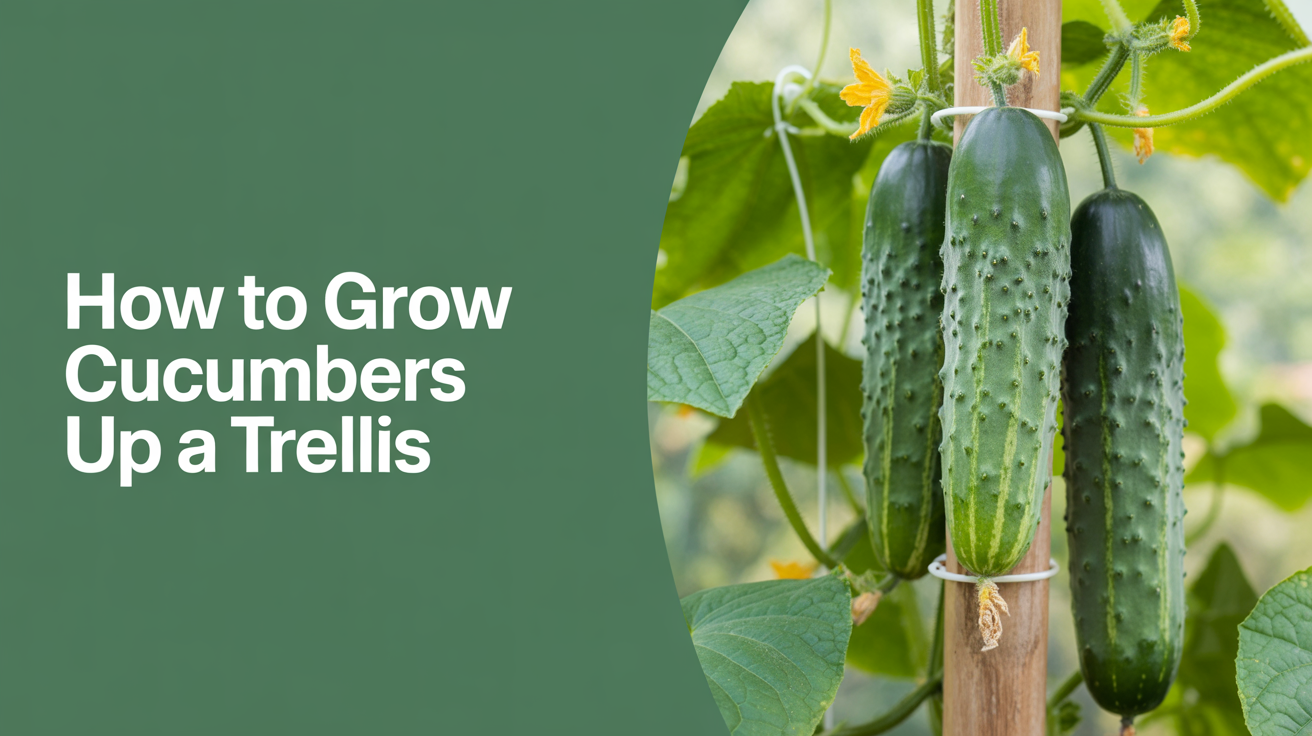
Cucumbers are one of the fastest-rewarding warm-season crops you can grow, and training them up a trellis is the most practical way to do it. You get better airflow, easier picking, and a lot more fruit per square foot than letting vines sprawl.
At a Glance
- Wait until soil hits at least 60°F, 65°F is better, before sowing or transplanting.
- Give cucumbers 6 to 8 hours of direct sun and 2 to 3 inches of finished compost worked into the bed.
- Trellised spacing is 12 inches apart in a row, versus 18 to 24 inches for sprawling vines on the ground.
- Set the trellis up before you plant, and aim for at least 5 feet tall, cucumbers outgrow shorter structures fast.
- Harvest every day or two once fruit starts, a cucumber left too long on the vine signals the plant to slow production.
- Watch for cucumber beetles early: beyond the leaf damage, they spread bacterial wilt, which can kill a plant outright.
When and Where to Plant Cucumbers
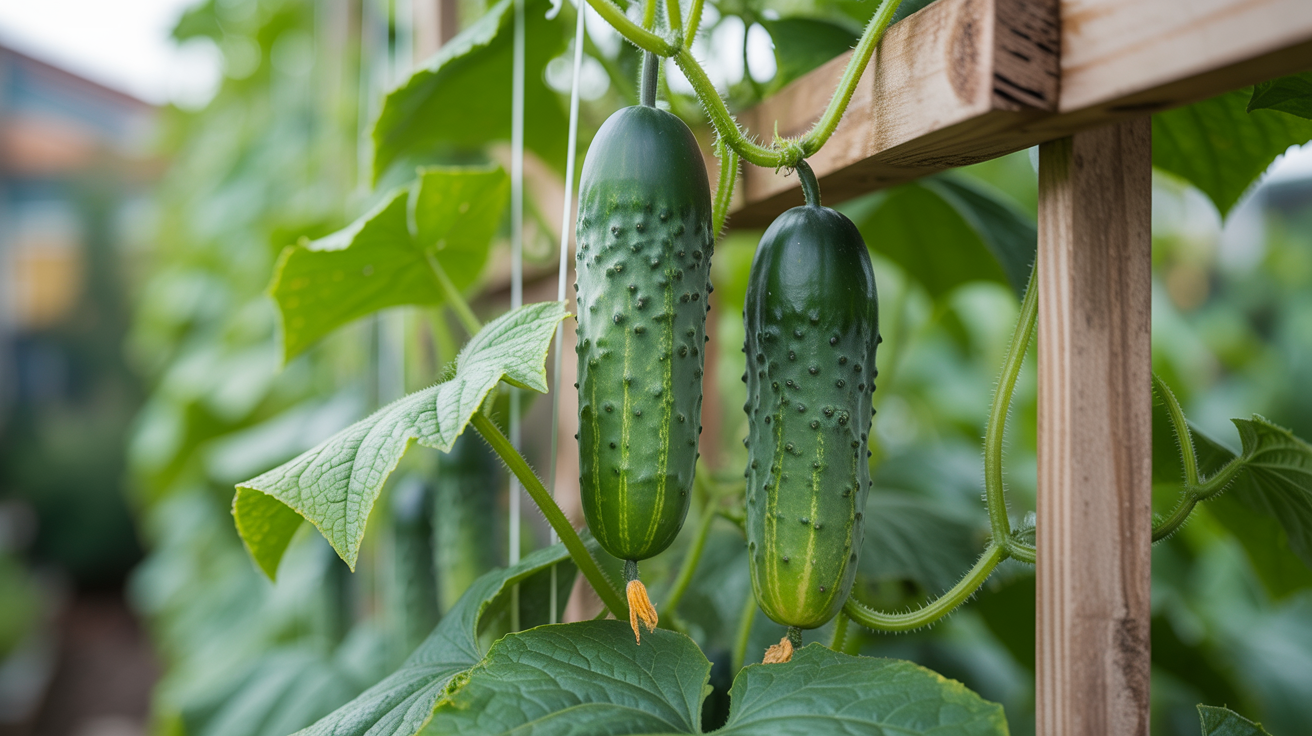
Cucumbers are strictly warm-season. Cold soil slows germination, and a late frost will kill seedlings outright. Wait until two weeks after your last frost date and the soil reads at least 60°F (65°F is better) before sowing or transplanting. In most of the U.S., that means late May through early June for direct sowing.
Pick the sunniest spot you have. Cucumbers need at least 6 hours of direct sun per day, and 8 hours produces noticeably better crops. A south- or west-facing wall with a trellis against it is close to ideal because the structure warms the microclimate slightly.
Soil should be rich, loose, and well-draining. Work in 2 to 3 inches of finished compost before planting. Cucumbers are heavy feeders, and thin soil shows up fast as yellow leaves and stunted vines. A raised bed filled with quality mix is about as good a starting point as you can get.
Why Growing Cucumbers Vertically Makes Sense
Sprawling cucumber vines take up a surprising amount of horizontal space, sometimes 6 to 8 feet of ground per plant. Training them upward solves several problems at once. University of Minnesota Extension notes that vining cucumbers can be trained to climb a three- to four-foot trellis, which lets you space rows closer together and also tends to produce straighter fruit.
More air circulation. Leaves dry out faster after rain or irrigation, which is the single biggest factor in preventing powdery mildew, the white coating that often arrives in late summer and shortens the harvest window.
Easier fruit to find. Cucumbers hiding under dense foliage on the ground tend to get missed, go yellow, and signal the plant to stop producing. Vertical fruits are visible at a glance.
Less contact rot and slug damage. Fruit sitting on damp soil is far more vulnerable than fruit hanging in the air.
Space savings. A trellis 6 feet tall and 4 feet wide can support two or three plants that would otherwise need 30 or more square feet of bed space.
If you're already growing tomatoes or peppers vertically, cucumbers fit the same approach and the same trellis style.
Choosing and Setting Up a Trellis
Almost anything that gives the tendrils something to grab will work. The main options:
| Trellis type | Setup effort | Cost | Best for |
|---|---|---|---|
| A-frame trellis | Moderate | Low to moderate | Heavy fruiting vines; planting on both sides |
| Single vertical panel | Low | Low | Small gardens; one or two plants |
| Cattle panel arch | Higher (one-time) | Moderate | Full rows; a walk-under harvest tunnel |
| Bamboo teepee | Low | Very low | A single plant in a tight corner |
A-frame trellis. Two panels leaned together in a tent shape with netting or wire strung between them. Very stable, good for heavy fruiting vines, and you can plant on both sides.
Single vertical panel. Posts or stakes with garden netting, wire fencing, or horizontal strings stretched between them. Simple and cheap. Space posts no more than 4 to 5 feet apart so the middle doesn't sag under the weight.
Cattle panel arch. A 16-foot cattle panel bent into an arch over a bed makes a sturdy walk-under tunnel. The rigid wire supports heavy vines without sagging, and picking from underneath is convenient.
Bamboo teepee. Three or four bamboo canes tied at the top. Works fine for one plant, though it doesn't scale to a full row.
Set up the trellis before you plant, not after. Hammering posts next to established seedlings risks root damage. Aim for a structure at least 5 feet tall. Cucumbers grow fast and will reach the top before the season is out.
On cost, a single-panel trellis built from two 6-foot stakes and a roll of garden netting typically runs 15 to 25 dollars and takes under an hour to put up, while a 16-foot cattle panel arch is closer to 30 to 50 dollars for the panel alone plus posts to anchor it, but it lasts for many seasons and needs no rebuilding each spring. If you're only trying one or two plants this year, start with the cheap single panel. If cucumbers are becoming a regular part of your garden, the cattle panel pays for itself within two or three seasons in saved setup time.
As vines grow, guide the main stem toward the trellis every few days. Tendrils will latch on once they reach it. You can loosely tie the main stem with soft plant clips or strips of old t-shirt if the vine wanders.
Planting Guide: Depth, Spacing, and Days to Harvest
| Detail | Recommendation |
|---|---|
| Sowing depth | 1/2 to 1 inch deep |
| Spacing (trellised) | 12 inches apart in a row |
| Row spacing | 3 feet between rows |
| Days to germination | 5 to 10 days at 70-85°F |
| Days to first harvest | 50 to 70 days from transplant |
For trellised growing, 12-inch spacing is workable because the vines go up rather than out. For sprawling vines on the ground, you would need 18 to 24 inches minimum.
Direct sowing works well in warm soil. Sow 2 or 3 seeds per spot, then thin to the strongest single seedling once they're 3 to 4 inches tall. Transplants are fine too but cucumbers resent root disturbance, so use biodegradable pots or handle the root ball gently.
Slicing cucumbers (like 'Marketmore' or 'Straight Eight') are the standard for fresh eating. Pickling types ('National Pickling', 'Calypso') stay shorter and crunchier, which also makes them easier to train. Burpless varieties tend to have thinner skins and longer fruit; they're less bitter for most people.
Watering, Feeding, and Cucumber Plant Care
Even moisture is the most important cultural habit for cucumbers. Irregular watering, meaning alternating dry spells with heavy soaks, causes bitterness and a condition called blossom end rot where the tip of the fruit turns soft and tan.
Aim for about 1 inch of water per week, more during hot stretches. University of Minnesota Extension gives the same one-inch-per-week baseline from rainfall or irrigation, with drip irrigation or soaker hoses at the base of the plant working better than overhead watering. Wet leaves late in the day encourage mildew. Mulch around the base with straw or shredded leaves to hold moisture and keep soil temperature steady.
Feed cucumbers once they start flowering. A balanced granular fertilizer (something like 5-5-5 or 10-10-10) worked into the soil at planting is a reasonable start. Once flowering begins, switch to a fertilizer slightly lower in nitrogen and higher in potassium and phosphorus to push fruit rather than leaves. A liquid feed every two to three weeks works fine.
Cucumbers need pollination to set fruit. Male flowers appear first, then female flowers, which have a tiny proto-fruit at the base and open later on the vine. If you see flowers dropping without fruit forming, that's usually a pollination lag and resolves on its own in a week or two. Avoid spraying insecticides during flowering hours, which is when pollinators are active.
Common Pests and Diseases
Cucumber beetles. These are striped or spotted yellow-and-black beetles about a quarter inch long. They feed on foliage and blossoms, and at high populations move on to stems and fruit; striped cucumber beetles can defoliate small plants entirely, and both types can carry the bacteria that causes bacterial wilt, a disease that can kill an otherwise healthy vine within days once it takes hold. Row cover over seedlings delays their arrival. Once plants are flowering and need pollinator access, the cover comes off. Yellow sticky traps help monitor populations. Hand-pick adults when numbers are low. Kaolin clay spray makes leaves less attractive to feeding beetles.
Powdery mildew. A white, chalky coating on leaves. It arrives when nights cool and humidity rises, typically late August or September. It rarely kills the plant but slows production and shortens the harvest window. Good airflow from trellising delays onset considerably. Remove badly affected leaves. A diluted baking soda spray (1 tablespoon per gallon of water) can slow spread if applied early. Resistant varieties like 'Spacemaster' and 'Diva' are worth choosing if mildew is a recurring problem in your garden.
Aphids and spider mites. Usually minor problems when beneficial insects are present. A strong spray of water knocks aphids off. Neem oil addresses both, applied in the evening to avoid harming pollinators.
Squash vine borer and squash bugs. These primarily target squash and pumpkins rather than cucumbers, but they show up in the same beds often enough to watch for. Wilting that starts suddenly on one vine, with sawdust-like frass near the base, points to a borer rather than a watering problem. There's no reliable cure once a borer is inside the stem, so row cover at planting is the main prevention.
If you've had pest issues on other crops, lettuce and salad greens are a good companion to rotate into the same bed the following year, as they attract fewer of the same pest families.
Harvesting Cucumbers to Keep Plants Producing
Harvest frequently. This is the single thing most new growers miss. A cucumber left on the vine too long signals the plant to slow down and set fewer new fruits. Check plants every day or two once harvest starts.
Pick slicing cucumbers when they're firm and dark green, usually 6 to 8 inches long depending on variety. If the skin starts turning yellow at the blossom end, you've waited too long. Pickling cucumbers are best at 2 to 4 inches for small pickles, up to 6 inches for sandwich slices.
Cut the stem with scissors or pruners rather than pulling, which can damage the vine. Store harvested cucumbers in the refrigerator for up to a week, which matches University of Minnesota Extension's storage guidance of about a week under refrigeration. They're sensitive to chill injury below 50°F, so the main fridge shelf is better than the coldest drawer.
As fall approaches and nights drop below 50°F regularly, production will taper and vines will yellow. Pull spent plants before they develop mildew that could overwinter spores in the soil.
Frequently Asked Questions
How many cucumber plants do I need for a family of four? Two to three trellised plants usually produce more cucumbers than a family can eat fresh. If you want to pickle, add two or three more pickling-type plants.
Why are my cucumbers bitter? Bitterness comes from a compound called cucurbitacin, which plants produce under stress and which varies naturally by variety. Irregular watering, high heat, and inconsistent soil moisture are the main triggers. Keep soil evenly moist and water deeply rather than lightly. Some older varieties are more prone to bitterness than modern hybrids.
Can I grow cucumbers in a container? Yes, in a pot at least 12 inches wide and 12 inches deep. Use a compact or bushing variety like 'Spacemaster' or 'Bush Pickle'. Set a small trellis or cage in the pot. Container plants dry out faster and need watering more often than in-ground plants.
What's the difference between slicing and pickling cucumbers? Slicing types have thinner, sometimes bumpier skin, higher water content, and mild flavor. Pickling types have drier flesh, thinner skin, and hold their crunch better in brine. You can eat pickling cucumbers fresh, but slicing types turn mushy in pickling liquid.
Do cucumbers need to be hand-pollinated? Only if pollinators are scarce. In most gardens, bees handle pollination without help. If you're growing indoors or under row cover during flowering, use a small paintbrush to transfer pollen from male flowers (no swelling at the base) to female flowers (small fruit at the base).
Why did my trellised cucumber plant suddenly wilt even though I've been watering it? Sudden, one-sided wilting on an otherwise well-watered plant is the classic sign of bacterial wilt spread by cucumber beetles, not a watering problem. Check the base of the stem for beetle feeding scars, and cut a wilted stem crosswise, a milky, sticky ooze from the cut is a strong confirming sign. There's no cure once a vine is infected; pull and discard it, and focus on row cover and beetle monitoring for the remaining plants.