Growing Vegetables
How to Grow Herbs: Basil, Parsley, Cilantro, and More
A beginner's guide to growing herbs at home: what each herb needs, how to harvest without killing plants, and which ones to keep in pots.
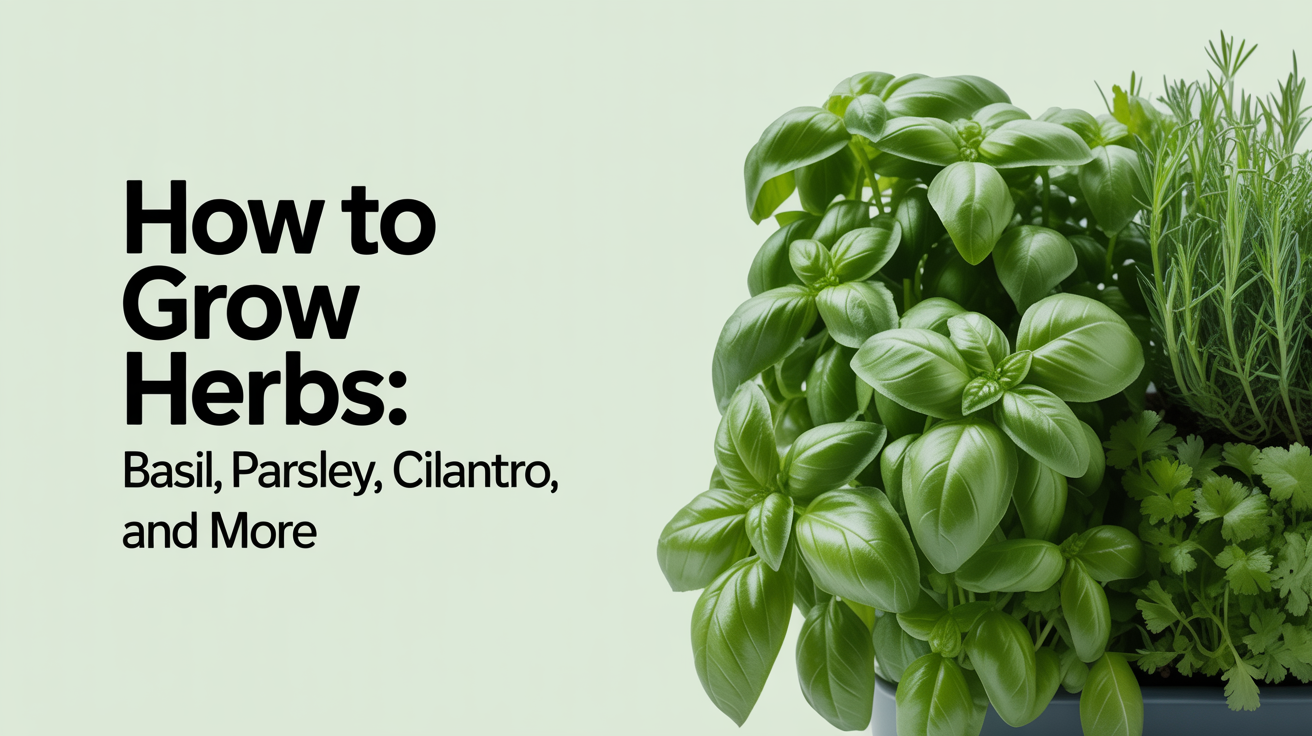
Growing herbs at home is one of the fastest ways to get useful results from a small space. Fresh basil, parsley, and cilantro cost a few dollars at the store every time you need them, and each is straightforward to grow once you understand what that particular plant actually wants.
Sun, Soil, and Water Basics
Most herbs want full sun (6 or more hours per day) and well-drained soil. The two things that kill herbs faster than anything else are overwatering and shade. If your soil stays soggy after rain, herbs will rot at the roots.
A standard potting mix works well in containers. For raised beds and in-ground plots, work in a few inches of compost before planting. Herbs don't need rich soil the way tomatoes or peppers do. Too much nitrogen produces lush leafy growth with weak flavor, so skip the heavy fertilizing.
For watering, check the top inch of soil. When it's dry, water thoroughly. When it's still damp, leave it alone. Mediterranean herbs like thyme and rosemary can handle even drier conditions once established. Basil wants more consistent moisture.
Warm-Season Herbs
Basil
Basil is a heat-lover. Don't transplant seedlings until nighttime temperatures are reliably above 50°F (10°C). Cold soil slows it down and a late frost will kill it outright.
The most important thing to know about growing basil: pinch it before it flowers. Once basil bolts and sets seed, the leaves turn bitter and the plant winds down. Pinch off flower buds as soon as they appear. Better yet, pinch the growing tip every time a stem reaches 6 to 8 inches long. Cut just above a set of leaves, and two new stems will branch from that point. A pinched basil plant gets bushy and keeps producing for months instead of going to seed in midsummer.
Harvest in the morning when the oils are most concentrated. Take no more than a third of the plant at one time.
Basil does well near tomatoes and peppers, which share its preference for warm soil and full sun.
Thyme
Thyme is a perennial in zones 5 to 9, though it's sometimes treated as an annual in colder climates. It wants full sun and dry conditions and handles drought better than most herbs. Once established, it needs very little attention. Harvest stems any time you need them. After it flowers in summer, cut the plant back by about a third to prevent it from getting woody and to encourage fresh new growth.
Rosemary
Rosemary is a slow-growing perennial that wants heat and sharp drainage. In zones 7 and warmer it survives winters outdoors. In colder zones, grow it in a pot and bring it inside before frost arrives.
The main thing to avoid with rosemary is wet soil. It grows naturally in dry, rocky Mediterranean conditions. Roots sitting in standing water will rot within weeks. If your soil doesn't drain fast, rosemary is better off in a container with a gritty potting mix.
Cool-Season Herbs
Parsley
Parsley is slow. Seeds take 14 to 21 days to germinate, sometimes longer. Soaking seeds in water overnight before sowing speeds germination a little. Start it indoors 8 to 10 weeks before your last frost date, or direct sow in early spring or late summer for a fall crop.
Parsley is technically a biennial, meaning it grows leaves in the first year and goes to seed in the second. Most gardeners treat it as an annual and resow each season.
Flat-leaf (Italian) parsley has more flavor for cooking. Curly parsley holds up better as a garnish. Both varieties grow the same way. Harvest outer stems first, cutting at the base of the stem rather than pulling leaves off the top. This keeps the plant producing from the center all season.
Cilantro
Cilantro is a cool-season herb that bolts quickly once temperatures climb above 75 to 80°F (24 to 27°C). There's no reversing a bolted cilantro plant. Once it sends up flower stalks, the leaves turn sparse and bitter.
The practical solution is succession sowing. Sow a short row every 3 to 4 weeks from early spring through late spring, then again in late summer for a fall crop. Each planting gives you 4 to 6 weeks of usable leaves before heat sends it to seed.
Direct sowing works better than transplanting for cilantro because the taproot doesn't like being disturbed. Sow seeds a quarter inch deep and keep the soil moist until germination. Cilantro pairs well in timing with lettuce and salad greens since both prefer cool weather and can be grown side by side in spring and fall.
If you let cilantro bolt, the seeds become coriander, which you can collect for cooking or replant.
Perennial Herbs Worth Containing
Mint
Mint spreads underground through runners and will take over a bed in a single season if planted directly in the ground. Grow mint in a container, or bury a pot in the ground with the rim sticking up about 2 inches above soil level to slow the spread.
Spearmint works well for cooking and tea. Peppermint is stronger. Both tolerate part shade and more moisture than the Mediterranean herbs. Harvest stems from the top, cutting just above a leaf node. Regular harvesting keeps mint bushy and delays flowering.
Chives
Chives are one of the easiest herbs to grow from seed and among the first to show up in spring. They're cold-hardy perennials that die back in winter and return reliably year after year.
Chives grow in clumps. Harvest by cutting the leaves to about an inch above the soil surface. The plant regrows within a week or two. Divide the clumps every 3 years to keep them from getting crowded and slowing down. The purple flowers that appear in late spring are edible and work well in salads.
Containers vs. Garden Beds
Most herbs do well in containers, which makes an herb garden for beginners accessible even if you only have a small balcony or porch.
A few things to keep in mind for container growing:
- Containers dry out faster than garden beds. In summer you may need to water daily.
- Use a pot with drainage holes. Herbs sitting in standing water will rot.
- Group herbs with similar water needs in the same container. Pairing thyme (dry side) with basil (moderate water) means one of them will always be in the wrong conditions.
- Terra cotta pots breathe and dry faster, which suits rosemary and thyme. Plastic holds moisture longer, which suits basil and parsley.
- Mint always gets its own pot, regardless of setup.
In raised beds, most herbs can share space with vegetables as long as you keep mint contained.
Harvesting to Keep Plants Producing
The biggest mistake beginners make with herbs is harvesting too little. Regular harvesting encourages new growth. Leaving herbs alone signals the plant to focus on flowering and seeding, which shortens your harvest window.
A few rules that apply across most herbs:
- Never take more than a third of the plant at one time.
- Harvest before flowering when possible. Leaves have the best flavor before the plant bolts.
- Cut above a leaf node, the point where a leaf meets the stem. New growth branches from that point.
- Morning harvests tend to give you the strongest flavor.
Herb Quick-Reference Table
| Herb | Annual/Perennial | Season | Sun | Key Tip |
|---|---|---|---|---|
| Basil | Annual | Warm | Full | Pinch flowers constantly to prevent bolting |
| Cilantro | Annual | Cool | Full to part | Succession sow every 3 to 4 weeks; bolts in heat |
| Parsley | Biennial (grown as annual) | Cool to moderate | Full to part | Slow to germinate; harvest outer stems first |
| Chives | Perennial | Cool to moderate | Full to part | Cut to 1 inch above soil; divide every 3 years |
| Mint | Perennial | Cool to moderate | Part to full | Contain in a pot; spreads aggressively |
| Thyme | Perennial | Warm | Full | Drought-tolerant; cut back after flowering |
| Rosemary | Perennial | Warm | Full | Needs sharp drainage; bring inside in zones below 7 |
Frequently Asked Questions
Can I grow herbs indoors?
Yes, though most herbs need more light than a typical indoor window provides. South-facing windows work best. If your herbs get leggy or pale indoors, add a basic grow light running 12 to 14 hours a day. Basil and parsley are the most common choices for indoor growing. Rosemary and thyme are harder to keep healthy inside through winter.
How often should I water herbs in pots?
Check the soil daily in warm weather. Water when the top inch is dry. Most herbs do better slightly underwatered than overwatered. The exception is basil, which wilts quickly and prefers consistent moisture.
Why is my cilantro flowering already?
Heat. Cilantro bolts in response to warm temperatures and long days. Once it flowers, there's little you can do except let it go to seed and collect the seeds for cooking (as coriander) or for replanting next season. To avoid it, sow earlier in spring or wait until late summer when temperatures drop for a fall planting.
Can I grow different herbs in the same pot?
Yes, but match their water needs. Basil, parsley, and chives all want moderate moisture and work well together. Keep Mediterranean herbs (thyme, rosemary, oregano) in their own drier container. Mint always gets its own pot regardless of what else you're growing.
When can I start harvesting after planting?
Most herbs are ready to harvest once the plant has several sets of leaves and looks fully established, usually 4 to 6 weeks after transplanting or about 8 weeks from seed. Don't strip a young plant too early. Let it develop enough foliage to handle being cut back before you take a significant harvest.