Growing Vegetables
How to Grow Zucchini and Summer Squash
Learn how to grow zucchini and summer squash from seed to harvest. Spacing, watering, pollination, and pest tips for complete beginners.
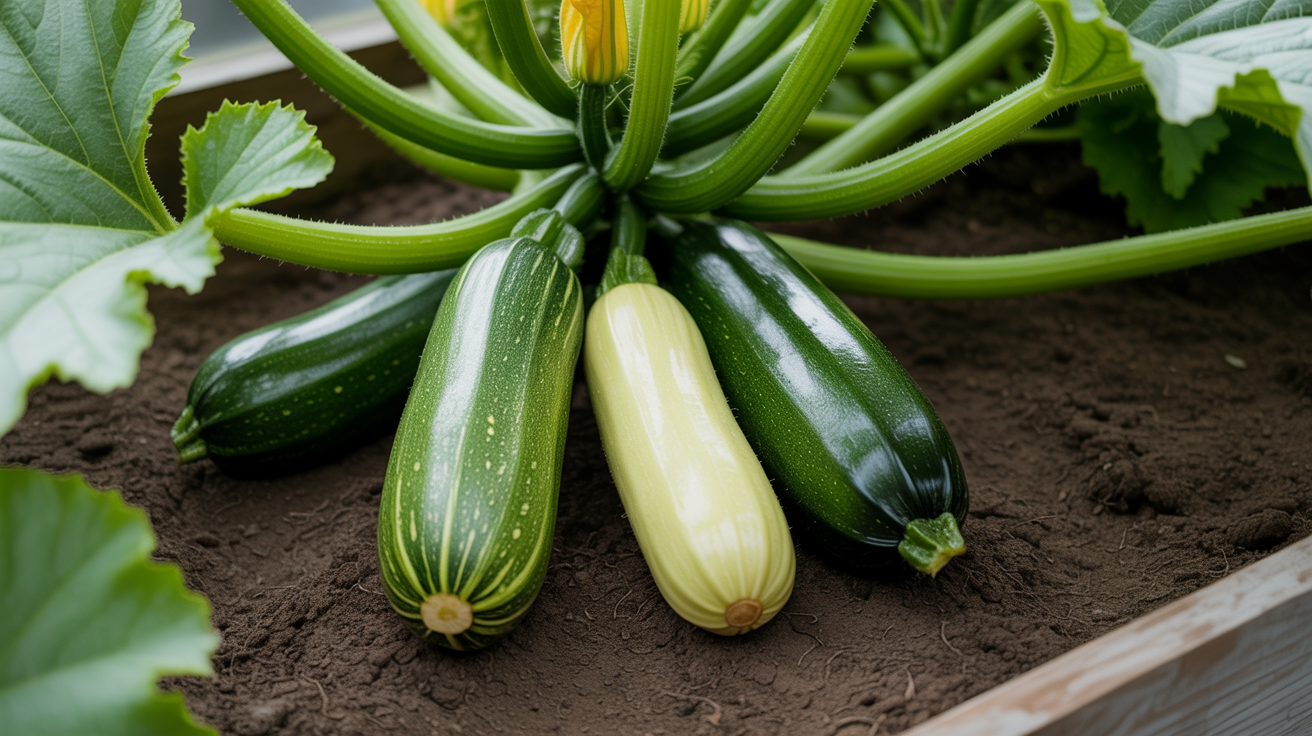
Zucchini is one of the most productive vegetables a beginner can plant. One or two well-tended plants can easily outpace what a household can eat, so start small. Direct-sow seeds after your last frost, keep the soil moist, and pick the fruits young. That's most of it. The rest of this guide fills in the details that trip people up: spacing, pollination, common pests, and harvest timing.
Quick Reference: Key Numbers
Before getting into the how, here are the numbers worth memorizing:
| Factor | Recommendation |
|---|---|
| Planting time | After last frost, soil 60°F+ |
| Sow depth | 1 inch |
| Plant spacing | 2–3 feet (hills: 3 plants per hill, 4–6 ft apart) |
| Days to first harvest | 45–60 days from seed |
| Ideal harvest size | 6–8 inches long |
| Watering | 1–2 inches per week |
| Full sun required | 6–8 hours daily |
How to Plant Zucchini and Summer Squash
Zucchini and summer squash (patty pan, yellow crookneck, and similar types) are warm-season crops. They die quickly in frost and germinate poorly in cold soil. Wait until nighttime temperatures stay above 50°F and the soil reads at least 60°F at a 2-inch depth.
Direct sowing is the standard approach. Squash dislikes root disturbance, so seeding where the plants will grow saves transplant stress. Push seeds about 1 inch deep and cover. Germination takes 5–10 days in warm conditions.
You can plant in two ways:
- Row planting: Space plants 2–3 feet apart in rows 4–6 feet apart. This suits smaller plots and makes it easier to spot pests.
- Hill planting: Mound the soil slightly and sow 3–4 seeds per hill, thinning to 2 once they're 4 inches tall. Hills warm up faster than flat ground, which can matter in cooler climates.
If you're starting tomatoes or peppers from seed indoors, see how to grow tomatoes — a complete beginner's guide for the indoor seed-starting setup. Squash doesn't need that treatment; it catches up fast when direct-sown.
Soil and Site
Rich, loose soil with plenty of organic matter suits squash well. Work in a few inches of compost before planting. Squash plants are heavy feeders, but a compost-amended bed usually covers their needs without additional fertilizer until mid-season. Full sun is non-negotiable: fewer than 6 hours and you'll get leggy plants with patchy production.
Watering and Fertilizing
Consistent moisture produces straight, solid fruits. Aim for 1–2 inches of water per week, more during heat spikes. Inconsistent watering (wet-dry-wet cycles) can cause blossom drop and misshapen fruits.
A few practical tips:
- Water at the base of the plant, not overhead. Wet leaves invite powdery mildew.
- Mulch around plants with straw or wood chips to hold soil moisture and keep roots cool.
- If your soil was amended with compost at planting, a light side-dressing of balanced fertilizer (10-10-10) around week 4–5 keeps plants productive through the peak of summer.
Zucchini plants sprawl. Each plant can spread 3–4 feet in every direction, so factor that into your spacing from the start. Crowded plants compete for light and airflow, which makes disease worse.
Pollination: Why Your Zucchini Has Flowers but No Fruit
This is the most common beginner confusion. Squash plants produce two kinds of flowers: male and female. Male flowers appear first, often a week or two before the females. They bloom, get no bees visiting yet, and drop off. This is normal.
Female flowers have a tiny immature fruit (an ovary) at the base of the petals. Males have a plain thin stem. Bees carry pollen from male to female flowers; without that transfer, the tiny fruit shrivels and drops within a few days.
If you're not seeing fruit set:
- Check that you have both male and female flowers open at the same time.
- Look for bee activity in the morning (squash flowers open early and close by afternoon).
- If pollinators are scarce, hand-pollinate: use a small paintbrush or a cotton swab to transfer pollen from the center of a male flower to the center of a female flower.
Hand-pollination takes 30 seconds and works reliably. It's a good backup in rainy spells or early in the season when bees are less active.
Zucchini Plant Care: Pests and Diseases
Squash Bugs
Squash bugs (Anasa tristis) are the most damaging pest on zucchini. Adults are brownish-gray, about half an inch long, and hard to kill once mature. They cluster on the undersides of leaves and suck sap, causing wilted, yellowed sections.
Check the undersides of leaves weekly from midsummer on. Look for clusters of copper-colored oval eggs. Remove and destroy egg clusters by hand or scrape them into soapy water. Young nymphs (gray, soft-bodied) are easier to kill than adults; neem oil or insecticidal soap works on nymphs but has little effect on mature bugs. Row covers keep bugs off early-season plants, but remove them once flowers appear so bees can reach the blooms.
Squash Vine Borers
Vine borers (Melittia cucurbitae) are a trickier problem, especially in the eastern U.S. The adult is a red-and-black moth that lays eggs at the base of stems. The larvae tunnel into the main stem and feed from the inside, causing sudden collapse of the plant.
Signs: sawdust-like frass (excrement) at the base of the stem, sudden wilting despite adequate water. Prevention works better than cure: row covers early in the season, or wrapping the base of stems in aluminum foil to deter egg-laying. Once larvae are inside, the damage is usually done. Some gardeners make a small incision to remove larvae and mound soil over the wounded stem to encourage re-rooting, with mixed results.
Powdery Mildew
White, powdery patches on the upper surface of leaves are powdery mildew, a fungal disease that's almost universal on squash by late summer. It slows plant growth and reduces production but rarely kills the plant outright before the season ends.
Prevention: good airflow (don't crowd plants), avoid wetting foliage, remove the most heavily affected leaves. A diluted baking soda spray (1 tablespoon per gallon of water) applied early can slow spread. Resistant varieties exist (check seed catalog descriptions) if mildew is a recurring problem in your garden.
Harvesting Zucchini and Summer Squash
Pick young and pick often. This is the single most important practice for sustained production.
Zucchini left on the plant past 8–10 inches becomes seedy, tough-skinned, and signals the plant to slow down fruit production. The goal is to harvest at 6–8 inches, or even smaller (4–6 inches for the most tender flesh). At peak summer, check plants every day. A fruit that's fine on Monday can be a club by Wednesday.
Use a sharp knife or pruning shears to cut the stem rather than snapping or twisting, which can damage the plant. Yellow summer squash and patty pan types follow the same rule: pick them small. Patty pans are best at 3–4 inches across.
If you end up with an overlooked oversized zucchini, it's still edible: hollow it out and stuff it, or shred it for zucchini bread. Just don't leave it sitting on the plant.
Consistent harvesting keeps plants producing into late summer. Plants that are allowed to set large, mature fruits put energy into seed production and cut back on flowering. Frequent harvest is the simplest way to extend your season.
If you're also growing other vegetables and want to compare care routines, how to grow lettuce and salad greens at home and how to grow peppers from seed to harvest cover crops that pair well in a summer garden.
Frequently Asked Questions
Why are my zucchini flowers falling off without producing fruit?
The first flush of flowers is almost always male. Male flowers appear before female flowers and will drop after a day or two. This is normal. Once female flowers open (look for the small swelling at the base), you need pollinators to transfer pollen. If both types are open and you still see drop, hand-pollinate with a brush or cotton swab.
How many zucchini plants do I need?
One to two plants is enough for most households. A single healthy plant in good soil can produce 6–10 pounds of fruit per week at peak. Two plants will keep you busy. Three or more is only sensible if you're preserving or sharing heavily.
Can I grow zucchini in a container?
Yes, with limitations. Use a container that holds at least 5 gallons (10–15 gallons is better). Choose a compact or "bush" variety rather than a sprawling type. Container plants dry out faster and need more frequent watering and fertilizing than in-ground plants.
What's causing my zucchini to rot at the blossom end?
Blossom-end rot (a brown, sunken area at the tip of the fruit) is caused by calcium deficiency, usually due to inconsistent watering rather than a lack of calcium in the soil. Irregular moisture prevents the plant from moving calcium to developing fruits. Steady, consistent watering is the fix.
When should I stop planting zucchini for the season?
Count back from your first expected fall frost. Zucchini needs roughly 50–60 days to produce. If your first frost is October 1, your last useful planting date is around early to mid-July, depending on your variety. A second planting 6–8 weeks after your first can give you a fresh flush of production after the early plants slow down.