Planting & Care
How to Stake and Trellis Tomatoes, Beans, and Vining Crops
Learn how to trellis vegetables the right way: staking tomatoes, supporting pole beans, and building a trellis for cucumbers and squash.
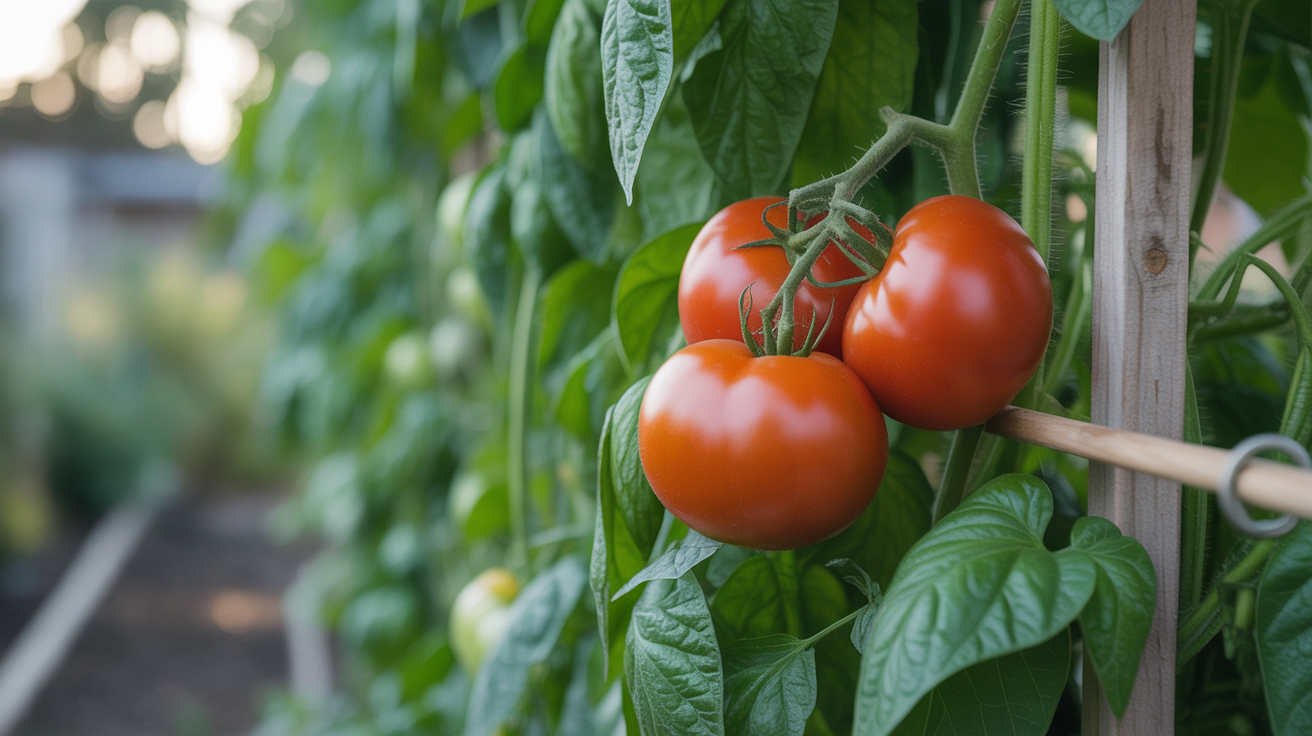
Most vining and tall crops flop over, rot at ground level, or snap under their own weight without some kind of support. Getting that support in place early is one of the simplest moves you can make to improve your harvest.
Why Supporting Your Crops Matters
A plant sprawled on the soil sits in moisture and shade. That combination breeds fungal problems, gives slugs a free meal ticket, and leaves fruit dirty or hidden. Lift the plant up and several things improve at once.
Airflow. Leaves dry faster after rain or irrigation. Wet foliage is where diseases like early blight and powdery mildew get a foothold.
Fruit quality. Tomatoes, cucumbers, and beans hanging in the air stay cleaner and are easier to spot at harvest. Cucumbers that touch soil often rot on that side.
Space. A cucumber on an A-frame uses a narrow vertical strip instead of four feet of horizontal bed. In a raised bed, that extra space can fit another row of lettuce or carrots underneath.
Stem health. When a heavy tomato plant tips over, the main stem can crack or kink. That wound is an entry point for disease.
The one rule that trips up beginners: install supports at planting time, not after the plant is big. Pounding a stake into established roots damages them. Burying a trellis post through a sprawling cucumber snaps leaves and vines. Put the hardware in first, then plant around it.
Tomatoes: Stakes, Cages, and the Florida Weave
Tomatoes split into two main types, and your support choice should match the type you are growing.
Determinate tomatoes (also called bush tomatoes) grow to a set height, set fruit all at once, and stop. Common examples include Roma, Celebrity, and Rutgers. A sturdy cage or a single stake is usually enough. These plants top out around 3 to 4 feet and do not need constant tying.
Indeterminate tomatoes keep growing until frost kills them. Beefsteak, Cherry tomatoes, Sungold, and most heirloom varieties fall here. Left unsupported, an indeterminate plant can reach 6 to 8 feet and collapse under its own weight by July. These need a more serious system.
Cages are the most common option you will find at a garden center. The flimsy wire cages sold at most hardware stores are too short and too light for a vigorous indeterminate. They tip over by August. If you want to use cages, make your own from concrete reinforcing wire (also called remesh or rebar mesh) with 6-inch openings. Cut a length about 5 feet tall, bend it into a cylinder, and stake it to the ground with rebar or heavy stakes. These last for years.
Single stakes work well for determinate types or for gardeners who prune aggressively. Drive a 6-foot stake about 12 inches into the ground at planting, then tie the main stem loosely to it every 8 to 10 inches as the plant grows. Use soft ties, strips of old t-shirt, or foam-coated wire. Avoid anything that cuts into the stem.
The Florida weave is a production method that works beautifully in a row of tomatoes. Drive a stake every two plants or so, then weave twine back and forth between the stakes on each side of the row, sandwiching the plants. Add a new layer of twine every 8 inches of growth. It is faster than tying individual stems and surprisingly sturdy.
If you started your plants from seed indoors, check out how to start seeds indoors: a step-by-step guide for tips on growing compact, stocky seedlings that transplant well. Spindly transplants will depend on that stake earlier than stocky ones.
Pole Beans and Peas: Poles, Nets, and Teepees
Pole beans and climbing peas both need something thin and rough to grip. Smooth metal is harder for tendrils to hold; rough wood, twine, or netting is better.
Bamboo teepees are the classic solution for pole beans. Push 6 to 8 bamboo canes (at least 7 feet tall) into a circle about 18 inches across, tie the tops together, and plant 2 to 3 bean seeds at the base of each pole. The plants climb up, fill in quickly, and look great. Take it apart at the end of the season; bamboo is reusable for several years.
Netting or trellis netting works well for peas, which have thin, delicate tendrils. Suspend netting between two posts. The mesh openings should be at least 4 inches wide so you can get your hands in to harvest. Peas are a cool-season crop, so they go in early spring or fall; you can reuse the same trellis for pole beans once peas are done.
Rows of posts and twine are a quick option. Two posts at each end of a bed with 4-inch mesh twine stretched horizontally at 6-inch intervals makes a decent climbing surface for beans or cucumbers. This method is less attractive but easy to set up and take down.
One thing worth noting: pole beans and peas fix nitrogen in the soil, so letting them grow fully benefits the bed long term.
Cucumbers and Squash: A-Frames and Slings
Cucumbers are natural climbers and actually do better on a trellis than sprawling on the ground. Squash is heavier and more complicated, but some varieties are worth the effort to lift.
A-frame trellis. Two panels of netting or wire mesh leaned together at the top form an A-frame. Cucumbers planted at the base of each side climb up and over. This is one of the most space-efficient systems in a raised bed; you can plant quick crops like lettuce and radishes in the shade underneath the A-frame.
Vertical netting on a post-and-wire frame. For a bed along a fence or wall, string heavy-gauge wire between two tall posts and hang netting from it. Cucumbers reach 4 to 6 feet, so the posts need to be at least that tall with 12 inches buried.
Slings for heavy fruit. Cucumbers are light enough to hang on their own. Winter squash and melons are not. If you want to grow a butternut or a cantaloupe on a trellis, the fruit will need support as it sizes up, or it will tear itself off the vine. Make a sling from a strip of old t-shirt, a piece of pantyhose, or a mesh produce bag. Tie each end to the trellis so the fruit rests in a hammock. Check the slings every few days and adjust as the fruit grows.
Summer squash like zucchini is typically grown as a bush and does not need a trellis. It is the vining winter squash types (butternut, delicata, kabocha) that climb if given the chance.
Crop-vs-Support Quick Reference
| Crop | Recommended Support | Minimum Height |
|---|---|---|
| Determinate tomato | Cage or single stake | 4 ft |
| Indeterminate tomato | Heavy cage, Florida weave, tall stake | 6 ft |
| Pole beans | Teepee, netting, twine grid | 7 ft |
| Climbing peas | Netting, twine grid | 4 to 5 ft |
| Cucumber | A-frame or vertical netting | 5 to 6 ft |
| Vining winter squash | Strong vertical trellis with slings | 6 ft |
| Summer squash (zucchini) | None needed | N/A |
When to Install Supports (And a Note on Transplants)
For anything you are transplanting into the garden, put the support in before you set the transplant in the ground. That way you avoid jabbing a stake through established roots three weeks later.
If you are direct sowing beans or cucumbers, put the trellis or poles in at sowing time. The soil is still loose, stakes drive in easily, and you will not have to navigate around sprouted seedlings.
Before you plant transplants, make sure they have been properly hardened off. Transplants moved directly from a warm indoor setup to full outdoor conditions often suffer cold shock or sunscald. See how to harden off seedlings before transplanting for a reliable step-by-step method.
If you are deciding whether to start from seed or buy starter plants, the guide on seeds vs seedlings: when to start from seed and when to buy plants covers the tradeoffs. Tomatoes, cucumbers, and squash are all commonly available as transplants, which gives you a head start.
Frequently Asked Questions
When is it too late to add a support to an existing plant?
It depends on the size. A small tomato at 12 inches can usually handle a carefully placed stake with minimal root disturbance. A mature plant at 3 to 4 feet is harder to work around without snapping stems or cutting roots. At that point, a cage slipped over the top and pushed into the soil at the edges is often less damaging than driving a stake. Prevention is far easier.
What kind of twine should I use for tying plants?
Soft natural twine, cotton, or foam-coated plant ties work well. Avoid standard nylon twine or wire without padding; both can cut into stems as the plant grows. The tie should be snug enough to hold but loose enough to slip a finger under.
Do I need to remove supports at the end of the season?
You should. Metal cages can rust if left in wet soil over winter. Wooden stakes and bamboo rot faster when left in the ground year-round. Clean supports, let them dry, and store them under cover. They will last much longer. Netting should be checked for plant debris; leaving old plant material on netting can carry disease to next year's crop.
My pole beans are not climbing the poles. What is wrong?
Young bean seedlings sometimes need a nudge. Gently wrap the stem once around the pole or press it against the surface. Once it makes contact, most varieties grab on within a day or two. Roughing up smooth poles with sandpaper helps tendrils grip.
Can I use a single trellis for multiple crops?
Yes, as long as the crops share similar support needs. Cucumbers and pole beans work fine on the same netting since both are lightweight climbers. Avoid putting heavy crops like winter squash on a panel built for beans; a 10-pound fruit can pull the whole structure down.