Raised Beds & Soil
How to Test and Improve Your Garden Soil
Learn how to test garden soil at home with simple DIY methods, then improve it with compost and amendments for healthier vegetables.
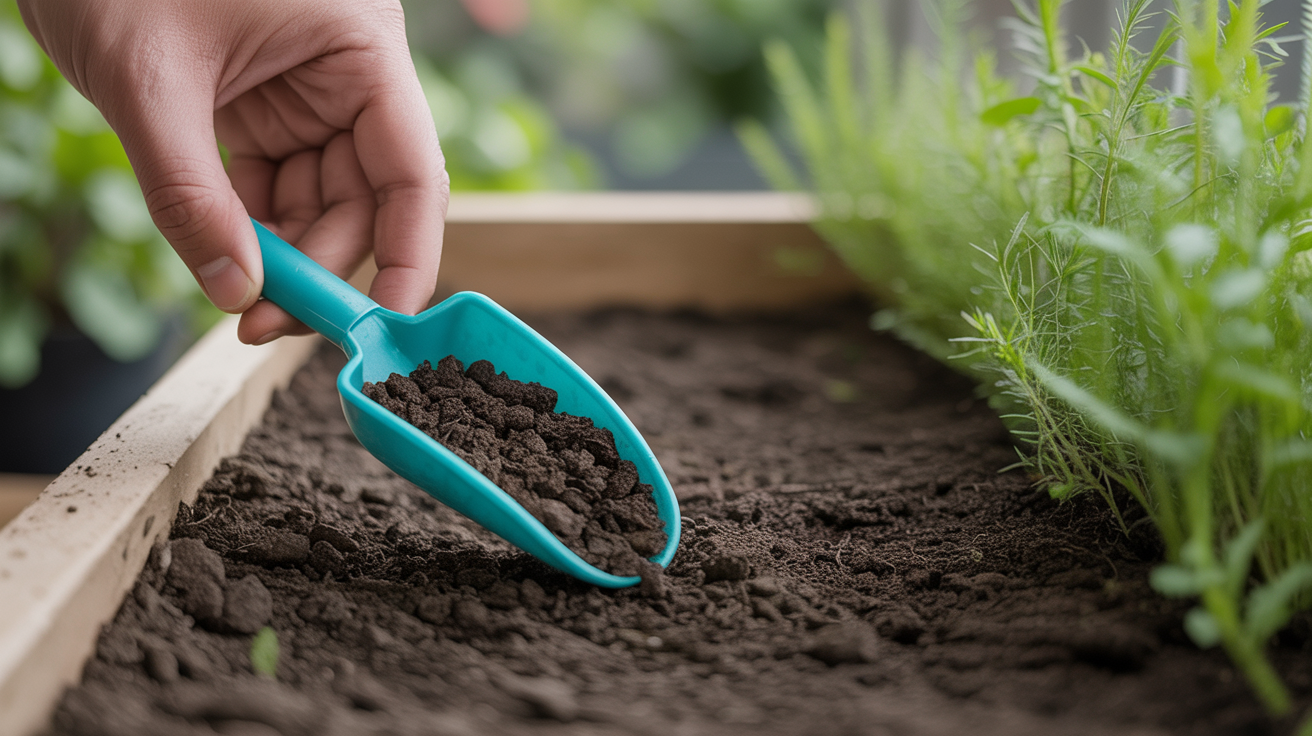
Good soil is the difference between vegetables that limp along and ones that actually produce. Before you add a single amendment or buy a bag of fertilizer, it's worth spending 20 minutes understanding what you're starting with. Testing your soil doesn't require a science degree or expensive equipment. A few household items and, if you want precision, a mail-in lab kit costing around $15 will tell you most of what you need to know.
The Jar Test: Understanding Your Soil Texture
Soil texture describes the ratio of sand, silt, and clay particles in your soil. This ratio affects drainage, water retention, nutrient availability, and how easy your soil is to dig. The jar test is the easiest way to see it.
What you need: a clear glass jar (quart size), water, a small amount of dish soap, and a cup of soil from your garden.
How to do it:
- Fill the jar about one-third with dry soil, removing any stones or large debris.
- Add water until the jar is nearly full, then add a few drops of dish soap (it helps the particles separate).
- Shake vigorously for two minutes.
- Set the jar on a flat surface and leave it undisturbed for 48 hours.
Reading the results: The particles settle in layers by weight. Sand drops first (within a couple of minutes) and forms the bottom layer. Silt settles next over the following hours. Clay is the finest particle; it stays suspended longest and forms the top layer of settled material. Water above that layer may remain cloudy for days if you have a lot of clay.
Measure each layer and calculate its percentage of the total settled depth. Ideal garden loam is roughly 40% sand, 40% silt, and 20% clay. Very high sand content (over 60%) means your soil drains fast but doesn't hold nutrients well. High clay content (over 40%) means it holds water and nutrients but drains poorly and compacts easily.
For context on how soil texture affects what you put in your beds, see our guide on what to fill a raised garden bed with.
Testing Soil pH: DIY Methods and Lab Tests
pH measures acidity or alkalinity on a scale from 0 to 14. Most vegetables grow best between 6.0 and 7.0 (slightly acidic to neutral). Outside that range, nutrients are chemically locked in forms plants can't absorb, even if the nutrients are physically present.
Quick DIY pH Check
You can get a rough sense of your soil's pH with items from the kitchen.
- Take two small soil samples (a tablespoon each) into separate bowls.
- Add a few tablespoons of white vinegar to one sample. Fizzing means the soil is alkaline (pH above 7).
- Wet the other sample slightly with distilled water, then add a pinch of baking soda. Fizzing means the soil is acidic (pH below 6).
- If neither fizzes, your soil is close to neutral.
This test is binary, not precise. It won't tell you if you're at 5.5 or 6.8. For that, use a soil pH meter (basic meters run $10–20 at garden centers) or, better, a lab kit.
Mail-In Lab Tests
A university extension service or private soil lab will test pH and nutrient levels for $15–25. They send you a bag, you mail in a small soil sample, and within a week or two you receive a report with specific recommendations. Many extension labs are subsidized by the state, so they're often cheaper than private options.
Search "[your state] cooperative extension soil test" to find the nearest lab. This test is worth doing at least once before you start gardening, and again every two to three years.
What Soil Test Results Actually Tell You
A standard soil report covers pH and three primary nutrients: nitrogen (N), phosphorus (P), and potassium (K). Here's what each one means for your vegetables.
| Nutrient | What It Does | Deficiency Signs |
|---|---|---|
| Nitrogen (N) | Drives leafy, green growth | Yellow leaves, slow growth |
| Phosphorus (P) | Supports roots and fruit development | Purple-tinged leaves, poor fruiting |
| Potassium (K) | Regulates water use, disease resistance | Brown leaf edges, weak stems |
| pH (6.0–7.0 ideal) | Controls nutrient availability | Various deficiency symptoms despite adequate nutrients |
Lab reports usually rate each nutrient as low, medium, high, or excessive, and some include fertilizer application rates. Follow those rates rather than guessing.
How to Improve Garden Soil Quality
Once you know what your soil is missing or where it's out of range, improving it is straightforward. The core fix for most structural problems is compost.
Adding Compost
Compost improves almost every soil type. It adds organic matter that loosens clay soils (improving drainage), helps sandy soils hold moisture, feeds soil microbes, and provides a slow-release source of all three major nutrients. It also buffers pH toward neutral over time.
For a new bed, work 3–4 inches of compost into the top 12 inches of soil. For an established bed, top-dress with 1–2 inches each season and let earthworms and rain incorporate it. Finished compost from a garden center or municipality works well; homemade compost works just as well if it's fully broken down (no recognizable food scraps or smell beyond earthy).
Adjusting pH
If your soil is too acidic (below 6.0), add ground limestone (lime). If it's too alkaline (above 7.0), add elemental sulfur. Go by lab recommendations if you have them. Rough starting points for a 100-square-foot bed:
| Goal | Amendment | Approximate Rate |
|---|---|---|
| Raise pH by 1 unit (clay soil) | Ground limestone | 8–10 lbs per 100 sq ft |
| Raise pH by 1 unit (sandy soil) | Ground limestone | 3–4 lbs per 100 sq ft |
| Lower pH by 1 unit | Elemental sulfur | 1–2 lbs per 100 sq ft |
| Lower pH by 1 unit (clay soil) | Elemental sulfur | 2–3 lbs per 100 sq ft |
Lime acts slowly (3–6 months to fully change pH) so apply it in fall for the following spring. Sulfur acidifies faster but still takes a few weeks. Retest pH before adding more.
Other Common Amendments
| Amendment | What It Fixes | How to Use |
|---|---|---|
| Aged manure | Low nitrogen, poor texture | 2–3 inches worked in annually |
| Perlite or coarse sand | Clay-heavy soil, poor drainage | Mix 20–25% by volume into bed |
| Peat moss | Overly alkaline soil | Lowers pH slightly; adds organic matter |
| Kelp meal | Low potassium, trace minerals | Follow package rates; don't overdo it |
| Blood meal | Low nitrogen (fast-release) | 1–2 lbs per 100 sq ft; use carefully |
| Bone meal | Low phosphorus | 2–3 lbs per 100 sq ft at planting |
Avoid adding raw (fresh) manure to a bed you're actively planting. It can burn roots and may contain pathogens. Aged (composted) manure is safe.
If you're building a new bed from scratch, this material interacts directly with your fill choices. See how to build a raised garden bed for the structural side, and consider how deep a raised garden bed should be before you calculate how much amendment to buy.
Building a Soil Improvement Routine
Testing once and amending once isn't enough. Soil changes over time as plants pull out nutrients and organic matter breaks down. A simple annual routine keeps garden soil quality consistent:
- Test pH and nutrient levels every two to three years (more often if you're seeing problems).
- Add 1–2 inches of compost each spring before planting.
- After harvest, add a thin layer of compost or plant a cover crop (clover or winter rye) to protect and feed the soil over winter.
- Rotate plant families each season to prevent nutrient depletion in specific spots.
This doesn't take much time. The payoff is soil that gets easier to work each year rather than harder.
Frequently Asked Questions
How do I know if my garden soil is good without testing?
Squeeze a handful of moist soil. If it holds a shape but crumbles apart when you poke it, the texture is reasonable. If it stays in a hard ball and doesn't break apart, it has too much clay. If it falls apart immediately into loose grains, it's mostly sand. Also look for earthworms while digging; they're a reliable sign of healthy organic matter and microbial life. But visual checks only go so far — pH and nutrient levels are invisible without a test.
Can I use a cheap pH meter from a garden center?
Yes, for a quick check. Budget meters (under $20) can drift and give inconsistent readings, so calibrate yours with a known reference solution if possible, and test the same spot twice to confirm. For decisions about how much lime or sulfur to add, a mail-in lab test gives you more reliable numbers.
How long does it take to improve soil quality?
Structure and organic matter improve noticeably in one growing season with consistent compost additions. pH takes longer to shift — expect 3–6 months for lime to fully raise it, and a full season for sulfur to lower it meaningfully. Nutrient deficiencies can be corrected faster with targeted fertilizers, but building naturally rich soil is a multi-year process.
Is it safe to grow vegetables in soil that tested high in lead or heavy metals?
This depends on the levels. Urban soils, especially near older homes or industrial sites, sometimes contain elevated lead. If your lab test flags heavy metals, growing in raised beds filled with clean purchased soil is the safest solution. The lab report will usually note whether levels exceed EPA thresholds for food gardening.
Do I need to test soil in a raised bed if I filled it with bagged mix?
Probably not in the first year if you used a quality mix. By year two or three, nutrients deplete and pH can drift, so a test becomes useful. At minimum, check pH with a meter before each season if you're having unexplained plant problems.