Planting & Care
Plant Spacing for Vegetables: How Far Apart to Plant
A practical guide to vegetable plant spacing in rows and raised beds. Includes a spacing chart for common crops and why crowding hurts your harvest.
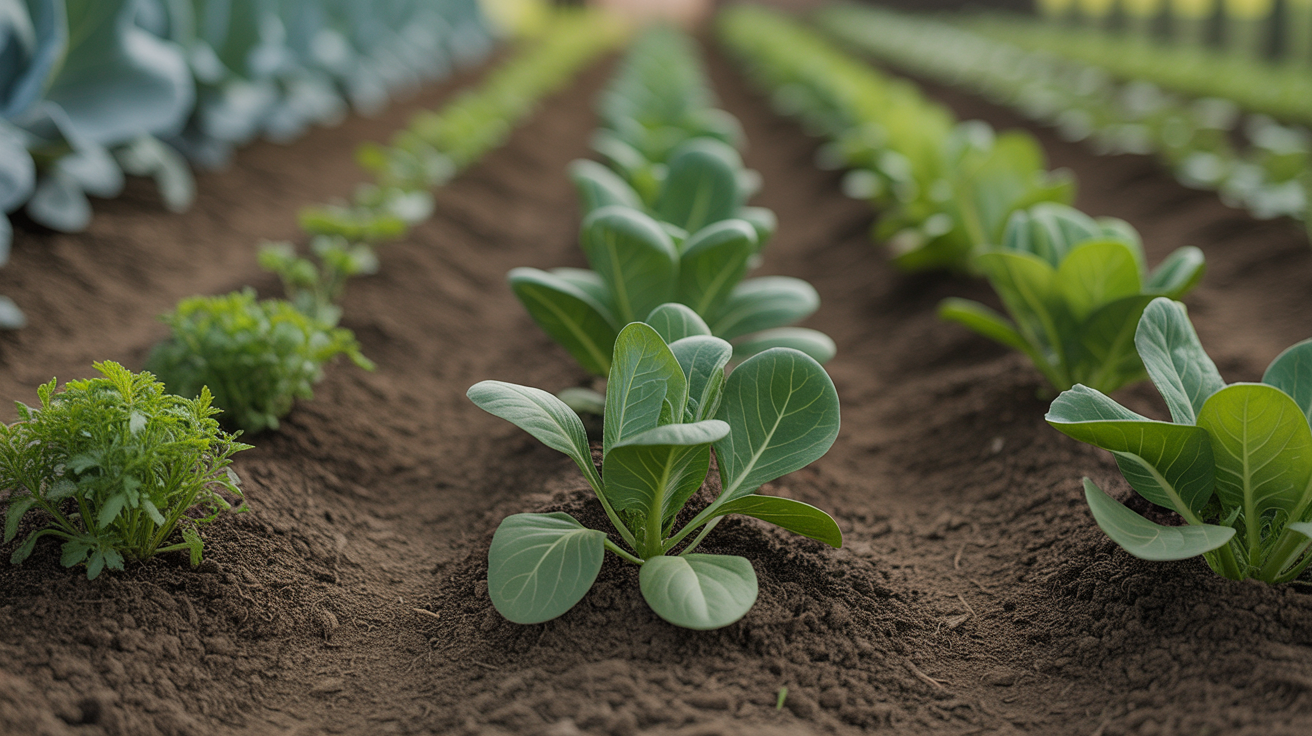
Most seed packets print a spacing recommendation, but those numbers were written for traditional row gardens with a tiller. If you're growing in raised beds, the spacing changes. Here's how to read those numbers, when to adjust them, and what happens when you don't.
Why Spacing Affects Your Harvest
Plants compete for the same resources: water, nutrients, and light. When you crowd them, each one gets less of all three. The results are predictable and frustrating.
Reduced yield. A crowded tomato plant pushes energy into survival rather than fruit. You'll get more tomatoes per square foot from two properly spaced plants than from four crammed ones.
Poor airflow. Leaves that can't dry out after rain or watering stay damp longer. That dampness is where fungal diseases like powdery mildew and early blight take hold. Many gardeners discover this connection the hard way mid-season.
Root competition. Roots spread out roughly as far as the canopy above them. If two plants are fighting for the same patch of soil, neither one wins.
Hard to harvest. This one sounds minor but matters: beans, cucumbers, and zucchini tucked under a canopy of overlapping plants are easy to miss. One oversized zucchini hiding in the leaves tells the plant to stop producing.
None of this means you need to follow every number on the packet to the inch. It means the numbers exist for good reasons, and compressing them too much costs you.
Row Spacing vs. Intensive Spacing in Raised Beds
Traditional row gardening was designed around equipment. The rows needed to be wide enough for a wheel hoe or a tractor to pass through. If you're growing in raised beds, that logic doesn't apply, because you reach in from the sides and never walk on the soil.
Row spacing refers to the distance between one row of plants and the next. For a traditional in-ground garden, row spacing is often 2 to 3 feet, even for crops that don't need that much room. The extra width just made cultivation easier.
Intensive spacing (sometimes called square-foot gardening) drops the row spacing down to match the plant's actual growing needs. Instead of keeping rows wide, you space plants evenly in every direction, which uses the bed more efficiently.
In a 4-by-8-foot raised bed, switching from row spacing to intensive spacing can double or triple the number of plants you fit in without crowding them. The key is that intensive spacing only works well when your soil is genuinely fertile and water-retentive. Beds with poor drainage or low organic matter won't support the same density that a deeply prepared, compost-rich bed can.
If you're growing in a conventional in-ground garden with rows, use the row spacing listed on the packet. If you're in a raised bed with good soil, you can generally use the within-row spacing in both directions.
Vegetable Plant Spacing Chart
These are starting points. Adjust based on your soil, your climate, and how large the variety you're growing gets at maturity. "Intensive" refers to raised-bed spacing where plants are evenly distributed in all directions.
| Vegetable | Intensive / Raised Bed | Row Spacing (In-Ground) | Notes |
|---|---|---|---|
| Tomatoes (indeterminate) | 24 in | 36 in | Need room for airflow; cage or stake |
| Tomatoes (determinate) | 18-24 in | 30 in | Bushier, slightly more compact |
| Peppers | 12-18 in | 18-24 in | Can go closer in very fertile beds |
| Cucumbers | 12 in | 36 in (trellised) | Trellis reduces footprint dramatically |
| Zucchini / summer squash | 24-36 in | 36-48 in | These get large; don't underestimate |
| Winter squash | 36-48 in | 48-60 in | Better in ground rows than beds |
| Beans (bush) | 4-6 in | Rows 18 in apart | Direct sow, thin if needed |
| Beans (pole) | 6-9 in | Rows 24-30 in apart | Trellis; space at base of support |
| Peas | 3-4 in | Rows 18 in apart | Trellis; dense sowing fine |
| Lettuce (leaf) | 6-8 in | Rows 12 in apart | Can cut-and-come-again if crowded |
| Lettuce (head) | 10-12 in | Rows 12-15 in apart | Needs room to form a head |
| Spinach | 4-6 in | Rows 12 in apart | Tolerates some crowding |
| Kale / chard | 12-18 in | Rows 18-24 in apart | Large plants at maturity |
| Carrots | 2-3 in | Rows 12 in apart | Thin to this spacing after germination |
| Beets | 3-4 in | Rows 12 in apart | Each "seed" is a cluster; thin early |
| Radishes | 2-3 in | Rows 6-9 in apart | Fast crop; easy to succession sow |
| Onions (from sets) | 4-6 in | Rows 12 in apart | Closer if growing for green onions |
| Garlic | 6 in | Rows 12 in apart | Plant deeper in cold climates |
| Broccoli | 18 in | Rows 24-30 in apart | One plant per square foot minimum |
| Cabbage | 18-24 in | Rows 24-30 in apart | Head size depends on spacing |
| Basil | 10-12 in | Rows 12-15 in apart | Pinch flowers to keep producing |
How to Space Vegetables in Raised Beds
The simplest system for raised beds is a grid. Decide on your spacing for each crop, then mark the grid in the soil with your finger or a stick before you plant. For a 4-foot-wide bed, you can reach the center from either side, which is the main advantage.
Match grid spacing to the crop. A bed planted with broccoli at 18 inches gets a 2-by-2 grid in a 4-by-4 bed (four plants). A bed of radishes at 3 inches fits many more. Some gardeners plant one type of crop per bed; others mix them, which can work well if you map it out before you dig holes.
Account for trellising. Crops that climb (cucumbers, pole beans, peas) can be planted more densely when vertical support lifts them out of the horizontal plane. A row of cucumbers 12 inches apart along the back edge of a raised bed, growing up a trellis, takes almost no floor space compared to the same cucumbers sprawling horizontally.
Use the packet as a floor, not a ceiling. The spacing on the packet is usually the minimum for decent production. If you have extra room, giving a plant more space is almost always better than giving it less. The one exception is for cut-and-come-again greens like lettuce and spinach, where slightly closer spacing encourages upright leaf growth.
If you're starting plants indoors before moving them to the bed, see seeds vs. seedlings: when to start from seed and when to buy plants for help deciding which crops are worth starting early. Once plants are ready to move outside, how to harden off seedlings before transplanting walks through the acclimatization process that keeps them from going into shock.
Thinning: The Step Most Beginners Skip
When you direct-sow seeds (carrots, beets, radishes, spinach, beans), you usually plant more than you intend to grow. If you're newer to starting from seed, how to start seeds indoors: a step-by-step guide covers the basics of germination. Seeds don't all germinate, and sowing thickly gives you some insurance. The problem is when too many actually sprout.
Thinning means removing seedlings so the remaining ones have enough space. It feels wasteful, especially when the seedlings look healthy, but leaving them crowded costs you more than pulling them.
Do it early. Thin when seedlings are an inch or two tall, before roots get tangled.
Use scissors, not your fingers. Pulling a seedling can disturb the roots of the one next to it. Snip the unwanted ones at soil level instead.
Check the spacing after thinning. It's easy to leave clusters that look spaced but aren't. Measure or estimate before you move on.
Carrots and beets especially need early thinning. Beet "seeds" are actually clusters of 2 to 4 seeds in one seed coat, so even one sown beet often produces multiple sprouts. Skip thinning and you get a tangle of forked, stunted roots instead of round beets.
Frequently Asked Questions
What happens if I plant vegetables too close together?
Plants compete for water, nutrients, and light, which reduces yield across the board. Poor airflow between leaves also creates conditions where fungal diseases spread easily. You'll typically get fewer, smaller fruits or roots, and the plants may look healthy early in the season before problems show up in summer.
Can I use raised bed spacing for in-ground gardens?
You can try, but the results depend on your soil. Intensive spacing works in raised beds partly because the soil is loose, deep, and nutrient-rich. In compacted native soil, roots can't spread as efficiently, and the plants won't support the same density. If your in-ground bed has been well-amended with compost over several seasons, closer spacing becomes more workable.
Do I need to follow the spacing exactly?
No. Treat the numbers as starting points, as this site's disclaimer notes. A tomato listed at 24 inches can grow fine at 20 inches in a very fertile bed with good airflow, or it might need 30 inches in a humid climate where disease pressure is high. Experience in your own garden is the best guide.
Can I plant different vegetables at different spacings in the same bed?
Yes, and many gardeners do. Map out the bed before you plant so you know how many of each crop will fit. Taller or larger plants (tomatoes, peppers, kale) generally go on the north side of the bed so they don't shade smaller crops. Mixing fast-growing crops like radishes with slower ones like carrots can also use space efficiently, since the radishes are harvested before the carrots need the room.
Do large containers need the same spacing as raised beds?
The same principles apply, but containers drain and dry out faster than raised beds, which limits density. A large pot (15 gallons or more) can support one tomato plant or a few lettuce plants, but at the same spacing you'd use for the bed. Crowding a container generally produces worse results than crowding a bed, because there's less root space to compensate.