Planting & Care
Succession Planting: How to Keep Your Garden Producing All Season Long
Learn how succession planting vegetables works, which crops benefit most, and a simple three-row lettuce example to keep harvests coming all season.
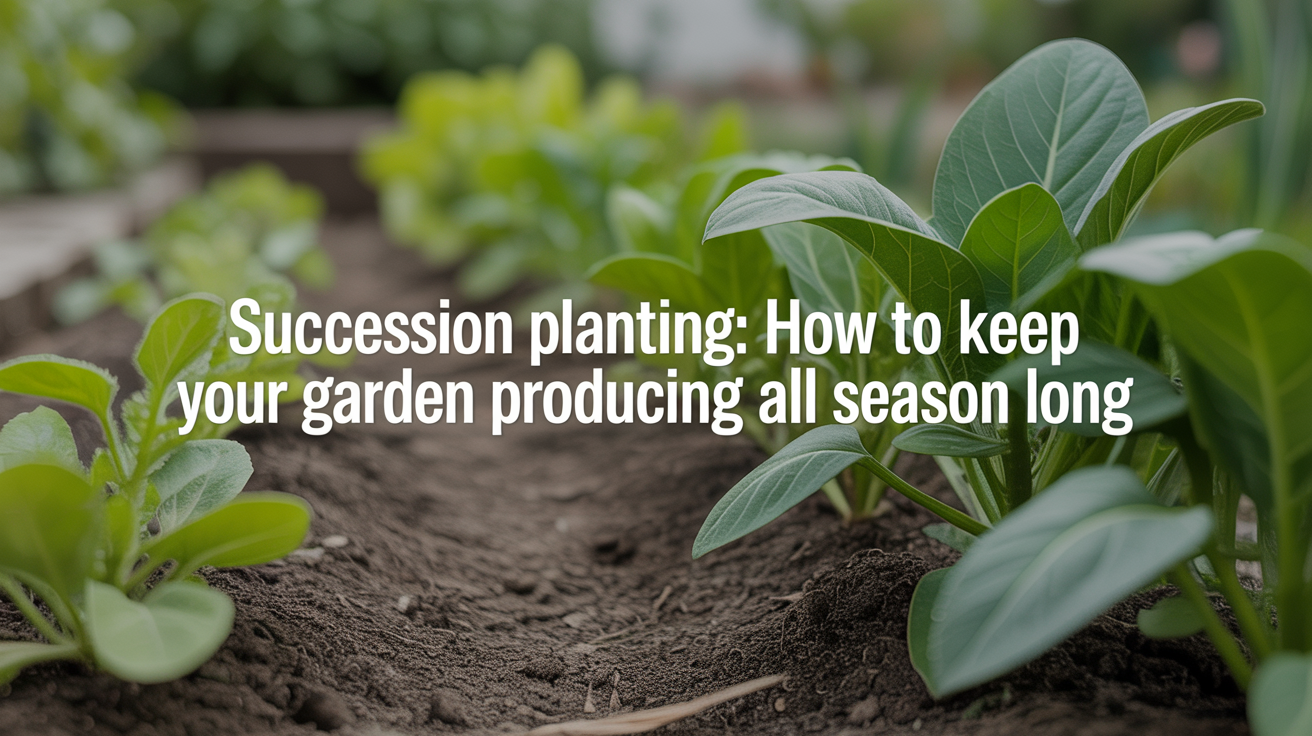
Succession planting means sowing a short row or a small batch of transplants every two to three weeks rather than putting everything in the ground on the same day. The result is a steady stream of harvests instead of one overwhelming flush of produce followed by a barren bed.
Why Planting Everything at Once Is a Trap
Most beginners buy a seed packet, follow the "plant in spring" instruction, and sow every seed on the same afternoon. Six weeks later, twenty heads of lettuce are ready to cut at the same time. You eat salad for two weeks straight, the rest bolts in the heat, and by midsummer the bed is empty.
The glut-then-nothing cycle happens because many quick-maturing crops (lettuce, radishes, spinach, cilantro, beans) all reach harvest within a narrow window. When you plant them together, they also finish together.
Succession planting breaks that window into smaller pieces. A row planted on May 1, another on May 21, and a third on June 10 gives you overlapping harvests from late June through early August instead of one crowded week.
This approach also means you use your garden space more continuously. As one row finishes, the next is coming in, and you can plug a new sowing into the gap rather than leaving bare soil.
Which Crops Are Worth Succession Planting
Not every vegetable benefits from staggered sowing. Some crops take so long to mature, or can be harvested over such a long window, that succession planting adds little.
Crops that reward succession planting:
- Lettuce -- matures in 45 to 60 days, bolts quickly in heat; sow a short row every 2 to 3 weeks from early spring through summer
- Radishes -- ready in 25 to 30 days and unpleasant if left in the ground too long; sow a small band every 2 weeks
- Spinach -- bolt-prone once temperatures climb; short, frequent sowings extend the harvest
- Bush beans -- a full planting matures all at once, so two or three staggered sowings spaced 3 weeks apart give a longer picking window
- Cilantro -- bolts fast in warm weather; sow a short row every 3 weeks through the season
- Arugula -- like lettuce, matures quickly and turns bitter when it bolts; treat it the same way
- Beets and turnips -- sow in shorter blocks every 3 weeks for a continuous supply of roots at their peak size
Crops you only plant once (or close to it):
| Crop | Why you plant once |
|---|---|
| Tomatoes | Long season; one or two transplants per variety feed most families all summer |
| Peppers | Same slow-maturing, long-producing habit as tomatoes |
| Summer squash | One or two plants produce more than most households can use |
| Winter squash | Long days to maturity; one planting fills the space |
| Corn | You can do two plantings 3 weeks apart, but it needs a block for pollination |
| Cucumbers | One or two plants produce heavily over a long window |
| Eggplant | Slow to start, but productive over a long season once it gets going |
The pattern is simple: crops with a short maturity window and a narrow harvest period benefit most from succession planting. Crops that keep producing for weeks or months on their own do not.
A Worked Example: Three Rows of Lettuce
Lettuce is the easiest crop to learn succession planting on because it matures fast and the timing is forgiving. Here is a straightforward example.
What you need:
- One packet of a leaf lettuce blend or a variety with a 45 to 55 day maturity
- A raised bed or row long enough to hold three short sections
- Three sowing dates spaced 3 weeks apart
The schedule:
| Row | Sow date | Expected harvest start | Expected harvest end |
|---|---|---|---|
| Row 1 | May 1 | June 15 | July 5 |
| Row 2 | May 22 | July 6 | July 26 |
| Row 3 | June 12 | July 27 | August 16 |
By the time Row 1 starts to bolt in mid-July, Row 2 is already producing. Row 3 carries you through the dog days of August. In practice, the exact dates shift depending on your climate, but the rhythm holds.
How to do it:
- Divide your bed into three equal sections, or just mark off a foot-wide band in a raised bed.
- Sow the first row about a quarter inch deep and thin to 6 inches apart once seedlings are an inch tall.
- Mark your calendar for 3 weeks later and sow the second row the same way.
- Repeat for the third row.
- As Row 1 bolts and turns bitter, pull it, amend the soil with a handful of compost, and either sow a fall crop or let Row 2 fill that space.
For more detail on getting lettuce right from seed to harvest, see how to grow lettuce and salad greens at home.
How to Pair Succession Planting With Indoor Seed Starting
Succession planting works even better when you combine it with starting seeds indoors. The idea is to keep a pipeline running: while one batch grows outside, the next batch is germinating under lights inside, ready to go in the ground when the outdoor row finishes.
This approach matters most in spring, when outdoor temperatures are still too cold for direct sowing but the season is ticking away. You can start lettuce, spinach, or brassicas indoors 3 to 4 weeks before your last frost date, get them into the ground as soon as conditions allow, and have the second succession already sprouted indoors while the first batch is maturing outside.
Here is how to make the timing work:
- Back-calculate from your harvest goal. If you want lettuce in early June, count back 50 days to find your transplant date (around mid-April), then count back another 4 weeks to find your indoor start date (mid-March).
- Stagger your indoor starts too. Start the first tray, then start the second tray 3 weeks later so the transplants are ready to go out in sequence.
- Harden off carefully. Before any indoor-started seedlings go outside, set them in a sheltered spot outdoors for 5 to 7 days to adjust to sun and wind. Skipping this step often kills seedlings that were healthy indoors.
For a step-by-step walkthrough of the whole indoor-starting process, see how to start seeds indoors: a step-by-step guide. And if you are weighing whether to start from seed at all versus buying transplants, seeds vs. seedlings: when to start from seed and when to buy plants covers that trade-off in detail.
Keeping a Simple Sowing Calendar
The biggest obstacle to succession planting is remembering to do it. Most gardeners sow a row, move on to other beds, and forget to go back three weeks later. By the time they remember, the first row is already bolting.
A paper or digital calendar reminder is all you need. When you sow a row, immediately set a reminder for 21 days out labeled "sow next lettuce row" or whatever crop it is. That is the whole system.
Some gardeners keep a small notebook in the shed with columns for: crop, date sown, bed location, expected harvest date, and next sowing date. You do not need anything elaborate. The goal is just to jog your memory before the first batch finishes.
One practical tip: label your rows with popsicle sticks or plant markers that include the sow date. When you walk past and see "Lettuce, May 1," you know at a glance where you are in the succession without flipping through any notes.
Frequently Asked Questions
What does succession planting mean for beginners? Succession planting means sowing crops in small batches every two to three weeks rather than all at once. Instead of harvesting everything in one short window, you get a longer, more manageable harvest spread across several weeks.
How far apart should succession plantings be? For most quick-maturing crops (lettuce, radishes, spinach, cilantro), two to three weeks between sowings is a good starting interval. For beans, three weeks works well. If you notice your harvests are still overlapping more than you want, try pushing the interval to four weeks.
Can you succession plant in a small raised bed? Yes. You do not need a lot of space. A 4-by-4 raised bed can hold three short rows of lettuce, each sown three weeks apart. You just sow a narrower band rather than a full row each time.
Does succession planting work for fall crops too? It does, but the timing is tighter because you are working backward from your first frost date. Start from the frost date, count back the days to maturity, and sow each succession a couple of weeks earlier than the last. Spinach, kale, radishes, and lettuce all work well for fall successions.
What if a succession planting fails or germinates poorly? Resow the gap right away. One of the benefits of short successive sowings is that a failed row does not wipe out your entire harvest -- the other rows are still on track. Keep a small reserve of seed so you can fill in without waiting to buy more.